
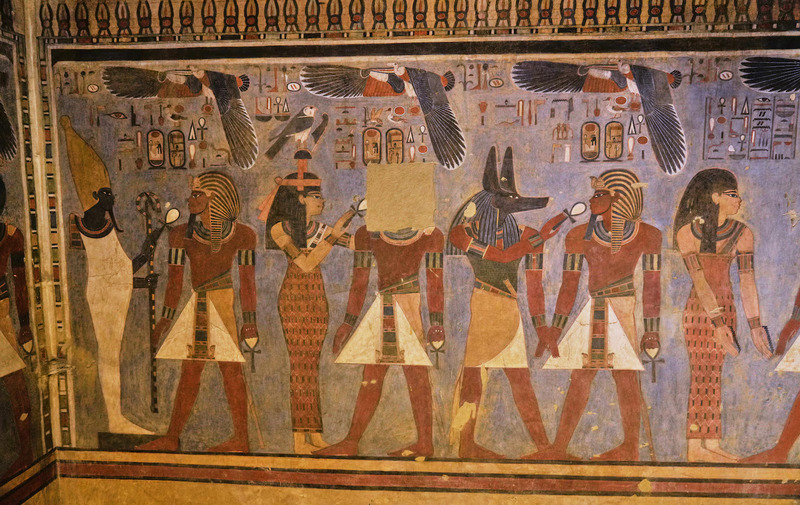
What Lies Inside This 3,400-Year-Old Egyptian Tomb? It’s Open Again!
Imagine stepping into a royal tomb where ancient paintings, sacred inscriptions and stories of a powerful civilisation have survived for more than 3,000 years. Egypt has brought this experience back to life with the reopening of the 3,400-year-old tomb of Pharaoh Amenhotep III after more than two decades of painstaking restoration.Located in the Theban Necropolis on Luxor’s West Bank in Southern Egypt, the tomb reopened to visitors in October 2025, offering a renewed glimpse into the grandeur of ancient Egypt and the remarkable efforts made to preserve its heritage.A Pharaoh’s Final Resting PlaceAmenhotep III ruled Egypt from around 1390 to 1350 BCE, during the prosperous 18th Dynasty. His nearly 38-year reign was marked by impressive temples, palaces and monumental sculptures, including the famous Colossi of Memnon near Luxor.His tomb reflects the artistic and religious traditions of this era. Although looters emptied the burial chamber centuries ago, its surviving wall paintings and sacred hieroglyphs continue to tell fascinating stories about the pharaoh’s beliefs and his journey into the afterlife.Among the surviving inscriptions are passages from the Book of the Dead, a collection of ancient Egyptian funerary texts intended to guide the deceased through the afterlife.Inside the Ancient Royal ComplexThe tomb features a passage stretching approximately 36 metres into a network of three connected chambers associated with Amenhotep III and his queens, Tiye and Sitamun.The surviving paintings depict the pharaoh alongside gods, accompanied by inscriptions invoking eternal life. Despite centuries of damage and deterioration, these details offer valuable insights into the religious beliefs and artistic achievements of ancient Egyptian civilisation.France's leading science media, Futura reports that the pharaoh’s mummy is no longer housed in the tomb. Ancient priests moved it for safekeeping, and it is now displayed at Cairo’s National Museum of Egyptian Civilization.Twenty Years of Bringing History Back to LifeRestoring the tomb was a painstaking undertaking carried out in three phases between 2001 and 2024. Egyptian, Japanese and international specialists worked together, with UNESCO coordination, to clean the surfaces, stabilise fragile paintings and protect the surviving artwork.The project involved hundreds of specialists over two decades, highlighting the dedication required to preserve a monument of such historical importance. Rather than simply opening an ancient structure to visitors, the restoration has helped safeguard its delicate artistic details for future generations.A New Chapter for Egypt’s HeritageThe reopening adds another attraction to Egypt’s rich archaeological landscape, as the country seeks to draw more visitors to its historic sites and museums. Together with the Grand Egyptian Museum near the Giza pyramids, the restored tomb offers travellers another opportunity to explore the achievements of one of history’s most fascinating civilisations.More than 3,000 years after Amenhotep III’s reign, his tomb continues to captivate the world, proving that preserving the past can open new doors to discovery.




















.jpg)
.jpg)
.jpg)
.jpg)




















 (1).jpeg)











.jpeg)
.jpg)