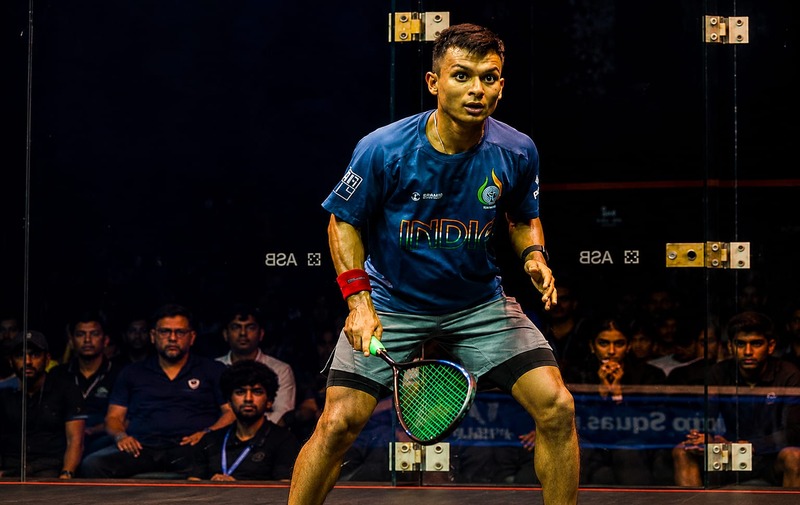
India Strikes Gold! Suraj Kumar Chand Wins FISU World University Squash Title
India has another reason to celebrate on the global sporting stage. Suraj Kumar Chand produced a sensational performance to win the men's singles title at the 2026 FISU World University Championship Squash, defeating Hungary's Benedek Takacs in a gripping five-game final. Competing before an electrified home crowd in Mumbai, the Indian star held his nerve in the decisive game to claim a memorable 3-2 victory and etch his name in the history books.Representing both India and Somaiya Vidyavihar University, Suraj's triumph marked one of the biggest achievements for Indian university squash in recent years.A Final Worthy of ChampionsThe championship clash had everything fans could ask for—intensity, drama and breathtaking rallies. Suraj and Takacs traded games in a fiercely contested battle, leaving the score locked at 2-2 after four games. With the pressure mounting and the home supporters cheering every point, Suraj produced his finest squash when it mattered most.Displaying remarkable composure, precision and attacking flair, he dominated the deciding game 11-4, sealing the match 3-2 and sparking jubilant celebrations around the venue. The victory was especially significant as it came on home soil, making the moment even more memorable for the Indian star.Following the victory, an emotional Suraj described the triumph as one of the most memorable moments of his career. Winning a world title in front of a home crowd, he said, was a dream come true and thanked everyone who had supported him throughout his journey.A Global Stage for Student AthletesThe 2026 FISU World University Championship Squash brought together talented student-athletes from 14 countries, showcasing the growing standard of university-level squash around the world. Hosted in Mumbai by Somaiya Vidyavihar University in collaboration with the Association of Indian Universities (AIU) and supported by the Squash Rackets Federation of India (SRFI), the championship celebrated sporting excellence, international friendship and healthy competition.In the women's singles event, Spain's Marta Dominguez Fernandez defeated Hong Kong China's Ching Hei Fung in straight games to win the title.With the singles competition concluded and the team events now underway, Suraj Kumar Chand's triumph highlights the rising strength of Indian squash on the international stage and serves as an inspiration for young athletes dreaming of representing the country.



 (1).jpeg)
.jpg)
.jpg)
.jpg)
.jpg)
.jpg)
.png)
















 (1).jpeg)
.jpg)
.jpg)


.jpg)
.jpg)