
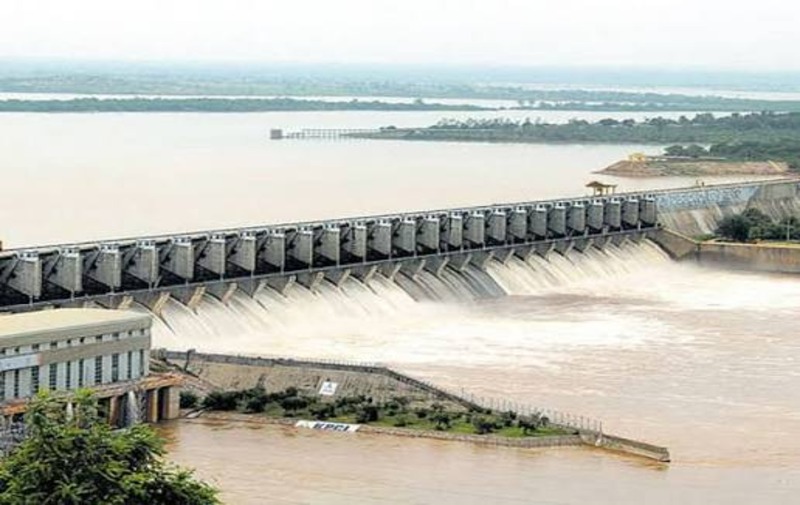
India’s Largest Urban Reservoir Is Rising in Amaravati, Powering Its ‘Blue City’ Dream
Andhra Pradesh’s Amaravati is taking a major step towards becoming a climate-resilient capital, with an ambitious water infrastructure network taking shape across the region.At the centre of this vision is the Neerukonda reservoir, a vast man-made water body spread across nearly 440–450 acres and designed to hold around 0.4 TMC of water. The reservoir is being developed primarily to capture and store rainwater, helping Amaravati reduce its dependence on external water sources while preparing the city for a changing climate.With around 30% of the work completed, the project is expected to be ready by next March, according to officials.But Neerukonda is only one piece of a much larger puzzle.An Entire Network, Not Just One ReservoirAmaravati’s emerging ‘Blue City’ concept involves a network of reservoirs and canals designed to work together as an integrated water-management system.The Penumaka reservoir, planned with a capacity of around 0.1 TMC, and the Shakamuru reservoir, spread across roughly 50 acres with a capacity of 0.03 TMC, will add to the region’s water-management capabilities. Upcoming reservoirs at Lam, Pedaparimi and Vykuntapuram are expected to further expand the network.The interconnected system is being planned to capture excess rainwater, manage stormwater and strengthen the capital region’s ability to deal with intense monsoon rainfall.Turning Floodwater Into a ResourceThe project’s significance goes beyond simply storing water.During periods of heavy rain, the reservoirs and canals can help moderate flood flows, potentially reducing pressure on urban areas. At the same time, stored rainwater can support groundwater recharge and contribute to long-term water availability. In a rapidly developing capital city, such infrastructure could become crucial to maintaining water security as population and urban activity grow.The vision also incorporates substantial green spaces. Plans include around 158 acres of landscaping and public spaces around the reservoir, bringing ecological and recreational elements into the infrastructure project.Where Water Meets TourismOfficials see the integrated flood-control and tourism infrastructure as having the potential to transform Amaravati into a major urban tourism destination.Water bodies, landscaped areas, canals and public spaces could create new recreational zones while adding to the visual character and livability of the emerging capital. As Amaravati develops, the project offers a glimpse of a city where water management, urban planning, green infrastructure and tourism are designed to work together.The idea is simple but powerful: rather than treating rainwater as a seasonal challenge, Amaravati is building infrastructure to make every drop part of the city’s future.




.jpg)











.jpg)


 (1).jpeg)