Shaurya Chakra for Courage at Sea: Navy Women Honoured for Historic Global Voyage
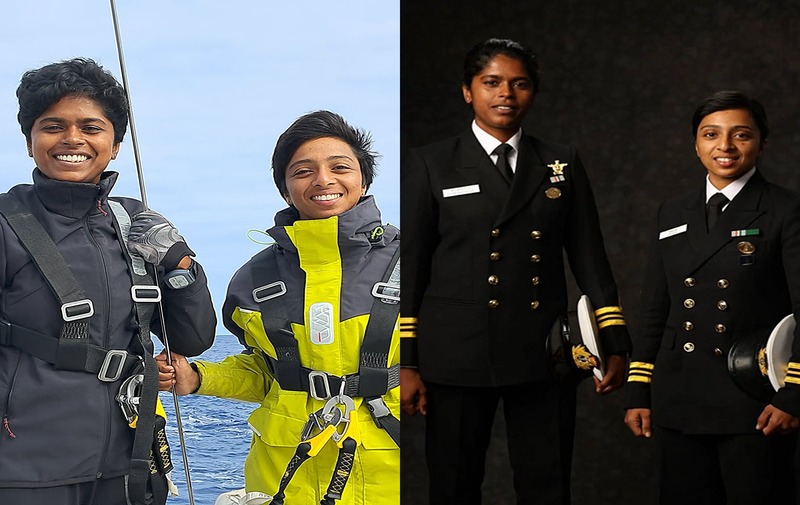
On the vast, unforgiving oceans of the world, where isolation tests the strongest minds and nature shows no mercy, two Indian Navy women officers carved their names into history. Lieutenant Commander Dilna K and Lieutenant Commander Roopa A were awarded the Shaurya Chakra, one of India’s highest peacetime gallantry awards, for their extraordinary courage and leadership during Navika Sagar Parikrama II—a historic, double-handed circumnavigation of the globe powered only by wind. Their achievement is not just a naval milestone; it is a human story of perseverance, self-belief, and breaking barriers.Navika Sagar Parikrama II: A Mission Like No OtherNavika Sagar Parikrama II was conceived as an ambitious Indian Navy expedition to push the limits of small-crew, long-distance sailing. Beginning on October 2, 2024, the voyage saw Lt Cdr Dilna K and Lt Cdr Roopa A set sail on an eight-month journey around the world, covering over 21,600 nautical miles, roughly 40,000 kilometres, without any external assistance. Sailing in double-handed mode, involving only two sailors managing the vessel round-the-clock, the officers relied solely on wind power and their seamanship skills. No escort vessels, no resupply, and no rescue backup—just the open ocean and unwavering resolve. When their sailboat reappeared on the Goan horizon on May 29, the nation quietly witnessed history: the first Indian duo to circumnavigate the globe in double-handed sailing mode.Facing the World’s Harshest SeasThe journey was as dangerous as it was historic. The duo navigated some of the most treacherous waters on Earth, including the notorious Drake Passage, where the Atlantic, Pacific, and Southern Oceans collide in violent weather systems. During the Pacific crossing, they faced a total power failure, stripping the vessel of vital systems. In complete isolation, they repaired and managed the boat manually, relying on training, teamwork, and presence of mind. Each decision carried life-or-death consequences, especially in regions thousands of kilometres away from human help. One of the most remarkable highlights was their sail to Point Nemo, the oceanic point farthest from land. Becoming among the first Indians to reach Point Nemo by sailboat, the officers experienced absolute solitude, an emotional and psychological test few humans ever face.From Non-Sailors to Global PathbreakersWhat makes this achievement even more compelling is that neither officer came from a traditional sailing background. Lt Cdr Dilna K, hailing from Kozhikode, Kerala, joined the Indian Navy as a logistics officer in 2014. A gifted sportsperson, she is a nationally recognised shooter and has represented the Kerala state cricket team. Her connection to the Armed Forces runs deep—her father, Devadasan, was an Army officer, instilling discipline and service values early in her life. Lt Cdr Roopa A, a native of Pondicherry, joined the Navy in 2017 as part of the armament inspection cadre. An aeronautical engineering graduate, she worked with National Aerospace Laboratories, Bengaluru, before choosing a life in uniform. Her father, Alagirisamy G P, served in the Indian Air Force, making her journey a continuation of a proud legacy. Neither grew up dreaming of ocean races. Yet both proved that excellence is built through learning, persistence, and courage not background.Recognition of Gallantry and National PrideFor their extraordinary bravery, resilience, and leadership, Lt Cdr Dilna K and Lt Cdr Roopa A were awarded the Shaurya Chakra by President Droupadi Murmu on the eve of the 77th Republic Day. Their award was part of a larger list of gallantry honours approved for 70 Armed Forces personnel across the Army, Navy, and Air Force. Earlier, in 2023, the duo had already earned the Admiral Ramdas Trophy, instituted by the Yachting Association of India, recognising their excellence in sailing. The Shaurya Chakra, however, elevated their journey from sporting achievement to a national act of bravery.Why Gallantry Awards Matter: Honouring Courage, Inspiring a NationGallantry awards like the Shaurya Chakra are essential because they recognise courage that often unfolds far from public view, in silence, isolation, and extreme risk. They honour not just success, but the willingness to face danger with responsibility and selflessness in service of the nation. Such awards inspire future generations by showing that bravery is not limited to battlefields, it exists wherever duty demands sacrifice, leadership, and moral strength. By acknowledging these acts, the nation preserves its values, reinforces faith in its institutions, and reminds its people that courage, resilience, and commitment to duty are worth celebrating and remembering. The Shaurya Chakra is one of India’s highest peacetime gallantry awards. It is given to members of the Armed Forces, paramilitary forces, and sometimes civilians for acts of extraordinary bravery, courage, or self-sacrifice performed outside the battlefield.Women at the Forefront of India’s Naval PowerThe impact of Navika Sagar Parikrama II goes far beyond nautical charts. The officers were chosen to command the Indian Navy’s tableau at the Republic Day Parade 2026, symbolising the expanding role of women in frontline naval operations. They will also march as part of the Navy’s contingent down Kartavya Path, carrying their story before the entire nation. Their voyage stands as a powerful reminder that modern warfare, exploration, and leadership are no longer defined by gender, but by capability and courage. Navika Sagar Parikrama II has redefined India’s maritime ambitions and set a new benchmark for small-crew, long-distance expeditions. More importantly, it has given young Indians especially young women a living example of how courage, preparation, and belief can carry them across any ocean. Lt Cdr Dilna K and Lt Cdr Roopa A did not just sail around the world. They expanded the horizon of what India dares to dream.










.jpg)




.png)