
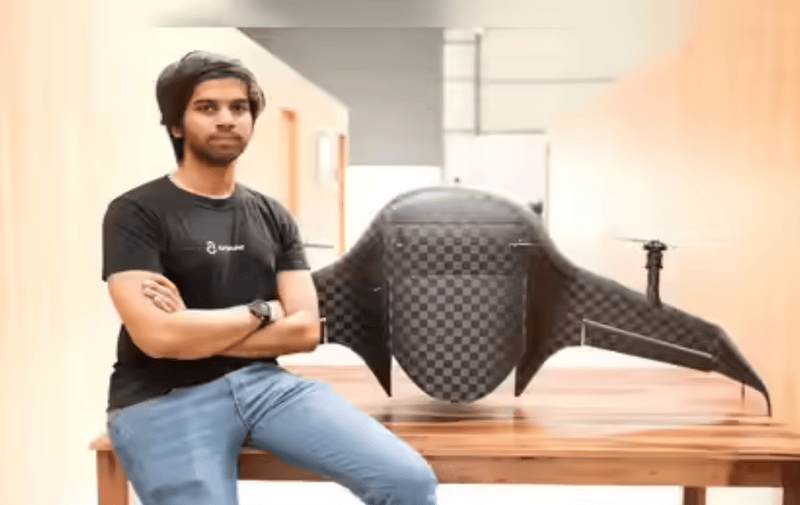
Naman Pushp: This Young Indian Is Solving a Problem Most of Us Never Notice
Naman Pushp is trying to solve one of the biggest inefficiencies in modern logistics. The young entrepreneur is the founder of Airbound, a deep-tech startup developing highly efficient drones that could dramatically reduce the cost of last-mile delivery. The company has already raised nearly $10 million from leading investors, including Lightspeed Venture Partners, Lachy Groom, Humba Ventures, and senior leaders from Tesla, SpaceX and Anduril.Yet, for Naman, the funding is merely fuel for a much bigger mission—to transform how goods move through cities.A Passion That Took Flight in ChildhoodNaman's fascination with robotics began much earlier than most. While living in Malaysia, he started building simple robots in the fifth and sixth grades using ultrasonic sensors. After returning to India, his curiosity only intensified. By middle school, he was competing in robotics competitions, but he soon realised that real learning happened beyond ready-made kits.Instead of assembling pre-packaged components, he began experimenting with steel, aluminium, electronics and mechanical systems to build robots entirely from scratch. Then came the pandemic.While many students struggled with disrupted schooling, Naman immersed himself in online learning. He taught himself computer-aided design (CAD), mechanical engineering concepts, advanced robotics and connected with engineering communities across the world. Watching young founders build breakthrough technologies sparked a simple yet life-changing thought: "If they can do it, why can't I?"The Drone That Changed EverythingThat question led him to discover Zipline, the African drone delivery company transporting medical supplies to remote regions. Inspired, Naman initially set out to build an open-source drone platform that anyone could improve upon. But as he dug deeper into drone engineering, the project evolved into something much bigger.At just 16 years old, he unveiled his "Open Drone" at a hackathon, winning $500. Every rupee went into building his first serious prototype. Today, that original drone still hangs proudly on the wall of Airbound's office, a reminder that every big idea starts somewhere.Soon after, early believers began backing him. Grants from the 1517 Fund, Grad Capital, and Emergent Ventures allowed him to continue building without depending on family finances. Solving a Problem Hidden in Plain SightAirbound isn't simply building drones, it is rethinking logistics. Today, delivering a one-kilogram parcel often requires transporting an 80 kg rider on a 120 kg motorcycle. Nearly 200 kg of mass moves just to deliver a tiny package.Naman believes there's a smarter way. He is developing drones that weigh only around 2 kg and are designed to transport small parcels while consuming a fraction of the energy. Airbound aims to slash delivery costs from approximately ₹2 per kilometre to just 10 paise, a leap that could redefine last-mile logistics.The company is developing an innovative blended-wing, tail-sitter drone architecture focused on efficiency rather than chasing perfection. For Naman, solving the core problem matters more than optimising every engineering detail.Building More Than DronesAirbound's vision extends well beyond package delivery. Ultra-affordable drone logistics could reshape cities by allowing restaurants, pharmacies and businesses to separate production from customer-facing spaces. Kitchens could operate from highly efficient locations while food reaches customers almost instantly.The drones are also designed to become "invisible infrastructure"—quiet, high-flying and minimally disruptive, much like the internet quietly powers modern life. The startup has already begun pilot projects with health clinics in Bommasandra, Bengaluru, testing how drone logistics can improve real-world operations.Dreaming Bigger Than Catching UpPerhaps the most inspiring part of Naman's journey isn't his technology—it's his mindset. He constantly asks, "Why doesn't this work?" instead of accepting limitations. Every obstacle becomes an engineering challenge waiting to be solved. His advice to aspiring innovators reflects the philosophy that shaped his own journey: move beyond kits, build real systems, make mistakes and learn from them.For Naman Pushp, India's ambition shouldn't be to catch up with the world. It should be to lead it. And judging by the remarkable journey of this 21-year-old innovator, that future may already be taking flight.