The Women Behind Vikram-1: Meet the Brilliant Engineers Powering India’s Private Space Revolution
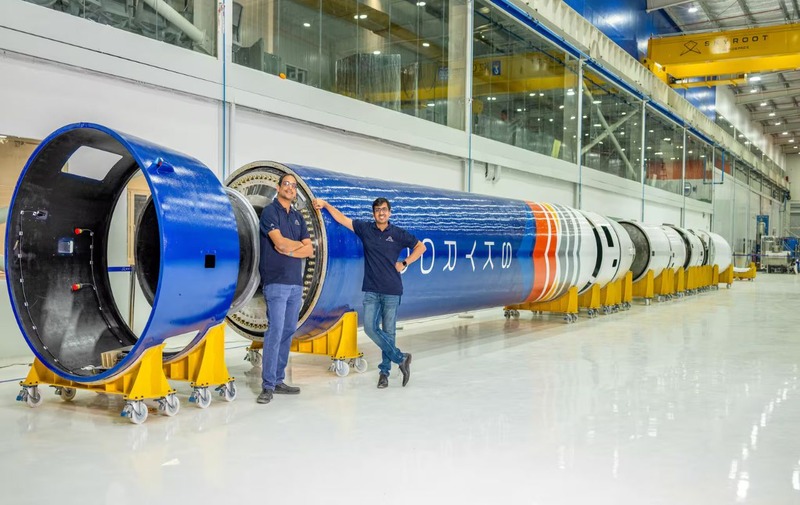
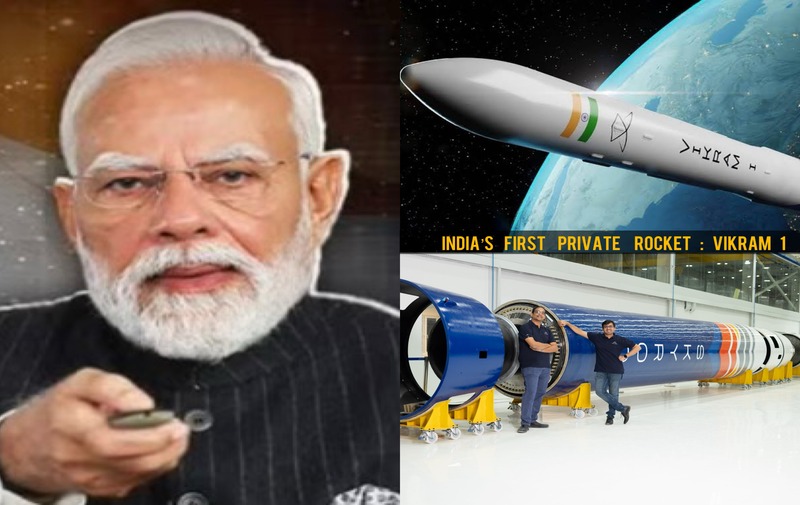
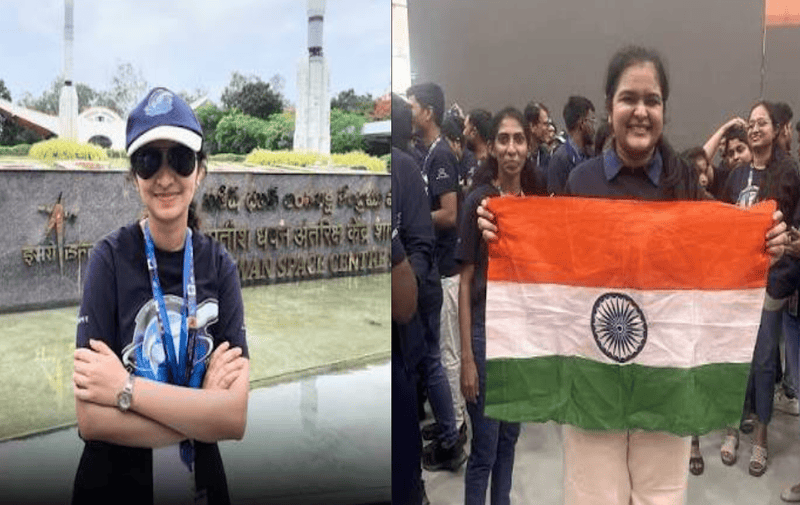
When Vikram-1, India’s first privately developed orbital rocket, roared into the skies, it marked a defining moment for the country’s rapidly growing private space sector. While the successful launch was celebrated across the nation, two remarkable women quietly stood behind one of India’s biggest space milestones, ensuring the rocket flew safely, accurately, and flawlessly.One wrote the software that powered the mission computer. The other built the autopilot that kept the rocket on course. Together, Spatika Prasad and Pruthvi Sanghani are inspiring a new generation of young Indians.Spatika Prasad: The Mind Behind Vikram-1’s Mission SoftwareEvery successful rocket launch begins long before liftoff, with thousands of lines of carefully engineered code. That responsibility rested, in part, with Spatika Prasad, an IIT Madras BS Degree Programme learner who worked as an Embedded Software Engineer at Skyroot Aerospace.As part of the Vikram-1 team, Spatika contributed to the mission computer software, one of the rocket's most critical systems. Her work included developing and testing the flight sequence software, conducting pre-launch ground checks, and performing onboard hardware-in-the-loop simulations to ensure every stage of the mission executed precisely as planned.These systems act as the rocket's digital brain, coordinating complex launch events with split-second precision. Reflecting on the achievement, Spatika described witnessing the successful launch as one of the proudest moments of her career.Spatika credited the IIT Madras BS Degree Programme stating that the strong foundation she gained in programming, data science, and analytical thinking had played a significant role in shaping her problem-solving abilities.Her journey is only accelerating. According to reports,this August, she will begin a Master's in Electrical Engineering at Eindhoven University of Technology (TU/e), Netherlands, taking her passion for aerospace and technology onto the global stage.Pruthvi Sanghani: The Engineer Who Kept Vikram-1 on CourseIf Spatika helped the rocket think, Pruthvi Sanghani helped it fly. Serving as the Control System Lead in Skyroot Aerospace's Guidance, Navigation and Control (GNC) team, Pruthvi played a vital role in designing and developing Vikram-1's autopilot system for Mission Aagaman.The autopilot continuously calculates the rocket's position, orientation, and trajectory, making rapid adjustments to ensure it follows its intended path with remarkable precision. It's among the most demanding engineering challenges in aerospace and Pruthvi was entrusted with leading it.Pruthvi pursued engineering in Rajkot before earning a Master's degree in Missile Technology in Pune. She later joined DRDO, contributing to India's missile programmes as a Project Engineer before bringing her expertise to Skyroot Aerospace.The stories of Spatika and Pruthvi reflect a larger transformation taking place in India's space ecosystem.As private companies like Skyroot Aerospace push technological boundaries, talented young engineers are finding opportunities to contribute directly to missions that once belonged exclusively to government agencies. Lighting the Way for Future Space ExplorersVikram-1 represents more than India's first private orbital rocket. For every young girl fascinated by science, mathematics, coding, or space exploration, Spatika Prasad and Pruthvi Sanghani offer powerful proof that those dreams are achievable. One helped create the intelligence that powered the mission.The other built the guidance system that steered it to success. Together, they helped propel not just a rocket, but India's growing confidence as a global space innovation leader.As Vikram-1 soared into orbit, it carried with it a message that will inspire generations: the future of India's space journey will be shaped by brilliant minds, fearless innovators, and women who dare to reach for the stars.