Not Just a Rakhi, But a Promise: Jharkhand Women Vow to Protect Their ‘Brothers’
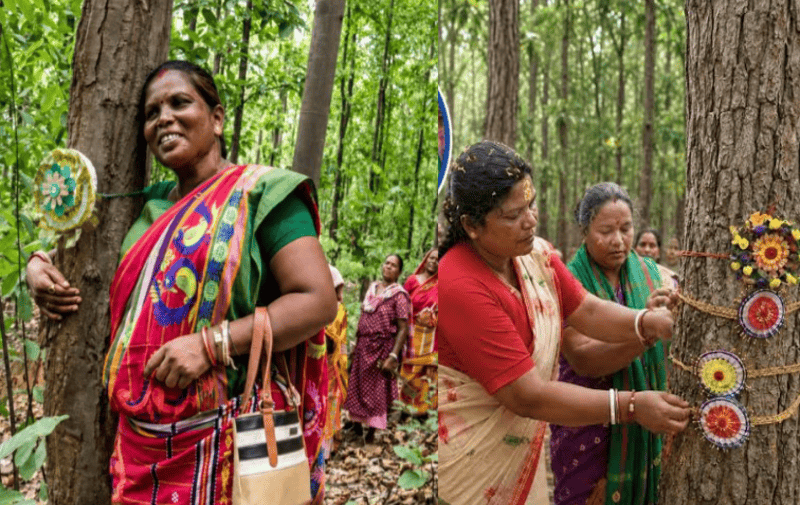
In the forests of East Singhbhum, Raksha Bandhan took on a deeply green meaning.On August 27, hundreds of tribal women gathered in the Bhalukbinda-Sunsunia forest area of Chakulia, dressed in traditional attire, to celebrate the festival with their “brothers”—the towering Sal trees.Led by Padma Shri awardee and environmentalist Jamuna Tudu, the women performed puja and aarti before tying colourful rakhis around tree trunks. Their message was simple yet powerful: they would protect the trees just as a sister protects her brother.The women pledged to prevent illegal tree felling and safeguard the forest and its wildlife.A Rakhi With a PromiseFor these women, the rakhi was far more than a festive thread. Tudu said the rakhis were tied wishing for the long life of the trees, accompanied by a collective vow that they would not allow them to be cut.The celebration also echoed with traditional music and dance as the women performed to the beats of the mandar and dhamsa. Chakulia police station in-charge Rajesh Kumar, who attended the event as chief guest, also joined the initiative by tying a rakhi to a tree.The ‘Lady Tarzan’ Who Fought for the ForestFor Jamuna Tudu, the ritual is deeply personal. Often known as the “Lady Tarzan of Jharkhand,” Tudu moved to Muturkham village after her marriage in 1998. What she witnessed in the surrounding forests disturbed her—trees were being felled on a large scale, threatening the ecosystem and communities dependent on it.She refused to stand by. Tudu joined hands with local women and helped establish the Van Suraksha Samiti, a forest protection committee. What began as a small grassroots effort eventually grew into a community movement protecting thousands of hectares of forest.Her remarkable work earned her the Padma Shri in 2019 for her contribution to the environment.A Tradition That Keeps GrowingThe green Rakhi tradition extends beyond East Singhbhum. It reportedly began in 2004 in Lukaiya village of Dhanbad’s Tundi block, where villagers turned Raksha Bandhan into an annual pledge to protect trees. The initiative has since spread to thousands of villages. In Lukaiya alone, more than 20,000 Mahua trees have reportedly been protected.This year, the campaign aims to involve villagers from hundreds of villages in tying rakhis to lakhs of trees across Jharkhand. For these communities, forests are not merely patches of green. They are intertwined with livelihood, culture, identity and survival.And this Raksha Bandhan, their rakhis carried a message that reaches far beyond the forest: if nature protects us, perhaps it is time we protected na