First Steel Bridge for India’s Bullet Train Installed in Maharashtra
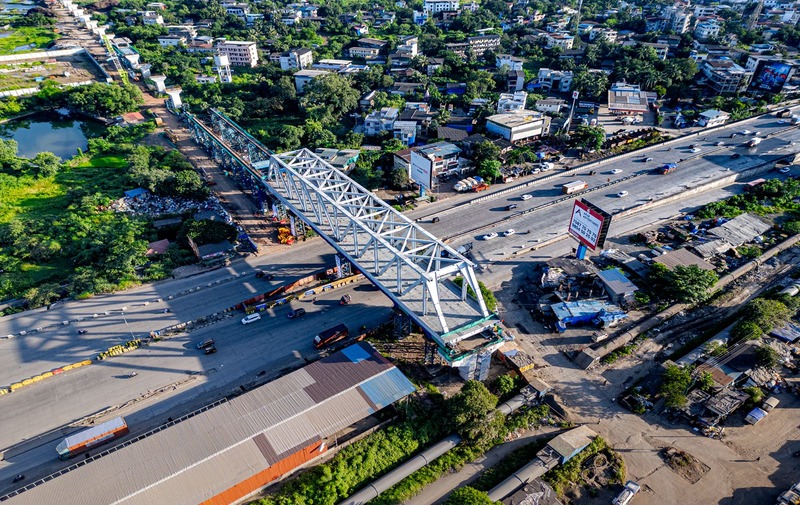
India’s Mumbai-Ahmedabad Bullet Train project has reached another striking milestone in Maharashtra.The first steel bridge of the high-speed rail corridor in the state has been successfully launched over NH-3, the Nashik Highway, at Dive-Anjur village in Bhiwandi, Thane district. Measuring 100 metres long, 14 metres wide and 14 metres high, the massive structure weighs around 1,405 metric tonnes. It was installed during night-time traffic blocks to reduce disruption for highway commuters.The bridge is one of the many large structures being built to help the bullet train corridor cross existing highways, expressways, railway lines and major rivers.From Trichy to MaharashtraWhat makes the project particularly interesting is the journey the bridge components undertook before reaching Maharashtra.The steel structure was fabricated at a specialised workshop in Trichy, Tamil Nadu, nearly 1,300 km away from the installation site. Its components were then transported to Maharashtra on trailers, where they were assembled before being moved into their final position. At the site, the bridge was assembled on temporary trestles positioned about 17.5 metres above the ground.A Carefully Engineered OperationLaunching a structure weighing more than 1,400 tonnes over a busy highway required precision. The completed bridge was pulled into position using an automated system featuring two hollow jacks, each capable of handling 150 tonnes, along with pre-tensioned Macalloy bars.The bridge also features a C5 protective painting system designed to improve durability and elastomeric bearings to help manage vibration. According to a report in The Times of India, before reaching the site, the steel components underwent detailed fabrication processes, including precision cutting, drilling, welding and painting. Each batch of steel was subjected to ultrasonic testing, while certified welders and supervisors were involved in the work.More Steel Bridges on the WayThe National High-Speed Rail Corporation Limited (NHSRCL) said the achievement reflects India’s growing capability to manufacture, transport and install complex steel structures for high-speed rail infrastructure. And this is only one part of a much larger engineering effort. The Mumbai-Ahmedabad High-Speed Rail corridor has 28 planned steel bridges, of which 16 have now been completed.As construction progresses, these bridges will play an important role in carrying India’s first bullet train across some of the country’s busiest transportation corridors.