
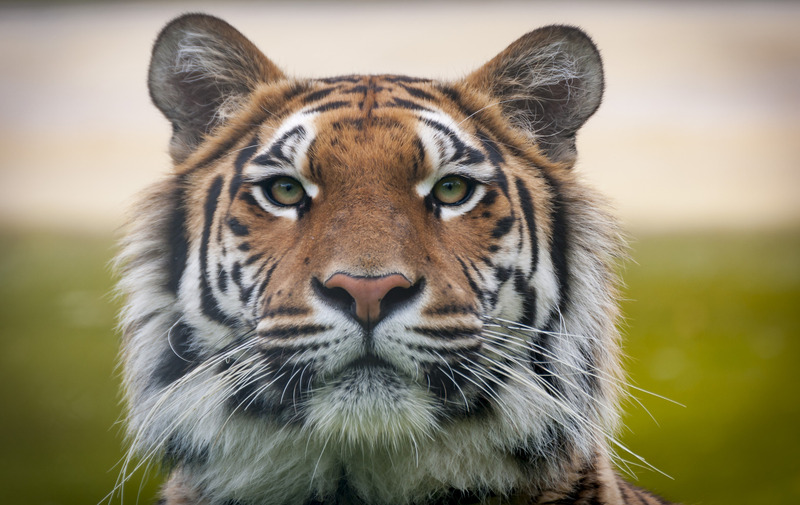
95 Nations, One Mission : India Set To Host The First-Ever Big Cat Summit
When a tiger disappears from a forest, something far larger than an animal is lost. A silence spreads through ecosystems, cultures, and communities that have lived alongside big cats for centuries. It is this growing urgency that has pushed conservation beyond borders, and now, India is preparing to place that urgency at the centre of the global stage. In a landmark announcement during the Union Budget 2026–27, Finance Minister Nirmala Sitharaman revealed that India will host the first-ever Global Big Cat Summit, bringing together heads of government and ministers from 95 big cat range countries. The summit is not just another international meeting; it signals a shift in how the world approaches wildlife conservation: collectively, cooperatively, and with shared responsibilityA Global Gathering with a Singular FocusThe inaugural Big Cat Summit will be organised under the banner of the International Big Cat Alliance (IBCA) and is expected to convene world leaders, policymakers, conservation experts, and senior officials from across Asia, Africa, the Americas, and Eurasia. These 95 countries together host the planet’s remaining populations of big cats, many of which are under severe threat. The discussions will centre on habitat protection, coordinated anti-poaching efforts, climate change impacts, and cross-border conservation strategies. For species that roam across national boundaries such as snow leopards in Inner Asia or tigers in South and Southeast Asia, no single country can succeed alone. The summit aims to turn that reality into a framework for action.Why India, Why Now?India hosting the summit is no coincidence. The country is home to the largest population of wild tigers in the world, a conservation success story built over decades through initiatives like Project Tiger, launched in 1973. Against a global backdrop of declining wildlife populations, India’s tiger numbers have steadily risen, offering both hope and hard-earned lessons. In recent years, India has also taken bold steps such as the reintroduction of cheetahs, a species declared extinct in the country in 1952. These efforts have positioned India not merely as a participant in conservation, but as a global leader willing to experiment, learn, and share. By hosting the Big Cat Summit, India is signalling that conservation leadership is no longer just about protecting what lies within borders it is about shaping global solutions.The International Big Cat Alliance: From Vision to TreatyThe summit builds on the growing role of the International Big Cat Alliance, launched by Prime Minister Narendra Modi on April 9, 2023. What began as a vision for collaboration formally came into force on January 23, 2025, when the Alliance became a treaty-based intergovernmental organisation with international legal status. The IBCA aims to promote cooperation among big cat range countries, encourage knowledge-sharing, mobilise funding, and align conservation strategies. Its evolution into a legal entity gives teeth to its ambitions, allowing member nations to move beyond statements of intent toward coordinated action. Source: The Wire Science Understanding the Big Cats and Why They MatterThe term “big cat” typically refers to large members of the Felidae family, especially those in the genus Panthera—the tiger, lion, leopard, jaguar, and snow leopard, all capable of roaring. While the cheetah and puma do not belong to this genus, they are often included due to their size and ecological importance. Big cats are more than apex predators. They are flagship and umbrella species, meaning their protection safeguards entire ecosystems. When forests are preserved for tigers or snow leopards, countless other species from insects to trees benefit alongside them. Protecting big cats, therefore, is a shortcut to protecting biodiversity itself. By bringing 95 countries together, India is reframing conservation as a shared human responsibility, not a national burden. Climate change, habitat fragmentation, and illegal wildlife trade do not stop at borders, and neither can solutions.Beyond the Summit: Conservation Meets CommunitiesThe Budget announcement also highlighted India’s broader conservation vision. Plans to develop ecologically sustainable mountain trails across Himachal Pradesh, Uttarakhand, Jammu and Kashmir, the Eastern Ghats, and the Western Ghats reflect a model where conservation and livelihoods coexist. Similarly, the development of turtle nesting sites into eco-tourism trails in Odisha, Karnataka, and Kerala underscores a growing emphasis on community-linked conservation. These initiatives recognise a simple truth: wildlife survives best when local people see value in protecting it. If successful, the summit could redefine global conservation, cooperation, turning isolated efforts into a united front. And if the roar of the big cat continues to echo through forests and mountains, it may well be because nations chose, at this moment, to act together rather than alone.