
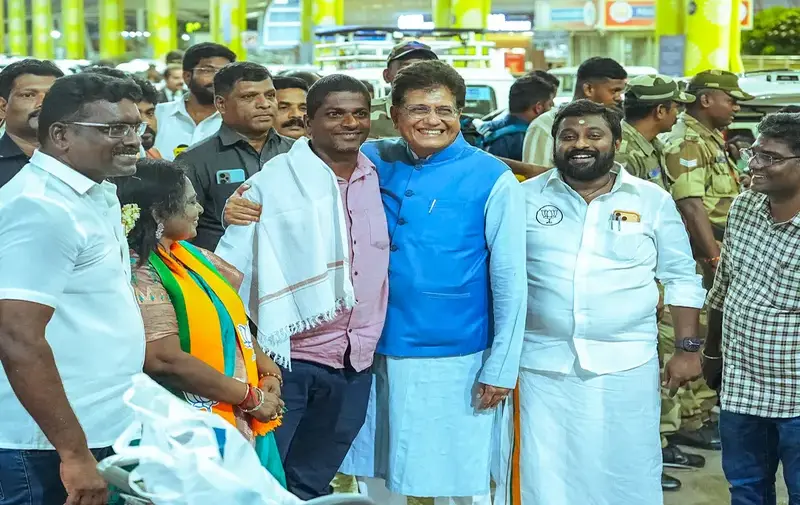
Piyush Goyal Welcomes Home 345 Stranded Fishermen from Iran: Tears, Hugs and a Nation’s Care
At the bustling terminals of Chennai International Airport, what unfolded was more than just an arrival; it was an emotional reunion that touched the soul of a nation. Families waited with anxious eyes, hearts racing, and prayers whispered under their breath. And then, one by one, they saw their fathers, sons, and brothers returning home after days of uncertainty. For the 345 Indian fishermen who had been stranded in Iran amid escalating tensions in West Asia, this was not just a journey back. It was a return to life, to love, and to the comfort of home. Welcoming them was Piyush Goyal, whose presence symbolised not just a formal reception but the collective embrace of an entire nation.A Crisis Far From HomeWhen conflict erupted in parts of West Asia, including Iran, these fishermen found themselves caught in a situation far beyond their control. Far from their homeland, surrounded by uncertainty, and cut off from normalcy, they faced days filled with anxiety and fear. Most of them, hailing from the coastal regions of Tamil Nadu, had ventured out simply to earn a living. Their lives, like countless others, depended on the sea. But this time, the sea led them into a crisis zone. Communication was limited, resources were strained, and the thought of returning home seemed distant. Yet, even in those difficult moments, hope remained alive.A Nation That Doesn’t Forget Its PeopleBack home, the wheels of action were already in motion. The Ministry of External Affairs worked tirelessly, coordinating with international authorities to ensure the safe evacuation of every stranded Indian. This was no ordinary operation. It required precision, diplomacy, and relentless effort. The fishermen had to undertake a long and exhausting journey—traveling nearly 20 hours through multiple countries, including Armenia, before finally boarding flights back to India. Behind the scenes, officials worked day and night, driven by a single mission: bring every Indian home safely. And they succeeded.A Journey Marked by Strength and SurvivalFor the fishermen, the journey back was not easy. It was physically draining and emotionally overwhelming. Every mile traveled carried the weight of uncertainty, but also the hope of reunion. When they finally landed in Chennai, the exhaustion on their faces was visible but so was relief. Relief that they had made it. Relief that they were safe. Relief that they were home. For many, it was the first time in days that they could truly breathe. Describing the moment, Piyush Goyal called it a “joyous day” and rightly so. It was a day when families were reunited, when tears of fear turned into tears of happiness, and when uncertainty gave way to gratitude. Beyond Borders: India’s Commitment to Its CitizensThis rescue effort is proof of something deeper than logistics or governance. It reflects a fundamental belief that every Indian life matters, no matter where in the world it may be. Whether it is through diplomatic negotiations, coordinated evacuations, or round-the-clock efforts by officials, the message is clear: India stands by its people. Even as tensions impacted global shipping routes like the Strait of Hormuz and uncertainties loomed large, India ensured not just the safety of its citizens but also the continued movement of essential supplies through its vessels. This balance between global responsibility and human care highlights the strength of a nation that values both.In times of crisis, a nation reveals its true character. This moment, simple yet profound, reflects the essence of India not just as a country but as a collective of people bound by care, responsibility, and compassion. It shows that governance is not just about policies but about people. That strength is not just measured in power but in empathy. And above all, it is a reminder that beyond borders, beyond politics, beyond everything, what truly matters is humanity.