
Powered by the Sun: IIT Madras Team Set for India’s First Sasol Solar Challenge in South Africa
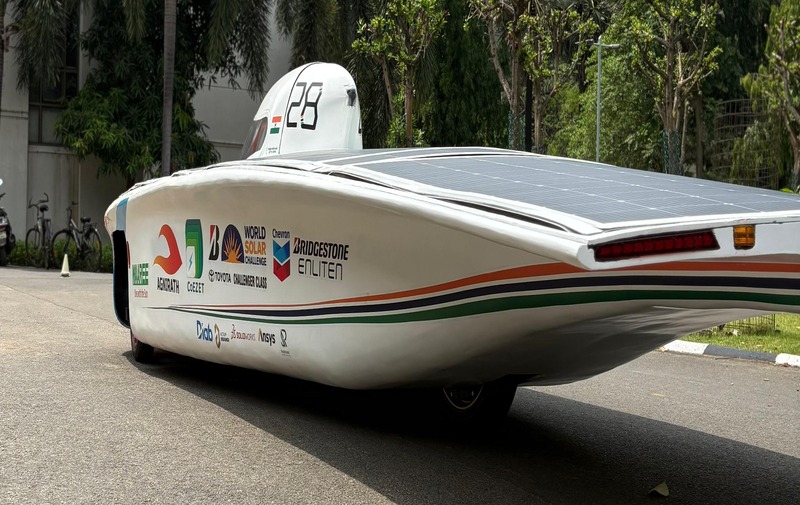
A futuristic vehicle gleams under the lights of a workshop at IIT Madras. With its sleek design, aerodynamic body, and cutting-edge technology, it looks like it belongs in a science fiction movie. But this machine is very real, and soon, it will carry India's ambitions onto the global stage.For the first time ever, an Indian team will participate in the prestigious Sasol Solar Challenge in South Africa. Representing the nation is Team Agnirath, a passionate group of engineering students from IIT Madras who are preparing to compete in one of the world's toughest renewable-energy races.Scheduled from September 10 to 17, the eight-day challenge will see teams travel approximately 2,300 kilometres from Johannesburg to Cape Town using vehicles powered primarily by the sun.More Than a Race Against SpeedUnlike traditional motorsport events where speed is king, the Sasol Solar Challenge rewards strategy, endurance, and engineering brilliance.Teams can only drive between 8 a.m. and 5 p.m. each day. The objective is simple yet demanding: cover the maximum possible distance within eight days. The team that travels the farthest wins."This is an endurance-based race, not a normal speed-based race," explained Team Director Pranav Adhityaa D. "Whatever the maximum distance covered in the stipulated eight days, that team is the winner." Every decision on the road matters. Teams must carefully balance speed and energy consumption while continuously harvesting solar power. A burst of acceleration could cost precious energy, while excessive caution might sacrifice valuable kilometres.A Glimpse Into the Future of MobilityAt the heart of Team Agnirath's mission lies a bigger goal than winning medals. The project is an exploration of what future transportation could look like.While electric vehicles have become a symbol of cleaner mobility, they still depend on charging stations and power grids. Solar-powered vehicles offer an exciting alternative by generating electricity directly from sunlight while moving. Mounted with high-efficiency solar panels, the vehicle functions like a moving power plant, converting sunlight into usable energy throughout the journey.Learning From Setbacks, Building a Better MachineTeam Agnirath's road to South Africa has been shaped by valuable lessons from previous international competitions. During their participation in Australia's World Solar Challenge, the team encountered a major obstacle. Their vehicle consumed energy faster than it could generate, forcing multiple stops and affecting performance.Instead of viewing it as a defeat, the students treated it as an opportunity to innovate. Over the last year, they redesigned critical systems, enhanced solar-panel efficiency, optimised battery performance, and refined the vehicle's energy-management strategy.As Team Agnirath prepares for the long journey from Johannesburg to Cape Town, the students are doing far more than competing in a race. They are showcasing Indian engineering talent, innovation, and the country's growing commitment to sustainable technology. Their solar-powered vehicle represents a bold vision of the future, one where transportation relies less on fossil fuels and even less on external charging infrastructure.