
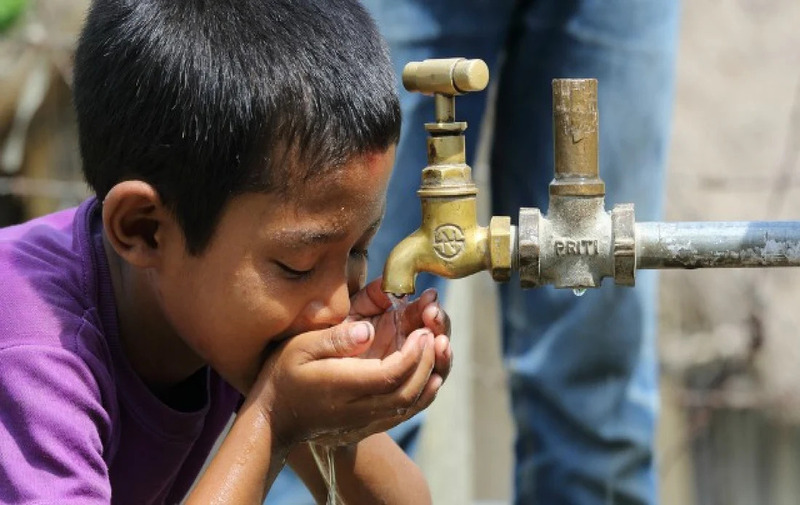
How Puri Became India's First City Where You Can Drink Water Straight from the Tap
For millions of Indians, drinking water straight from the tap remains unthinkable. Purifiers, bottled water, and endless boiling have become part of everyday life. But in the temple city of Puri, Odisha, a quiet revolution is changing that narrative.Today, residents and visitors in Puri can turn on a tap and drink the water directly, without filtering, boiling, or second-guessing its safety. The city has become India's first to provide continuous 24x7 BIS-certified drinking water to every household, setting a benchmark for urban water management across the country.The transformation recently caught national attention after industrialist Anand Mahindra highlighted Puri's achievement on social media, calling it a powerful example of what can happen when leadership, execution, and community participation work together.A City Once Struggling for Every DropThe achievement becomes even more remarkable when viewed against Puri's past. Just a decade ago, the city faced challenges familiar to many Indian towns. Only about half of its households had access to piped water. Residents frequently depended on water tankers or bottled supplies, while concerns over contamination remained common.Adding to the problem, nearly half of the city's water was reportedly lost through leakages caused by aging and damaged pipelines. Irregular supply and poor infrastructure made reliable access to safe drinking water a daily struggle. Recognising the urgency of the situation, the Odisha government launched a comprehensive overhaul of Puri's water distribution system.Technology Meets Public ServiceThe city underwent a massive infrastructure upgrade that included laying thousands of kilometres of pipelines and creating a smart, round-the-clock water distribution network. But this wasn't just about replacing pipes.Authorities integrated advanced Internet of Things (IoT) technology into the system. Sensors installed across the network continuously monitor water flow, pressure, and chlorine levels every few seconds, allowing officials to detect leaks, quality issues, or disruptions in real time.Water drawn from the Bhargavi River passes through multiple treatment stages before reaching homes. It is filtered, chlorinated, ionized, and rigorously monitored throughout its journey. The result is a reliable supply of safe drinking water reaching nearly 2.5 lakh residents every day.The benefits extend far beyond local households. Puri welcomes around 20 million tourists annually, many of whom now enjoy access to safe public drinking water while visiting the city's famous religious and cultural landmarks.The Women Behind the RevolutionWhile technology laid the foundation, trust became the key to success. That trust was built by an extraordinary group of women known as Jal Sathis.Serving as community ambassadors for water quality, these local women regularly visit households, collect and test water samples, and educate residents about the safety of the new system. Their role extends beyond technical monitoring. They have become the bridge between government initiatives and public confidence. Through regular interaction and awareness campaigns, Jal Sathis helped convince residents that the water flowing through their taps was genuinely safe to drink. Puri's achievement is about more than clean water. It demonstrates how modern technology, effective governance, and grassroots participation can solve long-standing urban challenges. It also highlights the powerful role women can play in driving community-led change. As cities across India search for sustainable solutions to water scarcity and quality concerns, Puri offers a compelling blueprint.