
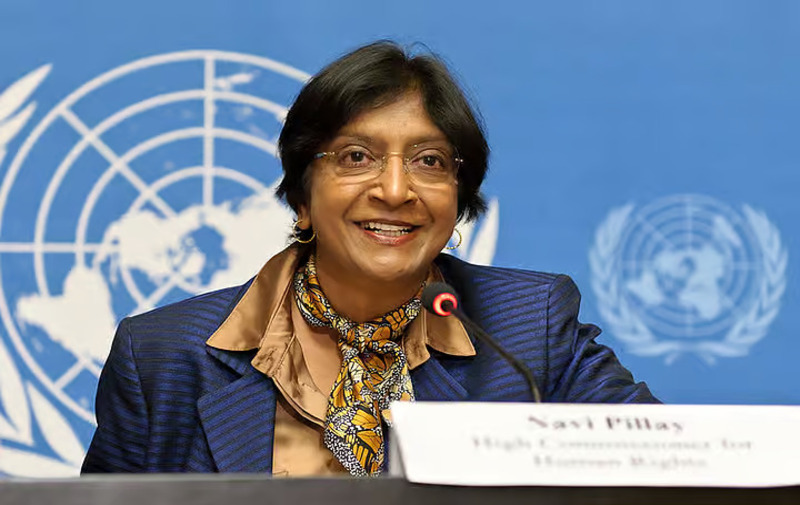
Indian-Origin Jurist Navi Pillay Wins 2026 Nobel Peace Prize for Championing International Justice
Born in Durban, South Africa, into a family of Indian Tamil origin, Navanethem “Navi” Pillay grew up during the apartheid era, when racial discrimination shaped everyday life. Her journey from these unequal beginnings to some of the world’s most important legal institutions reflects a lifelong commitment to justice.Pillay, 85, has reportedly been awarded the 2026 Nobel Peace Prize for her efforts to strengthen international law and ensure that war crimes, crimes against humanity and genocide are prosecuted.Her legal career broke barriers early. In 1967, she became the first woman to establish a law practice in Natal and later became the first non-white woman to serve on South Africa’s High Court.Taking Justice Beyond BordersPillay’s work has extended far beyond South Africa. She served as a judge at the International Criminal Tribunal for Rwanda and the International Criminal Court, and later became the United Nations High Commissioner for Human Rights.Across these roles, she helped advance the principle that even the most powerful individuals must be held accountable for grave crimes. Her contribution to international justice includes landmark rulings recognising that rape and sexual violence can constitute acts of genocide and crimes against humanity. She also played a role in legal efforts to prosecute incitement to genocide through propaganda.These developments helped bring greater recognition to victims whose suffering had too often been overlooked, while strengthening the legal tools available to pursue accountability.She is also serving as a judge at the International Court of Justice in proceedings concerning allegations of genocide against Myanmar over the treatment of the Rohingya. These proceedings highlight the role international courts can play in addressing allegations of the gravest crimes. According to the Nobel citation described in the announcement, Pillay’s career demonstrates how international law can help resolve conflicts peacefully, protect victims and hold states and leaders accountable.Why Her Work MattersFrom defending those who opposed apartheid to serving on international courts, Pillay’s career has carried a consistent message: justice must not depend on power or position. The reported Nobel recognition also comes amid concerns about the weakening of international institutions and the growing influence of power politics over the rule of law.Her journey is a reminder that lasting peace requires more than the absence of conflict. It requires accountability, the protection of human rights and a justice system capable of standing up to power.Keywords: Navi Pillay, 2026 Nobel Peace Prize, international law, human rights, apartheid, genocide, International Court of Justice, crimes against humanity