
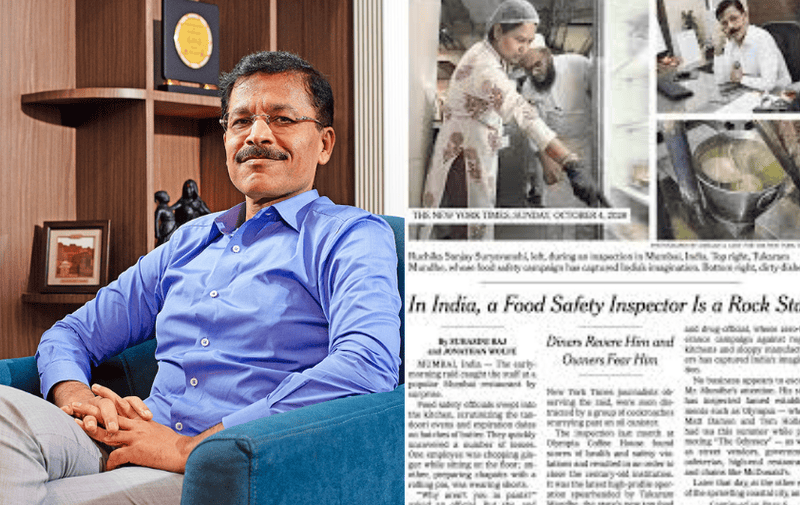
Tukaram Mundhe Makes New York Times Front Page as India’s ‘Food Safety Rock Star’
A Maharashtra bureaucrat known for his no-nonsense approach to food safety has now found himself on one of the world’s most recognised newspaper front pages.Tukaram Mundhe, Commissioner of the Maharashtra Food and Drug Administration (FDA), has been featured on the front page of The New York Times under the headline “In India, a Food Inspector Is a Rock Star.”The accompanying strap says it all: “Diners revere him and owners fear him.”Known for his strict enforcement of food safety regulations, Mundhe has become a familiar name among diners and food businesses following a series of surprise inspections across Maharashtra.The ‘IAS Singham’ EffectMundhe, who is often referred to as “IAS Singham”, has built a reputation for taking action against establishments accused of violating food safety norms. Since being appointed Maharashtra FDA commissioner earlier this year, his department has carried out inspections at restaurants, food outlets, warehouses and quick-commerce dark stores.Several establishments have faced temporary closures or licence suspensions following these inspections. Among the high-profile businesses to face action were outlets of Domino’s and Pizza Hut, where inspections reportedly found issues.Several well-known legacy food businesses in Mumbai have also come under the FDA’s scrutiny.Mundhe’s crackdown has extended beyond traditional restaurants. FDA teams have also inspected dark stores operated by quick-commerce companies such as Blinkit and Zepto. Officials reportedly found alleged food safety violations at some locations, including expired products and the presence of pests.The inspections have brought a part of the food supply chain that consumers rarely see directly into the spotlight. For diners, that has made Mundhe an unlikely celebrity.Why Diners Are Paying AttentionFood safety can often remain invisible until something goes wrong. Mundhe’s highly publicised inspections have changed that conversation, putting kitchen hygiene, expired products and storage practices firmly in the public eye.The New York Times described him in its online report as a “food safety celebrity”, examining how his enforcement drives have transformed a government official into a public figure.While food businesses have faced the consequences of violations, Mundhe’s approach has also earned support from consumers who want greater accountability from establishments serving the public.