
Frozen Secrets: India's Chandrayaan-2 Detects Hidden Ice in Lunar South Pole Craters
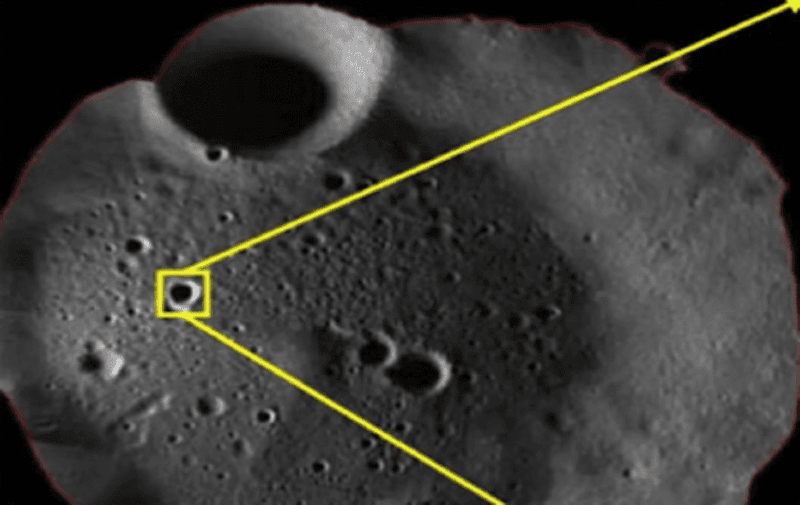
India’s lunar ambitions have just received a massive scientific boost. Scientists working with Chandrayaan-2 have discovered strong evidence of subsurface ice hidden beneath some of the coldest and darkest regions on the Moon, a breakthrough that could redefine the future of space exploration.The discovery was made using radar data collected by the Chandrayaan-2 orbiter, which has been circling the Moon since 2019. Researchers from the Physical Research Laboratory (PRL) in Ahmedabad analysed the data and published their findings in the prestigious journal npj Space Exploration.What they found was extraordinary: traces of ice buried beneath the floors of “doubly-shadowed” craters near the Moon’s south pole, places where sunlight has never reached for billions of years.The Moon’s Darkest Places May Hold Its Greatest TreasureThese aren’t ordinary craters. Some lie inside larger craters that are already permanently in darkness, creating ultra-cold pockets known as “doubly-shadowed” regions. Temperatures in these hidden lunar pits can plunge to an astonishing minus 248 degrees Celsius, making them some of the coldest places in the solar system. Such extreme conditions are ideal for preserving ice over geological timescales.Unlike visible frost or surface snow, this ice is believed to lie underground, trapped beneath layers of lunar soil and rock. Scientists say it may have remained untouched for billions of years.Chandrayaan-2’s Radar Vision Makes the Impossible PossibleThe discovery was made possible by Chandrayaan-2’s highly advanced instrument called the Dual Frequency Synthetic Aperture Radar (DFSAR), described by ISRO as the first fully polarimetric radar system designed specifically to study the Moon.According to a report in The Times of India, instead of taking photographs, the radar sends microwave signals toward the lunar surface and studies how they bounce back. Ice reflects these signals differently from ordinary rock or dust, allowing scientists to identify possible hidden deposits beneath the surface.According to ISRO, radar signatures from four of the nine craters studied strongly indicate the possible presence of subsurface ice. One crater, however, stood out above the rest.A Tiny Crater with a Huge Story to TellA small crater just 1.1 kilometres wide, located inside the larger Faustini crater, showed the clearest signs of buried ice. Scientists noticed unusual radar readings along with a striking physical feature, a flowing, lobed rim structure around the crater. Such formations are believed to occur when an impact strikes icy ground, causing a slushy outward flow before rapidly freezing again.Researchers believe a meteorite impact may have pierced through underground ice, leaving behind this rare frozen signature. This combination of radar evidence and visible surface morphology has made the crater one of the most exciting lunar sites identified so far.Why Lunar Ice Could Change the Future of Space TravelThe discovery goes far beyond scientific curiosity. Water is one of the most valuable resources in space. Transporting water from Earth is enormously expensive and difficult. If astronauts can extract ice directly from the Moon, it could provide drinking water. This would allow future lunar bases to become more self-sustaining and could transform the Moon into a launchpad for deeper space missions.That is why the Moon’s south pole has become the centre of a growing global space race. NASA’s Artemis programme, China’s lunar missions and India’s future plans are all focused on this mysterious icy frontier.Chandrayaan-2 may have faced setbacks during its landing attempt in 2019, but its orbiter continues to deliver world-class science years later. This latest discovery strengthens India’s position as a major force in planetary exploration and highlights the long-term value of the mission.The Moon may appear silent and lifeless from afar, but deep within its frozen shadows, India may have uncovered the fuel for the next great era of exploration.