
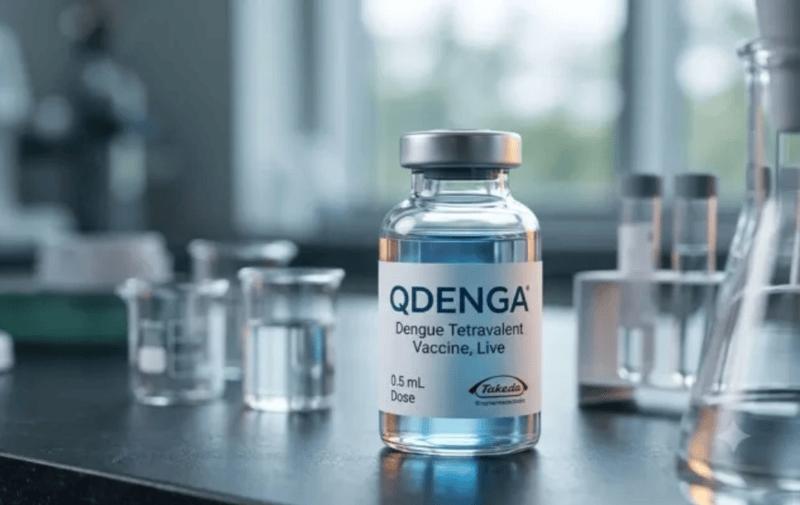
First-Ever Dengue Vaccine Approved in India: A Landmark Moment for Public Health
In a major breakthrough for public health, India has approved its first-ever dengue vaccine, marking a significant step in the country's battle against one of its most persistent mosquito-borne diseases.The Drug Controller General of India (DCGI) has granted approval to Takeda Biopharmaceuticals India's Qdenga, a vaccine designed to protect against all four dengue virus serotypes (DENV-1, DENV-2, DENV-3 and DENV-4). The approval comes at a time when dengue cases are rising rapidly across the country, offering fresh hope to millions living in vulnerable regions.One of Qdenga's biggest advantages is its simplicity. It can be administered regardless of whether a person has previously been infected with dengue and does not require pre-vaccination testing, making it easier to roll out on a large scale.Why This Vaccine Is a Game ChangerUnlike earlier dengue vaccines that required screening before administration, Qdenga is approved for individuals aged 4 to 60 years, irrespective of prior dengue exposure. The vaccine is given subcutaneously in two doses of 0.5 mL each, with the second dose administered three months after the first.Its broad protection against all four circulating dengue virus strains is particularly significant for India, where multiple serotypes often circulate simultaneously, increasing the risk of severe disease during repeat infections. According to Takeda, seven-year clinical data demonstrate sustained protection against dengue infections and dengue-related hospitalisations.A Timely Answer to a Growing Health ChallengeThe approval arrives as India faces an escalating dengue burden.Reported dengue cases have increased 11-fold over the past two decades, and India now accounts for nearly one-third of the world's dengue cases. While official figures recorded more than 113,000 cases in 2025, experts believe the true number of infections could run into tens of millions annually, as many infections go undiagnosed or unreported.Dengue has become a major public health concern in over 125 countries, but India's tropical climate, dense population, and monsoon-driven mosquito breeding make the disease particularly challenging to control. Health experts believe vaccination could become a crucial addition to existing preventive measures such as mosquito control, surveillance, and public awareness campaigns.Made for India, With IndiaAnother encouraging aspect of the approval is Takeda's manufacturing partnership with Hyderabad-based Biological E, which aims to produce up to 50 million doses every year.Although the vaccine's price has not yet been announced, domestic manufacturing is expected to make it more affordable for Indian families. Costs could become even lower if Qdenga is eventually included in government immunisation programmes. The local production partnership also strengthens India's vaccine manufacturing ecosystem while improving future availability.Backed by Global ConfidenceQdenga has already built a strong international track record. Since its global launch in 2022, the vaccine has received approval in 43 countries, with more than 32 million doses distributed worldwide.Adding to its credibility, it has also received World Health Organization (WHO) prequalification, confirming that it meets international standards of quality, safety, and efficacy. This recognition enables procurement through global agencies such as UNICEF and the Pan American Health Organization, expanding access worldwide.Takeda officials describe the approval as an important milestone for India's comprehensive dengue prevention strategy. Experts emphasise that while vaccination is a powerful new tool, it will work best alongside mosquito control, disease surveillance, sanitation, and community awareness.With dengue continuing to threaten millions every year, India's first approved vaccine represents more than just a medical innovation, it is a landmark step towards building a healthier, more resilient future.