
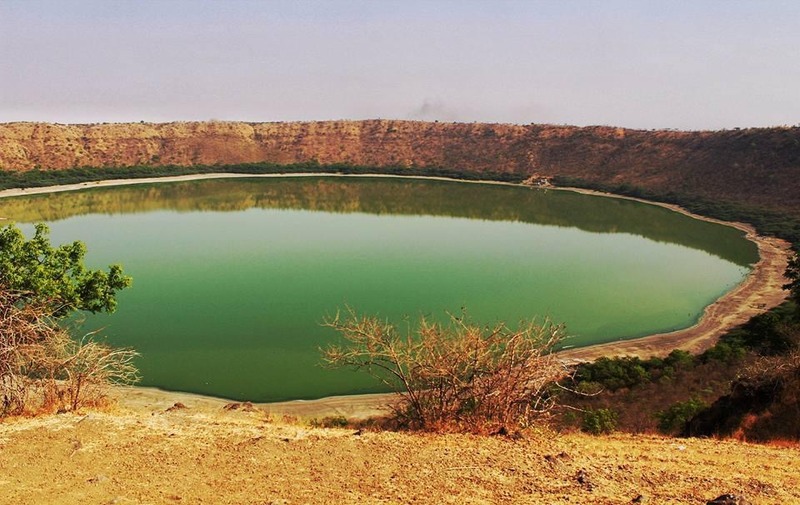
Maharashtra’s Lonar Lake Earns Place Among World’s Top 100 Geological Heritage Sites
A cosmic event that took place nearly 50,000 years ago has now earned global recognition! Maharashtra’s famous Lonar Crater Lake in Buldhana district has secured a place among the prestigious ‘Third 100 IUGS Geological Heritage Sites’, bringing international attention to one of the world’s most extraordinary geological wonders.With this distinction, Lonar Lake has become only the second site in India to receive the honour, celebrating its exceptional scientific importance and unique geological history.From a Meteorite Impact to a Global Geological WonderLocated in Maharashtra’s Buldhana district, Lonar Lake was formed when a meteorite struck the region approximately 50,000 years ago, creating a massive crater in the Deccan basalt rock formations.What makes this lake particularly remarkable is that it is considered the world's only major hypervelocity impact crater formed in basalt. Unlike ordinary freshwater lakes, Lonar has saline and alkaline water, making its ecosystem and geological composition especially fascinating to researchers.Over the years, its unusual rocks, minerals and soil have attracted scientists interested in understanding meteorite impacts and planetary geology. Some of its geological characteristics have even drawn comparisons with lunar materials, adding to its scientific significance.The lake is already recognised as a Ramsar site and a National Geological Monument, making this latest international honour another milestone in its journey.India Gets Its Second IUGS Geological Heritage SiteThe recognition has been granted by the International Union of Geological Sciences (IUGS), which identifies geological sites of outstanding scientific importance and their contribution to understanding Earth's history and evolution.The Geological Survey of India (GSI), under the Union Ministry of Mines, initiated Lonar's nomination for the distinction. The lake received preliminary approval during the 82nd IUGS Executive Committee meeting in Bogota, Colombia, in January 2026. Its inclusion was formally announced at the IUGS Geoheritage Event held in Portugal from November 4 to 8, 2026. The Ministry of Mines subsequently confirmed the achievement on November 13.Lonar is now India's second entry in the programme, following Meghalaya's Mawmluh Cave, which featured in the inaugural list announced in 2022.A New Chapter for Tourism and ConservationBeyond scientific recognition, the honour could open exciting opportunities for Maharashtra's tourism sector. Greater international attention is expected to attract geologists, researchers, students and travellers to Buldhana, creating opportunities for local communities through tourism-related activities.The recognition is also expected to strengthen conservation efforts aimed at protecting the lake's fragile ecosystem and preventing pollution. It could further support initiatives to pursue UNESCO World Heritage recognition for the site.For India, Lonar's achievement is more than an addition to a prestigious global list. It is a celebration of a remarkable natural wonder that holds clues to our planet's past while offering valuable opportunities for future scientific discoveries.