
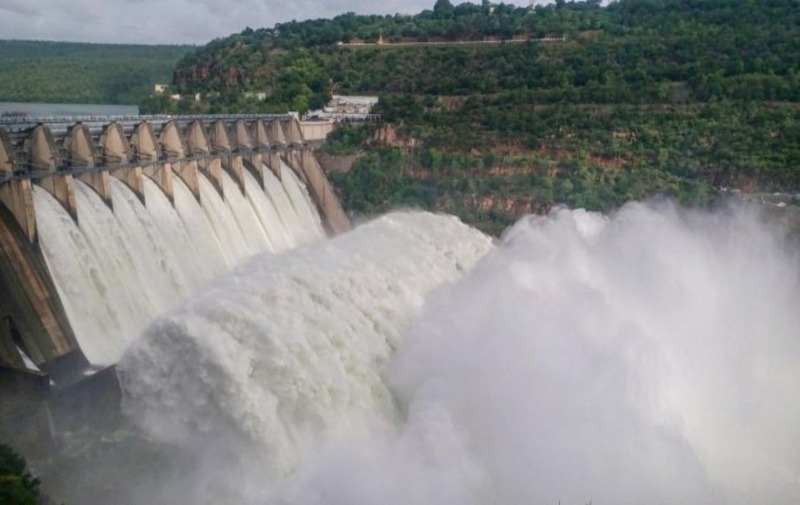
A Historic Decision for the Himalayas: Centre Says No to More Hydel Projects
In a decision that could redefine the future of India’s environmental policy, the Centre has informed the Supreme Court that no new hydroelectric projects will be permitted in the upper reaches of the Ganga basin in Uttarakhand. The move comes after years of debate, scientific warnings, devastating disasters, and relentless environmental activism surrounding the fragile Himalayan ecosystem.The Alaknanda-Bhagirathi basin, which is the main headstream of the Ganga, is among the most sensitive ecological regions in the country. Stretching through the towering Himalayas and lying entirely within Seismic Zones IV and V, the region faces constant threats from landslides, glacial lake outburst floods, avalanches, and tunnel collapses.Yet despite these risks, multiple hydropower projects had long been proposed in the area. Now, in what many environmentalists are calling a “watershed moment,” the government has decided to halt any further expansion.Supreme Court Battle That Began After Kedarnath DisasterThe issue has been under the Supreme Court’s scrutiny since the catastrophic Kedarnath floods of 2013, one of India’s deadliest natural disasters. The tragedy exposed the vulnerability of the Himalayan terrain and triggered nationwide concerns over unchecked infrastructure development in ecologically fragile regions.Following the disaster, the apex court examined whether large-scale hydroelectric projects were aggravating environmental risks in the upper Ganga basin. Expert committees were appointed to assess the situation. While Expert Body-II (EB-II) had cleared 28 hydropower projects, a later committee headed by the Cabinet Secretary reduced the number to five. However, the Centre has now rejected even those recommendations.In a joint affidavit filed by the Union Environment Ministry, along with the Ministries of Jal Shakti and Power, the government stated that the geological and ecological integrity of the Alaknanda and Bhagirathi basins must be protected at all costs.Why the Upper Ganga Is So FragileThe upper Ganga basin is not just another river valley; it is the lifeline of nearly half of India’s population. The headstreams originating here carry essential nutrients, biodiversity, and freshwater that sustain vast ecosystems downstream.The Centre cited four major reasons behind its decision:1. Extreme Seismic ActivityThe entire basin lies in highly active earthquake zones, making large infrastructure projects particularly dangerous.2. Geological InstabilityThe young Himalayan mountains are geologically unstable and prone to erosion, slope failures, and tunnel collapses.3. Disaster VulnerabilityThe region frequently experiences flash floods, avalanches, and glacial disasters that can intensify with heavy construction activity.4. Biodiversity ConcernsThe basin is home to endangered and Schedule-I species, along with unique river ecosystems that are highly sensitive to human interference.The government also emphasized the cumulative impact of multiple projects on the river’s natural flow and ecology.Seven Projects to ContinueWhile no fresh projects will be approved, seven hydropower projects that are already commissioned or are at an advanced stage of construction will continue. Of these, four are already operational, while three remain under construction.The Centre’s decision attempts to strike a balance between ongoing infrastructure commitments and ecological preservation, though environmental groups continue to stress the importance of minimizing further damage in the region.A Victory for Environmental CampaignsEnvironmentalists and river conservation groups have welcomed the decision as a major breakthrough after decades of protests and awareness campaigns.Many activists pointed out that repeated disasters in Uttarakhand have shown the heavy cost of disturbing fragile mountain ecosystems. They argue that the government’s reasoning should also apply to other ecologically vulnerable regions across India, including the Western Ghats and parts of the Northeast Himalayas.The decision is also being seen as an acknowledgment that rivers like the Ganga are not merely water resources but living ecosystems with immense cultural, spiritual, and environmental significance.A New Chapter for River ConservationThe Centre’s stand before the Supreme Court signals a shift in India’s development narrative, one where ecological security may finally begin to take precedence over aggressive infrastructure expansion in vulnerable zones.For the upper Ganga basin, this could mean cleaner rivers, safer mountains, and a more sustainable future for generations to come. As the Himalayas continue to face the pressures of climate change and rapid development, the decision may well become a landmark example of balancing progress with preservation.