
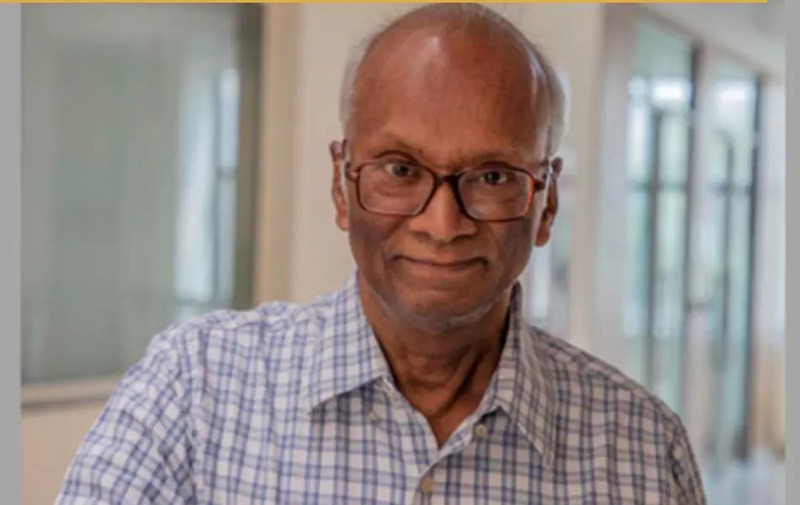
Theoretical Physicist Deepak Dhar Wins 2026 Dirac Medal, Joins Elite Circle of Global Physicists
India’s scientific community has another reason to celebrate. Theoretical physicist Deepak Dhar has been named a co-recipient of the 2026 Dirac Medal, one of the most distinguished honours in theoretical physics.Instituted in 1985 by the Abdus Salam International Centre for Theoretical Physics, the award honours scientists whose work has made outstanding contributions to theoretical physics. Named after legendary physicist Paul Dirac, the medal places Dhar among an illustrious group of researchers.At 75, Dhar has now achieved a particularly rare feat. He is among just ten physicists to have received both the Dirac Medal and the Boltzmann Medal. In 2022, he became the first Indian to win the Boltzmann Medal.Decades Ahead of His TimeDhar’s research delves into a deceptively simple question: How can basic interactions produce extraordinarily complex behaviour in large systems?His work has helped researchers model phenomena as diverse as earthquakes, traffic congestion and fluctuations in financial markets. The ideas may be highly mathematical, but their applications reach far beyond the world of theoretical physics.For Dhar, however, recognition is not the driving force. “We researchers do not work for medals or recognitions,” he told The Indian Express. What matters to him is that work conducted more than 25 years ago continues to remain relevant.From Uttar Pradesh to Global PhysicsBorn in 1951 in Pratapgarh, Uttar Pradesh, Dhar studied at the University of Allahabad and IIT-Kanpur before travelling to the United States for his doctoral studies at the California Institute of Technology (Caltech).There, he had the extraordinary opportunity to work as a teaching assistant to Richard Feynman, one of the most celebrated physicists of the 20th century.Unlike many scientists of his generation who built careers abroad, Dhar returned to India. He went on to spend decades pursuing fundamental research, including at the Tata Institute of Fundamental Research and Indian Institute of Science Education and Research Pune.He currently serves as an INSA Distinguished Professor at the International Centre for Theoretical Sciences in Bengaluru.Dhar believes India has made significant progress in creating opportunities for fundamental research, but says education must remain the foundation. He has particularly stressed the need to strengthen primary school education and cultivate scientific curiosity early.For young researchers, his own philosophy is refreshingly simple: information may be easier to access today, but genuine understanding still demands time, patience and deep interest.