
A Smarter Way to Cool Data Centers? NVIDIA's Breakthrough Could Make AI More Sustainable
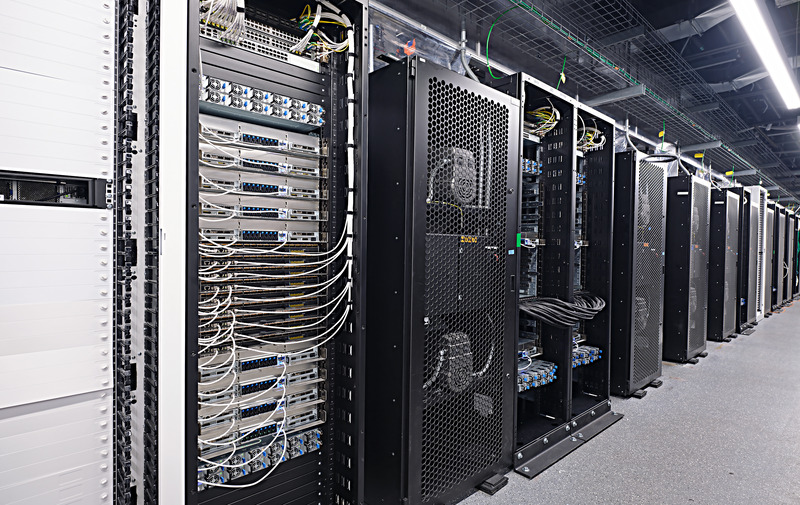
Artificial intelligence is transforming the world at an unprecedented pace—but behind every powerful AI model lies an enormous network of data centres that consume vast amounts of electricity and water. Now, NVIDIA believes it has found a way to tackle one of AI's biggest environmental challenges.The technology giant has unveiled a near-zero-water cooling system for its latest AI data centres, a breakthrough that could significantly reduce the industry's dependence on freshwater while improving efficiency and lowering operating costs.The innovation is part of NVIDIA's next-generation Rubin generation infrastructure, where traditional air cooling has been replaced with a fully liquid-cooled design capable of keeping some of the world's most powerful AI chips running without continuously consuming water.Cooling AI Without Wasting WaterConventional data centres generate enormous amounts of heat, requiring extensive cooling systems to prevent servers from overheating. Many facilities rely on cooling towers that consume millions of litres of water every year. NVIDIA's new approach takes a different path.According to a report in WION, instead of blowing cool air across servers, the system circulates coolant directly through sealed cold plates attached to AI chips. As the liquid absorbs heat, it flows through a closed-loop system, where it is continuously recirculated rather than discarded. The result is a cooling process that requires almost no fresh water during normal operations.According to NVIDIA, the liquid can safely operate at temperatures as high as 45°C (113°F)—even warmer than a typical hot tub. Because the coolant can function efficiently at higher temperatures, the system requires far less energy-intensive cooling equipment, further reducing electricity consumption.Ali Heydari, Director of Data Centre Cooling and Infrastructure at NVIDIA explained that the NVIDIA DSX reference design for AI factories has zero water consumption and they have managed to eliminate massive amounts of power usage and pretty much all water usage.The company notes that in regions where dry-cooling systems can effectively dissipate heat for most of the year, water consumption can be reduced to nearly zero. Only during brief periods of extreme weather or unusually high temperatures may additional cooling systems be required.Why It MattersThe announcement comes at a time when concerns over AI's environmental footprint are growing rapidly. As AI models become larger and more sophisticated, cloud computing companies are building increasingly powerful data centres. These facilities require enormous quantities of cooling, often competing with local communities for precious water resources. For residents living near new data centres, one question frequently arises: "Will this facility use our water?"That concern is becoming increasingly important as many regions around the world already face droughts, water shortages, and growing demand from agriculture and urban populations. By shifting toward closed-loop cooling systems, technology companies can reduce the pressure on local freshwater supplies while making AI infrastructure more community-friendly.If adopted widely, near-zero-water cooling may redefine how the world's AI factories operate—proving that the future of computing doesn't have to come at the cost of one of Earth's most precious resources.