
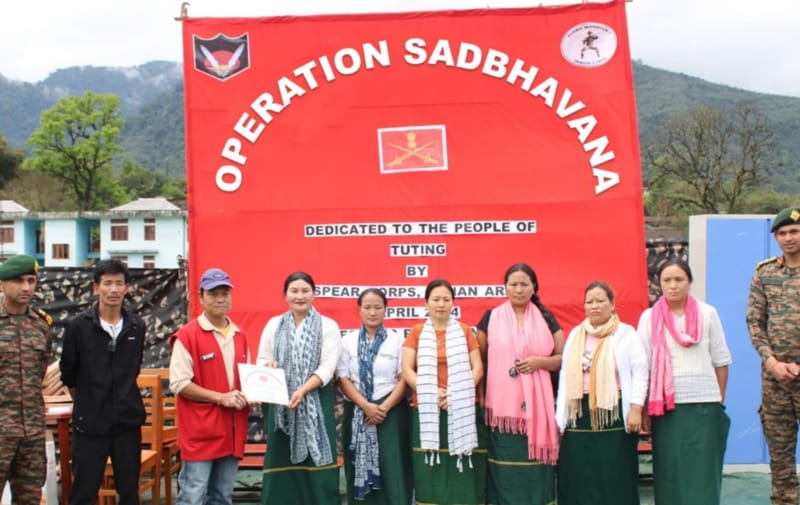
Operation Sadbhavana: When the Army Built Hope Beyond Borders
In regions where the sound of conflict once echoed through mountains and valleys, a quieter, more powerful transformation began to take shape. Operation Sadbhavana, meaning “goodwill,” is not just a government programme it is a story of healing. Launched in 1998 by the Indian Army, this initiative stepped beyond the boundaries of traditional military roles and entered the lives of ordinary people in Jammu and Kashmir, Ladakh, and parts of Northeast India. These were places where years of unrest had done more than damage infrastructure—it had shaken trust, broken communities, and left behind generations growing up without basic facilities. Schools were destroyed, bridges collapsed, and entire villages were cut off from healthcare and education. In such an environment, development was not just needed—it was urgent.Why Operation Sadbhavana Was BornThe origins of Operation Sadbhavana lie in a simple yet powerful realization: peace cannot exist without trust, and trust cannot grow without development. While the Indian Army was actively engaged in maintaining security and combating militancy, it understood that long-term peace required more than force. It required connection. Terrorist activities had disrupted daily life across Jammu and Kashmir. Basic infrastructure such as schools, electricity systems, and roads had been severely damaged. People were not only living in fear but also struggling for survival. The Army recognized that rebuilding these essentials would not only improve living conditions but also weaken the influence of militancy by offering people a better, more stable future.Rebuilding Through EducationOne of the strongest pillars of Operation Sadbhavana has been education. The Army established more than 40 Army Goodwill Schools across Jammu and Kashmir and Ladakh. These schools are not just buildings; they are safe spaces where children can learn, dream, and imagine a future beyond conflict. Thousands of students receive quality education in these institutions, often for the first time in their lives. The impact goes beyond textbooks. These schools instill discipline, confidence, and a sense of belonging. For many families, sending their children to these schools has become a symbol of hope. In addition to setting up new institutions, the Army has also renovated over 2,700 government schools. By providing facilities such as computers, libraries, and proper sanitation, it has helped bridge the gap between rural and urban education. In regions where education once seemed like a distant dream, it has now become a reachable reality.Healthcare Reaches the UnreachableHealthcare is another area where Operation Sadbhavana has made a deep impact. In remote areas like Ladakh, where harsh terrain and extreme weather make access difficult, medical facilities were almost nonexistent. For years, many villagers had never seen a doctor. The Army stepped in with regular medical and veterinary camps. In just one year, 2004, 163 medical camps were conducted, treating over 14,000 patients.These camps brought essential services directly to the people, addressing everything from basic illnesses to more serious health conditions. The human impact of these efforts is profound. For an elderly villager receiving treatment after years of neglect, or a child getting timely medical care, these camps are more than services they are lifelines. They represent care, compassion, and the reassurance that someone is looking out for them.Empowering Youth and WomenOperation Sadbhavana also focuses on building self-reliance among local communities. Recognizing that unemployment and lack of opportunity can make youth vulnerable to negative influences, the Army introduced skill development programmes. Young people are trained in various professions such as mechanics, tourist guiding, mountaineering, and sports. These skills not only provide income but also create a sense of purpose. A young man who once felt lost may now find direction as a trained professional, contributing positively to society. Women, too, have been empowered through training in traditional arts and vocational skills. These initiatives help them become financially independent and confident. In many cases, women who once had limited roles within their households are now active contributors to their communities.