
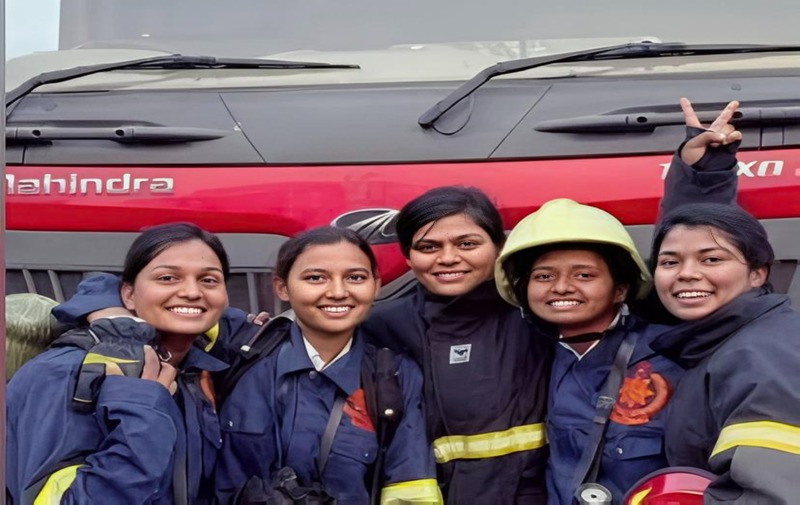
Breaking the Fireline: Karnataka Welcomes Its First Women Firefighters
For 84 years, the sirens wailed, the engines roared, and boots hit the ground, but they were always men’s boots. That is about to change. Karnataka is preparing to welcome its first batch of women firefighters, marking a historic turning point in the State’s Fire and Emergency Services Department. With the announcement of a 10% reservation for women in firefighting roles, the state has taken a decisive step toward rewriting a long-standing chapter of exclusion. What began in 1942 as a department operating under police control has grown into a vast emergency response network. Yet, in all these decades, women remained confined to administrative desks. Today, that narrative is shifting not quietly, but decisively.From “Fireman” to “Firefighter”: More Than a Name ChangeLanguage shapes perception. And perception shapes opportunity. The Karnataka government has proposed replacing the title “Fireman” with the gender-neutral “Firefighter” in official records and recruitment notifications. At first glance, it may appear to be a small semantic adjustment. In reality, it is a powerful signal. When a job title carries the word “man,” it subtly defines who belongs. A neutral title widens the door. It tells young girls that courage, strength, and resilience are not gendered traits. The State of Fire Services in KarnatakaKarnataka’s Fire and Emergency Services Department today operates 234 fire stations across the state, with an estimated workforce of over 3,000 personnel. The sanctioned strength stands at 7,159 posts, though only around 5,200 positions are currently filled. Over the decades, the department expanded from Bengaluru’s South and North divisions to cities such as Ballari, Hosapete, Mangaluru, Udupi, and Raichur. After the Karnataka Fire Force Act came into force in 1964, the department began functioning independently. The department’s responsibilities go far beyond battling flames. Teams respond to floods, road accidents, building collapses, chemical emergencies, and even animal rescues. As climate change intensifies extreme weather events, the workload continues to grow. Emergency response today demands not only physical strength but also emotional intelligence, adaptability, and technical expertise. Despite this evolution, women until now have been present only in administrative roles—handling accounts, clerical duties, and office work. Operational firefighting remained inaccessible due to recruitment rules that did not permit women to apply. The newly announced 10% quota aims to correct that imbalance.A Push from the CentreThe move did not emerge in isolation. During a meeting of the Union Ministry of Home Affairs, States were urged to bring more women into fire services. Karnataka has begun amending its recruitment rules accordingly, paving the way for women to enter operational roles long considered off-limits. Officials have confirmed that the recruitment framework and training details are currently being worked out. This transition will require adjustments in physical training modules, equipment considerations, and infrastructure readiness. However, other states such as Maharashtra, Delhi, and parts of Kerala have already demonstrated that women can successfully serve in frontline firefighting roles. Karnataka is not experimenting with an untested idea; it is aligning itself with a broader national and global shift toward gender-inclusive emergency services.Why Representation Matters on the GroundThe inclusion of women in firefighting is not merely symbolic. It carries practical, real-world implications. During rescue operations, particularly in cases involving women, children, or pregnant victims, sensitivity and comfort can play a crucial role. Currently, women victims are often carried out by male personnel. Advocates argue that trained female firefighters could handle such situations with greater empathy and cultural sensitivity, especially in conservative or vulnerable settings. Beyond this, diverse teams tend to perform better in crisis management. Emergency response demands communication, coordination, and psychological steadiness under pressure. These qualities are not gender-specific. By broadening participation, the department strengthens its overall capability. Moreover, visibility matters. When young girls see women in uniform responding to emergencies, it expands their imagination of what is possible. Representation in high-risk, high-respect professions challenges outdated stereotypes about physical and emotional capability.A Step Toward Equality, Not the Final DestinationWhile the 10% quota marks progress, it is only the beginning. True integration will depend on consistent recruitment, supportive training environments, and institutional commitment. Cultural shifts within the department will take time. Infrastructure and facilities must be made inclusive. Policies must translate into practice. Experts and activists argue that the exclusion of women from operational firefighting was inconsistent with Karnataka’s broader commitment to gender equality. By amending recruitment rules, the State acknowledges that change was overdue. As climate challenges grow and emergency services face mounting pressure, expanding the talent pool is both a moral and operational necessity.A New Chapter for KarnatakaAfter more than eight decades, the image of a firefighter in Karnataka is about to change. The uniform remains the same. The courage remains the same. The responsibility remains the same. What changes is who gets to wear it. In opening its fire stations to women, Karnataka is not just filling posts. It is correcting history, strengthening its emergency response system, and sending a powerful message about equality.