
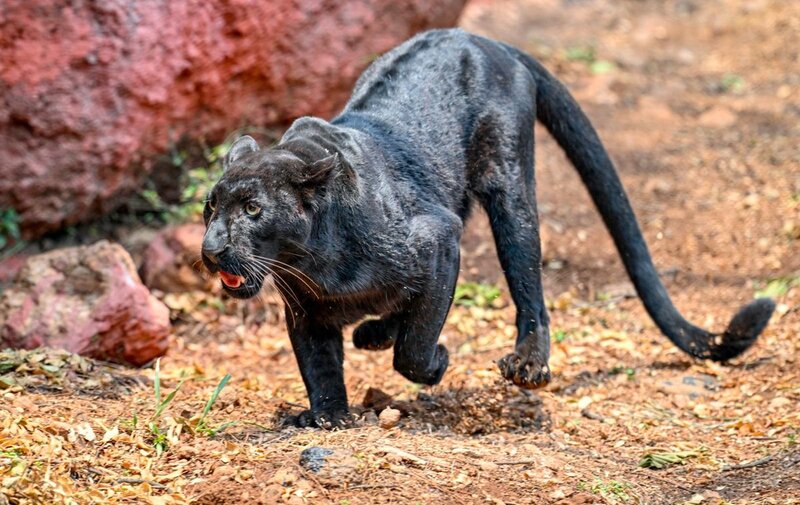
A Rare Return: Visakhapatnam Zoo Welcomes Back the Elusive Black Panther After 40 Years
In the quiet hours of a coastal morning, as sunlight filters through green canopies and birds echo across enclosures, something extraordinary unfolded in Visakhapatnam. After a gap of nearly 40 years, a female black panther stepped into a carefully prepared enclosure at the Indira Gandhi Zoological Park, marking a moment filled with awe and emotion. For many visitors, this was not just the arrival of a rare animal but the return of a forgotten chapter. The last time a black panther was seen here was in the mid-1980s, and its comeback now feels like a bridge between generations—those who remember and those who are witnessing it for the first time.A Journey Across IndiaThe story of this black panther begins far away in the lush greenery of Assam State Zoo-cum-Botanical Garden, the only breeding centre for black panthers in India. The animal was brought to Visakhapatnam on March 5, 2026, as part of an inter-zoo exchange programme approved by national authorities. Since its arrival, it was kept under careful quarantine, allowing it to adjust slowly to its new surroundings. Zoo officials ensured that every protocol was followed with precision, prioritising the animal’s health and comfort. On April 21, 2026, the panther was formally released into its enclosure by P. V. Chalapathi Rao, marking the official beginning of its new life in the city.More Than Just a Rare AnimalA black panther is not a separate species but a melanistic form of the leopard, its dark coat caused by an excess of melanin. This unique appearance gives it a mysterious, almost mythical presence. Known for its solitary and nocturnal nature, the black panther is rarely seen in the wild, making this sighting even more special for visitors. Watching such a creature up close sparks curiosity and wonder, especially among children, offering them a rare connection to wildlife beyond screens and textbooks.A Connection Beyond the EnclosureFor older residents of Visakhapatnam, the return of the black panther brings back memories of childhood visits—moments of excitement, curiosity, and fascination. For younger generations, it creates new memories that they will carry forward. Families standing together, watching the animal move silently across its enclosure, share a quiet sense of amazement. In that moment, the zoo becomes more than just a place; it becomes a space where people reconnect with nature and with each other.Strengthening Conservation EffortsThe arrival of the black panther is not just about public display; it is a step forward in conservation and education. Modern zoos play a vital role in spreading awareness about biodiversity and the importance of protecting natural habitats. Through initiatives like inter-zoo exchange programmes, institutions work together to ensure the survival and well-being of rare species. The presence of such animals helps people understand their role in maintaining ecological balance and the urgent need to protect them in the wild.A Symbol of Hope for the FutureIndia’s journey in wildlife conservation has come a long way, and moments like this reflect that progress. The return of the black panther to Indira Gandhi Zoological Park is not just about filling a four-decade gap; it is about inspiring awareness, curiosity, and responsibility. As the panther settles into its new home, it silently tells a powerful story: one of survival, care, and coexistence. And for every visitor who catches a glimpse of it, the experience becomes a reminder that protecting wildlife is not just the duty of a few but a shared responsibility of all.