
Arming the Villages: How Doda’s Locals Are Becoming the Chenab Valley’s First Line of Defence
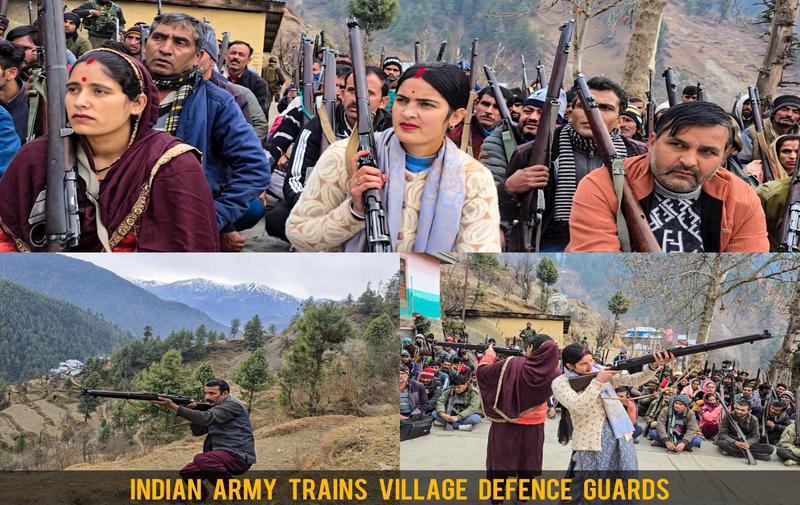
In the rugged and forested landscapes of Jammu and Kashmir’s Chenab Valley, security challenges have once again come into sharp focus. With suspected militant movement reported in the higher reaches of Doda and Kishtwar districts, the Indian Army has adopted a strategy that goes beyond conventional military operations. Alongside active counter-terrorist missions, it has begun strengthening grassroots security by training Village Defence Guards (VDGs) drawn from some of the most vulnerable and remote villages of the region. Around 150 volunteers from 17 villages along the Doda–Chamba border are currently undergoing intensive training at Shingini panchayat in the Bhalessa area, nearly 90 kilometers from the Doda district headquarters. These villages sit close to dense forests and mountainous terrain—areas that have historically provided cover and movement routes for militants. For residents who live far from major towns and security installations, this initiative represents not just training, but reassurance.Who Are the Village Defence Guards?Village Defence Guards are local volunteers raised to protect their own villages in sensitive border and hinterland areas. Over the years, they have served as a critical support system for security forces by providing intelligence, maintaining vigilance, and responding swiftly to suspicious activity. Unlike regular troops, VDGs know every trail, stream, and forest path in their surroundings. This local knowledge, when combined with structured training and better equipment, turns them into a formidable first line of defence. In the Doda district, the VDGs include farmers, daily wage workers, shopkeepers, and notably, women volunteers. Their participation underscores a growing belief that security is a shared responsibility, not limited by gender or profession.Training for Real-World ThreatsThe current training program is comprehensive and practical, designed to prepare volunteers for real-life scenarios they may encounter. The VDGs are being trained in handling automatic and self-loading rifles, minor combat tactics, self-defence techniques, bunker construction, and methods to repel enemy or terrorist attacks. Emphasis is placed on discipline, coordination, and quick response rather than aggression. Officials involved in the program say the goal is not to militarize villages but to ensure that residents can protect themselves until security forces arrive. In areas where terrain and weather can delay rapid deployment, these minutes can make the difference between safety and tragedy.Women at the Frontline of Community DefenceOne of the most powerful aspects of the training in Bhalessa is the participation of women. For many of them, joining the VDG program is deeply personal. Several have grown up hearing stories of violence, displacement, and fear. Standing on the training ground with a rifle in hand, they are not only learning self-defence but also reclaiming a sense of control over their lives. A woman volunteer from one of the remote villages shared that earlier, nights were filled with anxiety whenever news of militant movement surfaced. Upgraded Weapons, Renewed ConfidenceA significant morale booster for the VDGs has been the recent upgrading of their weaponry. The replacement of old .303 rifles with self-loading rifles (SLRs) has been widely welcomed. Volunteers have expressed gratitude to Union Home Minister Amit Shah for approving the upgrade, saying it has significantly enhanced their confidence and effectiveness. For villagers who may be the first to confront a threat, reliable weapons are not just tools; they are symbols of trust from the state. The upgrade sends a clear message that the government recognizes their role and is willing to invest in their safety.Complementing Counter-Terror OperationsSecurity officials emphasize that the VDG training is not a standalone measure but part of a broader, coordinated approach. While the Army, Police, and Paramilitary forces continue extensive search and cordon operations in the higher reaches of the Chenab Valley, trained VDGs act as vigilant eyes and ears at the village level. This approach is particularly important in the Doda and Kishtwar districts, where militants had managed to infiltrate a couple of years ago and exploit difficult terrain. By empowering locals, security forces aim to deny militants the anonymity and freedom of movement they often rely on.A Step Towards Long-Term PeaceOfficials believe that empowering villagers is essential for sustainable peace in Jammu and Kashmir. Security cannot rely solely on armed forces; it must also be rooted in community resilience and participation. When villagers feel secure and involved, they are more likely to resist extremist influence and support lawful authority. For the VDGs of Doda district, the training is about more than learning tactics. It is about dignity, responsibility, and hope. As one volunteer put it, “We want peace more than anyone else, because this is our home.” In a region often defined by conflict headlines, the sight of villagers, men and women, training together to protect their communities offers a quieter but powerful story. It is the story of ordinary people standing up, not out of hatred, but out of love for their land and a desire for a safer future.