
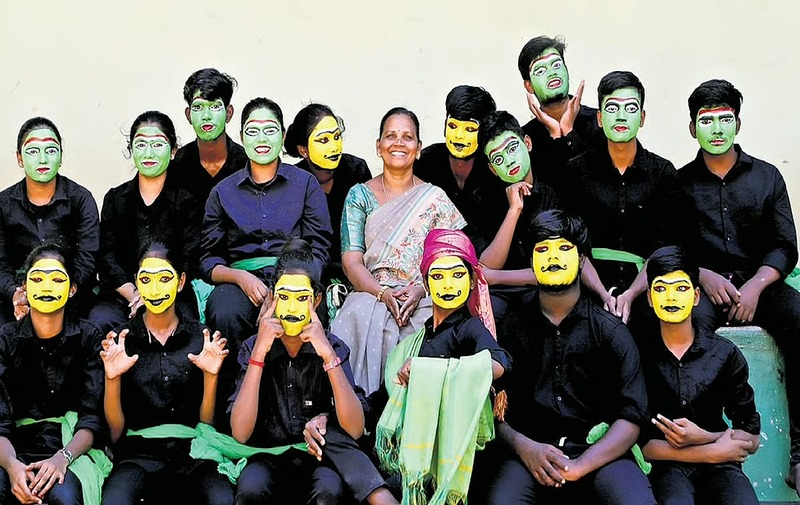
This Teacher Took Social Science Out of the Classroom—What Happened Next Is Inspiring
In a quiet corner of Coimbatore, a remarkable shift is taking place in the way Social Science is taught. Instead of students passively reading from textbooks, they are stepping into the streets, performing, questioning, and experiencing lessons in ways that stay with them for life. At the heart of this change is a teacher who believes that education should not just inform but transform. By using traditional street drama forms like Therukoothu and Nadu Theru Natakam, this educator is bringing history, civics, and social issues alive right in front of the community.Breaking Free from Textbook LearningFor years, Social Science has often been seen as a subject that requires memorisation dates, events, and definitions. Many students struggle to connect with it because it feels distant from their everyday lives. This teacher in Coimbatore decided to challenge that pattern. Instead of simply explaining concepts like democracy, social justice, or historical movements, students are encouraged to live them through performance. A lesson on civic responsibility might turn into a street play about voting awareness. A chapter on social inequality may become a powerful enactment highlighting real-life struggles. This shift from passive reading to active participation makes learning more engaging and meaningful. Students are no longer just learners they become storytellers, performers, and thinkers.Experiential Learning: Learning by DoingOne of the most powerful aspects of this approach is experiential learning. When students act out scenes, they are not just remembering information they are understanding it deeply. Imagine a group of students performing a play about India’s freedom struggle. Instead of memorising facts about protests or leaders, they feel the emotions, conflicts, and courage behind those events. This emotional connection makes the lesson unforgettable. Experiential learning also improves retention. Studies have shown that students remember concepts better when they actively participate rather than passively listen. By stepping into roles and engaging with content physically and emotionally, students develop a deeper and more lasting understanding.Making Social Science Social AgainAnother key strength of this method is that it feels real and meaningful to students. The topics used in these street dramas are not just from textbooks—they are based on real-life issues that students see around them, like environmental protection, gender equality, local governance, public health, and community history. Because of this, learning becomes more like a conversation than a lesson. When students perform these topics in public, they begin to see themselves as part of society, not just classroom learners. This approach helps connect education with real life, making students understand that Social Science is not only about the past but also about shaping the present and the future. By performing in streets, marketplaces, and public areas, students bring education to the people. Passersby stop, watch, and engage. The street becomes a classroom, and the audience becomes part of the learning process. This interaction creates awareness about important social issues while also building a strong connection between schools and the community. It breaks the traditional barrier where learning is confined within four walls. For many community members, these performances are not just entertainment they are eye-opening experiences.Building Confidence and Life SkillsWhile students do improve academically, the benefits of street drama go far beyond textbooks. Through this method, they naturally build important life skills like confidence, as performing in public helps them overcome stage fear, and communication skills, as they learn to express their ideas clearly. They also develop teamwork by working together with others and critical thinking by understanding real issues and presenting possible solutions. These are not skills that can be easily taught through lectures; they grow through experience, practice, and interaction. For many students, especially those who are shy or hesitant, this approach becomes a turning point, giving them the confidence, voice, and platform to express themselves.Learning That StaysAt its core, this teaching method is about connection between students, subjects, and society. Picture a student who once struggled to understand the concept of equality. Now imagine that same student performing a role where they portray discrimination and its impact. That experience changes something within them. It builds empathy, awareness, and a deeper understanding that no textbook alone can provide. Teachers often say that education should shape not just minds but hearts. This approach does exactly that. It reminds us that learning is not just about marks or exams; it is about becoming better, more aware human beings. In a time when education often feels mechanical and exam-focused, this approach brings back its true essence: learning that is alive, relevant, and deeply human.