
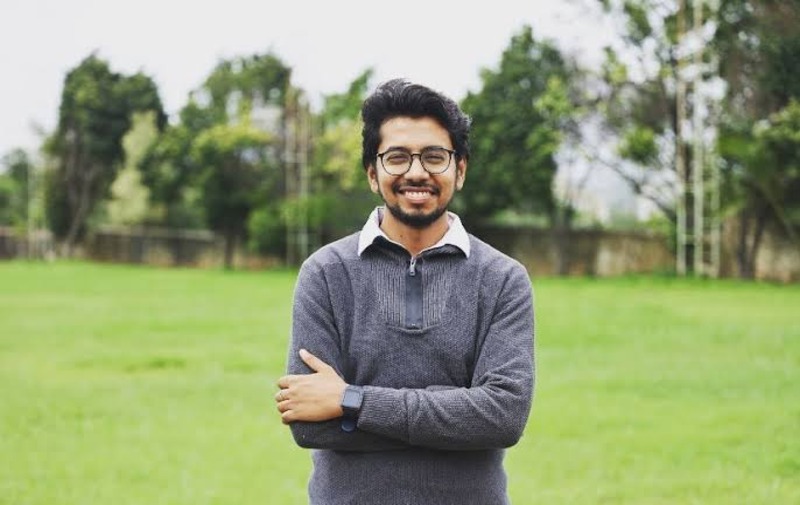
Engineering Hope : How Prashant Gade Built India’s Most Affordable Bionic Arm
In a country where advanced prosthetic arms often cost more than a family’s lifetime savings, one engineer decided that innovation should not be reserved for the privileged. Prashant Gade is not just building bionic arms; he is rebuilding independence for thousands of amputees.When Engineering Dreams ShatteredPrashant’s journey was not smooth. During college, his engineering ambitions faced setbacks that left him shaken. Like many young students, he had big dreams. And like many dreamers, he faced moments when reality seemed to say no. But those disappointments did not end his journey—they redirected it. Over time, three moments shaped his life: the childhood question about purpose, the heartbreak of broken academic expectations, and a deeply emotional encounter years later with a woman who received a prosthetic arm he helped fix. When the woman broke down in tears, saying she would finally be able to comb her daughter’s hair again, something clicked. That moment answered the question he had carried since childhood: what is the purpose of life? For Prashant, the answer became clear: it is to serve.Rethinking Prosthetics: Affordable, Advanced, AccessibleIndia has thousands of upper limb amputees, many of whom cannot afford high-end prosthetics that often cost several lakhs. Most advanced prosthetic arms are connected to muscle movements and remain financially out of reach for the underserved. Prashant envisioned something different. Through Inali Assistive Tech, he helped develop Inali Arms bionic arms that operate by detecting brain signals rather than relying solely on muscle activity. This approach allows for more intuitive control and improved functionality. By leveraging modern engineering, 3D printing, and biomechanics, the team created prosthetics that are lightweight, customizable, and significantly more affordable than global alternatives. The impact has been profound. To date, Inali has transformed the lives of over 1,500 amputees across India. Behind each number is a story—someone regaining independence, someone returning to work, someone hugging their child with both arms again.Innovation Rooted in EmpathyWhat makes Prashant different from many innovators is that his work begins not with technology, but with empathy. He witnessed firsthand the social stigma and daily struggles faced by amputees. Basic activities—eating, dressing, writing, or lifting a child—become enormous challenges. But beyond the physical limitation lies an emotional battle: loss of dignity, reduced confidence, and social isolation. By providing functional prosthetic arms at low cost, Prashant restores more than movement. He restores identity. The story of the mother who wanted to comb her daughter’s hair reflects this human dimension. A small act for most of us became a life-changing moment for her. And it reaffirmed Prashant’s belief that technology must solve real human problems.Rising to the Need of the HourPrashant’s social innovation did not stop with prosthetics. During the COVID-19 crisis, he turned his engineering focus toward designing low-cost ventilators that could be manufactured easily across the world. This shift reflects a core quality of his character: responsiveness. For him, innovation is not static. It adapts to the needs of society. His work has drawn recognition from medical professionals, government bodies, and nonprofit organizations. Yet, he remains rooted in the same question he asked as a child: what truly matters at the end of life? Certainly not material possessions. But impact that lasts.Redefining the Purpose of LifeLooking ahead, Prashant’s vision is clear: every amputee, regardless of economic background, should have access to affordable, high-quality prosthetic solutions. Through research, collaboration, and relentless innovation, he continues to push boundaries in assistive technology. But perhaps his greatest contribution is not the bionic arm itself. It is the message his journey sends. Purpose is not discovered overnight. It reveals itself through questions, heartbreak, and moments of empathy.For Prashant Gade, it took sixteen years and three defining incidents to understand his path. Today, thousands of individuals across India are living fuller lives because one engineer chose compassion over comfort and conviction over compromise. He once wondered why people take nothing with them when they leave this world. Now, he knows the answer. What we leave behind is not possessions. It is impact.