
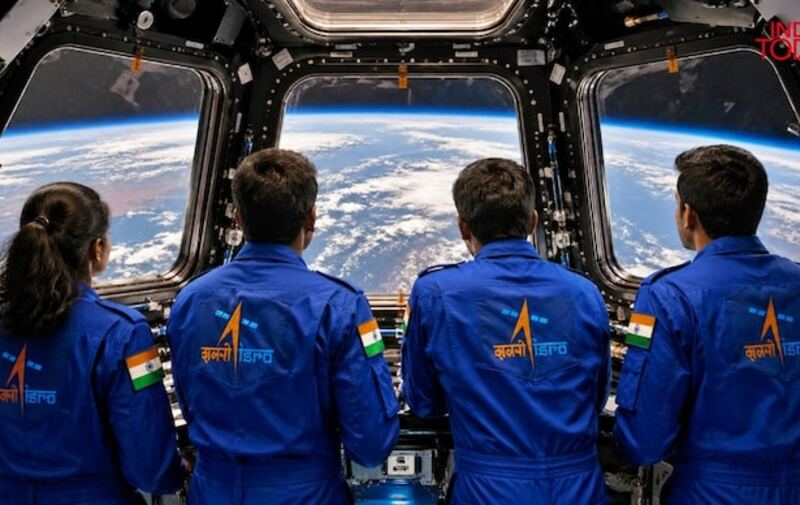
Space Is Calling Everyone: ISRO Throws Open the Doors for Civilian Astronauts
India’s journey into human spaceflight is entering a bold and exciting phase. The Indian Space Research Organisation is now preparing to open its astronaut corps to civilians, a move that signals a shift from its earlier approach of relying solely on military test pilots. This decision is not just administrative; it represents a deeper vision of inclusivity, long-term planning, and a future where space is not limited to a select few but becomes a shared national aspiration. For a country that has steadily built its reputation in space technology, this moment feels like a natural yet powerful evolution.Moving Beyond the First Generation of AstronautsWhen India began preparing for its first human spaceflight mission under Gaganyaan Mission, the focus was on safety, precision, and reliability. The first batch of astronauts reflected this priority, consisting entirely of highly trained Indian Air Force test pilots. Names like Prashanth Nair, Shubhanshu Shukla, Ajit Krishnan, and Angad Prathap became symbols of India’s first steps into human space exploration. These astronauts brought with them years of experience in handling high-risk situations, making them the ideal choice for missions where every second and every decision could determine success.Opening the Doors to CiviliansNow, as ISRO looks ahead, it is reimagining the composition of its astronaut corps. A key recommendation by its astronaut selection and management committee suggests that the second batch should include both military personnel and civilians. The proposed group of around ten astronauts is expected to consist of six mission pilots from military aviation backgrounds and four civilian specialists from science, technology, engineering, and mathematics fields. This balanced approach reflects a growing understanding that space missions today require not just operational expertise, but also scientific depth. It is a significant departure from the past and a step toward a more inclusive future.Why This Shift MattersThe inclusion of civilians is not just symbolic; it is strategic. As India plans for sustained operations in space, the role of astronauts is expanding beyond piloting spacecraft. Future missions will involve scientific experiments, technological testing, and long-duration stays in orbit. ISRO’s long-term vision includes participation in missions aboard the proposed Bharatiya Antariksh Station. Such missions will require specialists who can conduct research, analyze data, and contribute to advancements in various scientific fields. By bringing civilians into the astronaut corps, ISRO is preparing for a future where space exploration is as much about discovery as it is about survival.A Gradual and Cautious ApproachDespite this progressive step, ISRO is moving forward with caution. Civilian astronauts are unlikely to be part of the initial missions. According to current plans, they may begin participating only from the fourth crewed Gaganyaan mission onward. This approach aligns with global practices. Countries like the United States and Russia also relied heavily on military-trained astronauts in the early stages of their space programs, gradually expanding to include civilians as systems became more reliable. Another notable change in the upcoming astronaut selection is the inclusion of combat helicopter pilots within the military intake. This move broadens the range of operational experience within the astronaut corps, bringing in professionals skilled in diverse flying conditions and mission environments. Such diversity is crucial in space missions, where adaptability and quick decision-making are essential. By combining different skill sets, ISRO is building a team capable of handling the complexities of modern spaceflight.Looking Ahead to Larger MissionsIndia’s human spaceflight ambitions do not stop with Gaganyaan. ISRO is already planning for larger crews and more frequent missions. From the seventh crewed mission onward, the number of astronauts per flight could increase from two to three, enabled by upgrades to the crew module. Future astronaut batches may also lean more heavily toward civilian specialists. There is even a possibility that the third batch could include a majority of civilians, marking a significant transformation in how India approaches space exploration. This shift reflects a broader trend: space is no longer just a domain of pilots and engineers; it is becoming a platform for scientists, researchers, and innovators.