
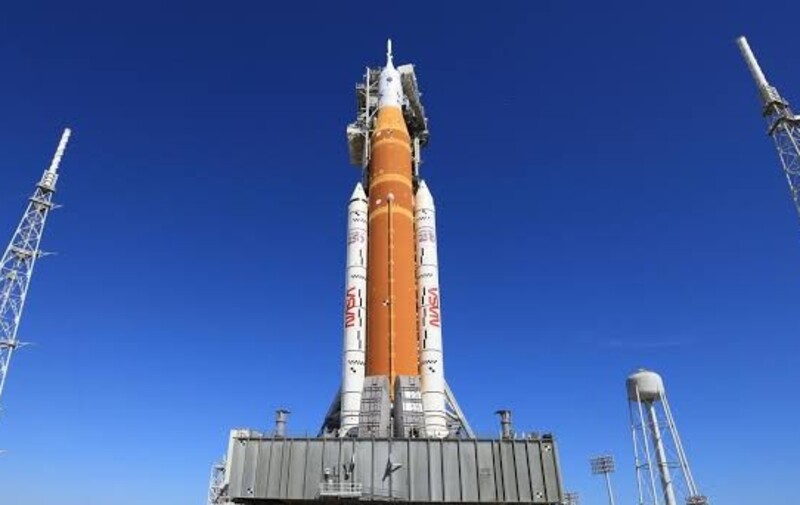
Artemis II Set to Launch: Humanity to Return to the Moon After 50 Years
After more than five decades since humans last ventured beyond Earth’s orbit toward the Moon, NASA is ready to make history once again. The Artemis II mission, scheduled for launch on 1 April 2026, represents a powerful new chapter in human space exploration. This mission is not just about revisiting the Moon—it is about preparing humanity for a future where living and working beyond Earth becomes a reality. Artemis II will be the first crewed lunar mission since the legendary Apollo program ended in 1972.Mission Overview: A Journey Around the MoonArtemis II is designed as a crucial test flight. Unlike the Apollo missions that involved lunar landings, this mission will focus on a lunar flyby. The journey will begin aboard the powerful Space Launch System (SLS), a 32-storey rocket capable of carrying astronauts far beyond Earth’s orbit. Launching from the iconic Kennedy Space Center, the crew will first enter Earth’s orbit before being propelled toward the Moon. Once near the lunar surface, the spacecraft will loop around it and begin its return journey, ending with a splashdown in the Pacific Ocean after nearly 10 days in space.The Orion SpacecraftAt the heart of the mission is the Orion spacecraft, a next-generation capsule designed for human spaceflight beyond low Earth orbit. Orion is equipped with advanced life-support systems, navigation tools, and deep-space communication technologies. Artemis II will test all of these systems under real conditions, ensuring they are ready for future missions involving lunar landings and even journeys to Mars. This mission is not about reaching the Moon; it is about proving that humans can safely travel deep into space again.A Diverse Crew and Global CollaborationOne of the most inspiring aspects of Artemis II is its crew. The mission includes four astronauts from the United States and Canada, symbolizing a new era of international cooperation in space exploration. For the first time in history, a Canadian astronaut will be part of a lunar mission. This reflects how space exploration is no longer limited to one nation; it is becoming a shared human effort. The Artemis program is expected to expand this collaboration further, opening doors for more countries to participate in future missions. Like all great missions, Artemis II has faced its share of challenges. Initially planned for early 2026, the launch was delayed due to technical issues, including hydrogen fuel leaks. Even after those problems were resolved, engineers encountered a clogged helium pressurisation line, forcing the rocket to return to the assembly facility for further repairs. These delays, while frustrating, highlight an important truth—space exploration demands precision and patience. Every system must work perfectly to ensure the safety of the crew. After rigorous testing and successful fixes, NASA has now confirmed that the mission is ready for launch.Why Artemis II MattersArtemis II is more than just a mission; it is a stepping stone toward humanity’s future in space. Its primary objective is to test critical systems such as life support, navigation, and communication in deep space. These systems will be essential for future missions, especially Artemis III, which aims to land humans on the Moon once again. Beyond that, the Artemis program has even bigger goals. It aims to establish a sustainable human presence on the Moon, which could serve as a base for future missions to Mars.Why We Still Look to the MoonFor generations, the Moon has been a symbol of curiosity, wonder, and possibility. From the first footsteps during the Apollo era to today’s advanced missions, it continues to inspire humanity. Artemis II carries forward that legacy. It reminds us that exploration is part of who we are. Even in a world filled with challenges on Earth, the desire to explore the unknown remains strong. For the astronauts onboard, this journey is not just a mission—it is a dream fulfilled. And for millions watching around the world, it is a moment of pride and inspiration. As the countdown begins, Artemis II stands as a powerful reminder of how far humanity has come and how far it can go. This mission will provide the data, confidence, and experience needed to push deeper into space. It is not just about returning to the Moon; it is about building a future where space exploration becomes a part of everyday human achievement. And just like the Apollo missions once did, Artemis II will remind us that when humanity dares to explore, there are no limits to what we can achieve.