
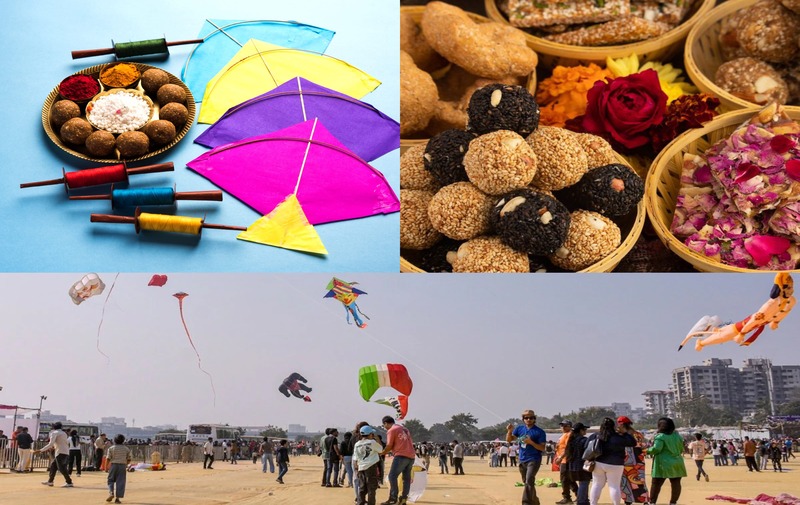
Makar Sankranti: Where Astronomy, Agriculture, and Faith Meet
I still remember standing on a terrace in January, fingers numb from the cold, eyes fixed on the sky. The sun was gentle, the wind playful, and the rooftops around me were alive with laughter. Strings stretched tight, kites danced wildly, and every successful cut was followed by a chorus of joyful screams “Kai Po Che!” For me, flying kites was not just a game; it felt like the purest sport ever invented. No scoreboard, no referee, only skill, timing, and the thrill of watching your kite soar higher than the rest. Back then, I did not know that this simple joy was tied to something far bigger, a celestial event that humanity has observed for thousands of years. That was Makar Sankranti, arriving quietly, without fireworks or grand rituals, yet carrying one of the deepest meanings in the Indian calendar.A Festival That Follows the SunMost Indian festivals move with the moon. Diwali, Holi, Navratri they shift dates every year, guided by the lunar calendar. Makar Sankranti stands apart. It follows the Sun. The word “Sankranti” means transition, and on this day, the Sun moves into the zodiac sign of Capricorn, known as Makar. This solar shift gives the festival its name. Since the Sun is steady and predictable, Makar Sankranti returns almost every year on the same date, around 14 January. Over centuries, the slow tilt of the Earth’s axis has caused slight changes in celestial timing, but the essence remains unchanged. This is the moment when nature itself turns a corner.When Winter Stops Tightening Its GripBy mid-January, winter feels different. The cold is still there, but it no longer bites. Makar Sankranti marks the beginning of Uttarayan, the Sun’s northward journey. From this day onwards, daylight gradually increases. Mornings grow brighter, evenings stretch longer, and warmth begins its slow return. For ancient communities who lived closely with nature, this shift was life-changing. Longer days meant safer travel, healthier crops, and renewed energy. Harvest, Gratitude, and the Earth’s PromiseMakar Sankranti is as much about the soil as it is about the sky. By this time, farmers across India finish harvesting key winter crops like rice, wheat, sugarcane, and pulses. The festival becomes a moment of gratitude to the Sun for its energy and to the Earth for its generosity. That is why Makar Sankranti wears different names across regions. In Tamil Nadu, it is Pongal. In Gujarat, Uttarayan fills the sky with kites. In Assam, Magh Bihu celebrates abundance. In North India, khichdi symbolizes nourishment and simplicity. Food becomes the language of celebration. Sesame seeds, jaggery, rice, and freshly harvested grains dominate kitchens, reminding people that sweetness follows effort, and warmth follows patience.The Spiritual Turn Toward LightBeyond seasons and harvests, Makar Sankranti carries deep spiritual meaning. Uttarayan is considered an auspicious phase in Hindu belief, a time associated with clarity, discipline, and inner awakening. Ancient texts describe it as a period filled with higher energy and light. Symbolically, it is the Sun’s reminder to rise within ourselves. Just as daylight increases, people are encouraged to move away from inner darkness, fear, inertia, and doubt and step into purpose and awareness. Makar Sankranti, in that sense, is not loud devotion. It is quiet alignment.Why Kites Matter More Than We ThinkKite flying may look like play, but it mirrors the spirit of the festival. Kites rise because of the balance between wind and string, control and freedom. They remind us to look up, to engage with the sky, and to celebrate sunlight rather than hide from it. When we shouted “Kai Po Che”, we were unknowingly celebrating the Sun’s victory over winter. Rooftops became meeting grounds. Neighbours became teammates and rivals. In a world increasingly moving indoors, this simple act pulled people into open skies and shared laughter. “Kai Po Che” means “I’ve cut it!” or “I’ve won!” in English. It is the joyful victory shout heard during kite flying when one kite successfully cuts another’s string in mid-air. Popular in Gujarat and western India, the phrase captures the thrill of skill, timing, and triumph. More than just words, “Kai Po Che” reflects the spirit of Makar Sankranti: open skies, friendly rivalry, and shared celebration. It turns rooftops into playgrounds and strangers into companions, echoing the simple happiness of winning not with noise, but with laughter carried by the wind.Why 14 January Still MattersIn an age of digital clocks and global calendars, Makar Sankranti quietly reminds us that human life is still shaped by cosmic rhythms. The Sun appears to change its course, and everything responds—weather, crops, moods, and movement. Year after year, on 14 January, people across India pause, look upward, and welcome a new phase of light. No spectacle is needed. Nature does the announcing. Makar Sankranti is not just a festival. It is a promise from the Sun, from the earth, and from time itself that after the coldest stretch, warmth always returns.
