
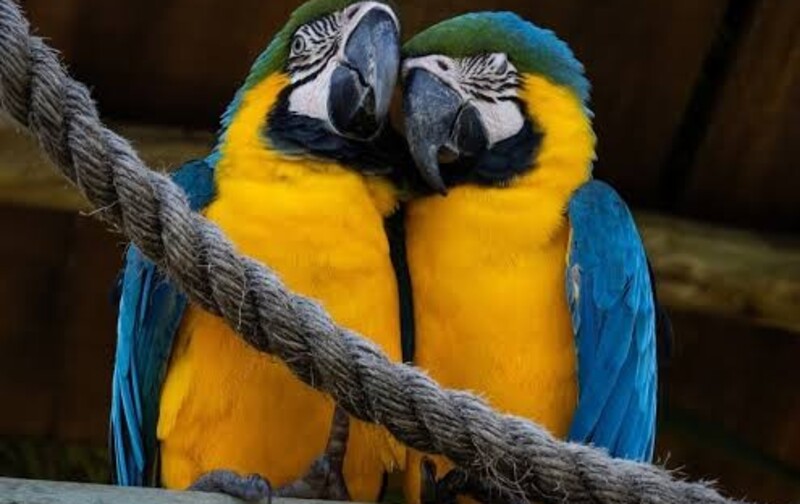
The Day Rio’s Silence Broke: Macaws Return After 200 Years
High above the dense green canopy of Rio de Janeiro, a flash of blue and yellow cuts through the sunlight. For many, it feels almost unreal like a scene from a painting coming to life. The return of the blue-and-yellow macaw to the forests surrounding the city is not just a visual delight, but a deeply symbolic moment in the history of conservation. These magnificent birds, once thought to have disappeared from the region entirely, are now slowly reclaiming their place in the skies, nearly two centuries after they vanished.A Lost Presence in HistoryHistorical records show that these vibrant parrots were once a common sight in Rio’s forests. French explorer Jean de Léry described their abundance as early as the 16th century, while Austrian naturalist Johann Natterer recorded sightings in 1818. Then, suddenly, they were gone. The disappearance of the macaws was not an isolated event. As forests were cleared for agriculture, charcoal, and urban expansion, entire ecosystems began to collapse. Along with the macaws, animals like jaguars, tapirs, and peccaries also vanished from the region. The silence left behind was not just ecological it was emotional, a loss of identity for the forest itself.The Rise, Fall, and Rebirth of a ForestThe story of the macaws is deeply tied to the fate of Tijuca National Park, one of the world’s largest urban forests. In the 19th century, this area was heavily exploited, leaving behind barren land where lush rainforest once stood. Recognising the environmental damage, Emperor Dom Pedro II initiated one of the earliest tropical reforestation efforts in the 1860s. Trees were replanted, and over time, the forest began to regenerate. But while the trees returned, many animals did not. For decades, the forest remained incomplete a body without its soul.Bringing Back the Forest’s VoiceThe turning point came with modern conservation efforts led by organisations like Refauna. Their mission was not just to restore trees, but to bring back the animals that once defined the ecosystem. This process, known as refaunation, began with species like agoutis, tortoises, and howler monkeys. Slowly, the forest started to come alive again, filled with movement and sound. But the return of macaws held a special significance. “These birds are like the orchestra of the forest,” conservationists say. Their loud calls, bright colours, and social nature make them impossible to ignore. With just four individuals reintroduced so far, their presence already feels like dozens, echoing across the canopy.Why Do Birds Return?The return of species like macaws is not random it is the result of careful planning and ecological balance. Birds return when three key conditions are restored: habitat, food sources, and safety. In Tijuca, decades of reforestation have recreated a suitable environment. Native trees provide nesting spaces and food, while conservation laws and monitoring reduce threats like hunting and trafficking. Equally important is the role of human effort. The macaws being reintroduced were rescued from captivity, rehabilitated, and gradually reintroduced into the wild. Their release is carefully monitored to ensure they adapt successfully. In simple terms, birds return when the ecosystem welcomes them back and when humans choose to protect rather than exploit.The Shadow of ExtinctionThe story of macaws in Brazil also carries a warning. While the blue-and-yellow macaw is making a comeback in Rio, another species, the Spix's macaw, tells a more fragile tale. Once native to Brazil, the Spix’s macaw was declared extinct in the wild in 2019 due to habitat loss and illegal wildlife trade. Its survival now depends on captive breeding programs and careful reintroduction efforts. This contrast highlights a crucial truth: extinction is not always permanent, but recovery is never guaranteed. It requires time, resources, and unwavering commitment.A Symbol of HopeThe return of macaws to Rio de Janeiro is more than a conservation story; it is a symbol of hope. It shows that even after centuries of damage, ecosystems can be restored. It proves that extinction can sometimes be reversed and that human actions, when guided by care and responsibility, can heal what was once broken. As the skies above Tijuca fill once again with flashes of blue and yellow, they carry a message for the world. Nature remembers. And when given a chance, it always finds a way back.