
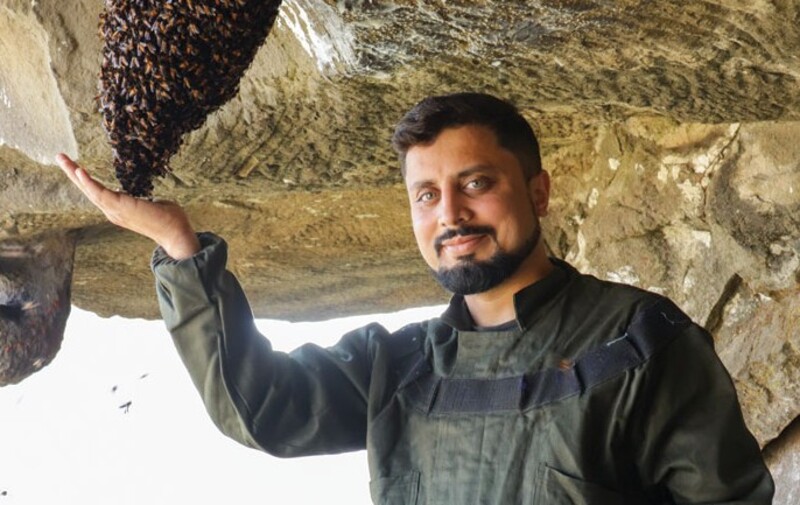
Meet the ‘Bee Man of Pune’: How Amit Godse Turned a Tragic Moment Into a Movement Saving Crores of Bees
On a quiet day in Pune, a disturbing sight changed everything for Amit Godse. A beehive in his housing society was mercilessly sprayed with toxic chemicals. Within moments, thousands of bees lay lifeless on the ground. It wasn’t just an incident; it was a turning point. In that moment of loss, Amit made a promise to himself: no more silent destruction, no more ignorance. That promise would soon evolve into a life mission. Today, Amit is known as the ‘Bee Man of Pune,' a title earned through courage, compassion, and relentless dedication. Over the past nine years, he and his team have rescued and relocated more than 14,000 beehives. Considering that each hive can house around 50,000 bees, his work has helped save nearly 70 crore bees. What began as one man’s emotional response has now become a movement that blends science, sustainability, and humanity.Pune’s Hidden World of BeesFew people realise that a bustling urban city like Pune is home to a rich diversity of bee species. From the towering rock bees that build their hives on high-rise buildings and tall trees to the tiny stingless bees that quietly inhabit tree holes and electrical boards, each species plays a unique role in the ecosystem. Amit’s work goes beyond rescue; it involves deep understanding. Each species behaves differently and requires specific techniques for safe relocation. Whether it is carefully transferring larvae and the queen bee into a box or patiently waiting for worker bees to return before moving a hive, every operation is a delicate balance of skill and empathy. His motto remains simple yet powerful: not a single bee should be left behind.From Fear to FascinationFor many, bees are creatures to fear. Their presence often triggers panic, leading to hasty decisions like spraying pesticides or destroying hives. But Amit is working to change that perception. Through his initiative, he is not just rescuing bees; he is educating people. He explains that bees rarely sting unless provoked. In fact, they are among the most essential contributors to life on Earth. Nearly 70% of global pollination depends on bees, making them directly responsible for one-third of the food we consume. From fruits and vegetables to seeds like onions, bees play a silent but vital role in agriculture. This shift in mindset from seeing bees as pests to recognising them as protectors of our food system is at the heart of Amit’s mission.The Silent Crisis in Our FieldsWhile cities struggle with unwanted beehives, farms are facing a far more dangerous problem: a shortage of bees. The excessive use of pesticides, rapid urbanisation, and monoculture farming have driven bees away from agricultural lands. As a result, pollination rates are dropping, putting crop yields at risk. Amit identified this gap and turned it into an opportunity for change. Through his initiative, he relocates rescued bees from urban areas back to farms, where they can thrive and contribute to natural pollination. This not only protects the bees but also supports farmers and strengthens food security. Building Homes and HopeAmit’s vision extends beyond rescue operations. He is actively working to create a safer environment for bees to flourish. From planting thousands of trees to building bamboo bee homes, every step is aimed at restoring balance in nature. These efforts are especially crucial at a time when nearly 30% of the global bee population is at risk. By creating habitats and raising awareness, Amit is ensuring that future generations inherit a world where bees and the ecosystems they support continue to thrive.More Than Just HoneyAmit Godse’s journey reminds us of a simple yet often forgotten truth: it is easy to love the sweetness of honey, but far more important to respect the creatures that create it. His work is not just about rescuing bees; it is about restoring harmony between humans and nature. It is about understanding that even the smallest creatures have a massive impact on our lives. In a world driven by convenience and speed, Amit’s story slows us down and asks us to think. The next time we see a beehive, will we destroy it out of fear, or will we choose to protect it with awareness? Because sometimes, saving the tiniest lives can make the biggest difference.