
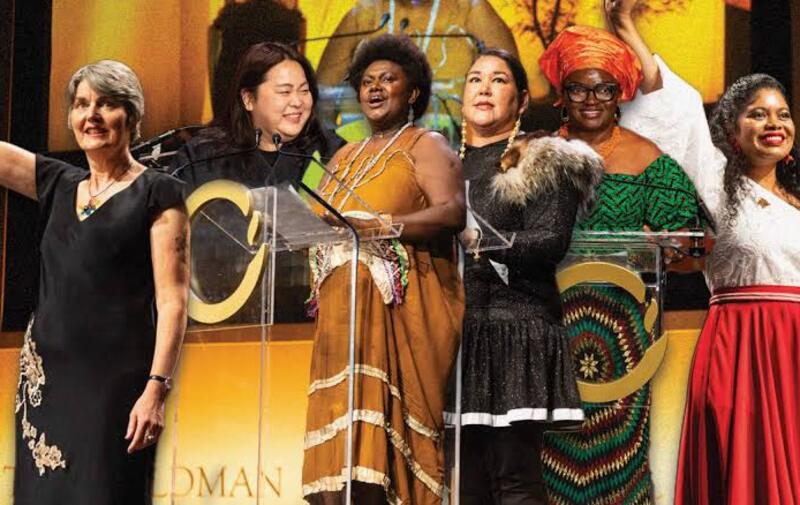
Six Women, One Planet: Meet the 2026 Winners of the ‘Green Nobel Prize’
In a year marked by rising climate concerns and urgent calls for action, a group of six women has emerged as a symbol of hope and determination. The prestigious Goldman Environmental Prize often called the “Green Nobel Prize” has honoured six changemakers whose work is transforming the fight against climate change in deeply personal and powerful ways. From forests in Nigeria to courtrooms in South Korea, from rivers in Alaska to communities in Colombia, these women are not just addressing environmental challenges; they are reshaping the future of activism itself.Women Leading the Climate FightThe 2026 honourees Iroro Tanshi, Borim Kim, Sarah Finch, Theonila Roka Matbob, Alannah Acaq Hurley, and Yuvelis Morales Blanco represent a diverse yet united front in the battle to protect the Earth. Each of them comes from a unique background, yet they share a common thread: the courage to challenge powerful systems and the determination to create lasting change.Science Meets Conservation in NigeriaIroro Tanshi’s journey began with a passion for understanding the natural world. As a tropical ecologist, her work focuses on bat conservation, a field often overlooked but critical to maintaining ecological balance. Through her research, she discovered rare bat species thought to have disappeared decades ago and protected vital habitats from destruction. Her innovative “Zero Wildfire Campaign” brought local communities into the conservation process, proving that environmental protection is most effective when people feel connected to it. Her work is a reminder that saving even the smallest creatures can have a profound impact on the planet.Youth Power Drives Legal Change in AsiaIn South Korea, Borim Kim represents a new generation of climate leaders. Through her organisation, Youth 4 Climate Action, she led one of Asia’s first successful youth-led climate lawsuits. The landmark ruling by South Korea’s Constitutional Court declared that inadequate climate policies violated the rights of future generations. This decision not only set a legal precedent but also highlighted the power of young voices in shaping national policy. Her work shows that activism today is not limited to protests; it is also being fought and won in courtrooms.A Decade-Long Battle Against Fossil FuelsIn the United Kingdom, Sarah Finch’s story is one of persistence. For over ten years, she led a campaign against oil drilling in Surrey, facing legal challenges and setbacks along the way. Her efforts culminated in a landmark Supreme Court ruling that forced authorities to consider the environmental impact of fossil fuels before approving extraction projects. This decision, now known as the “Finch ruling,” has already influenced environmental policy beyond the UK. Her journey proves that change often requires patience, resilience, and the willingness to keep going even when the odds seem overwhelming.Healing Land and Communities in Papua New GuineaTheonila Roka Matbob’s work addresses not just environmental damage but also social justice. In Papua New Guinea, she led a campaign that compelled mining giant Rio Tinto to acknowledge and begin addressing the harm caused by the Panguna mine. For decades, the local community had lived with the consequences of environmental degradation. Through her leadership, a process of healing and accountability has finally begun. Her story highlights the deep connection between environmental protection and human rights.Protecting Indigenous Lands in AlaskaAlannah Acaq Hurley’s work is rooted in her identity as a Yup’ik leader. Representing 15 tribal nations, she led a coalition that successfully stopped the Pebble Mine project in Alaska’s Bristol Bay region. This victory protected one of the world’s most important ecosystems, home to vast wilderness and the largest wild salmon runs on the planet. It also demonstrated the power of Indigenous leadership in environmental conservation. Her efforts remind us that protecting the planet often begins with listening to those who have lived in harmony with it for generations.Standing Up for Communities in ColombiaIn Colombia, Yuvelis Morales Blanco’s activism began at the community level. She mobilised people in Puerto Wilches to oppose fracking projects that threatened their environment and way of life. Her efforts contributed to the suspension of major drilling projects and a Constitutional Court ruling that upheld the rights of local communities. This victory reinforced the principle that development must not come at the cost of people’s rights and environmental safety. Her story shows how grassroots movements can create national impact.A Future Shaped by CourageThe recognition of these six women by the Goldman Environmental Prize is more than an award; it is a message. It tells us that meaningful change is possible, that individuals can make a difference, and that the fight for the planet is far from over. As climate challenges continue to grow, so does the need for voices like theirs, voices that are informed, fearless, and committed to action. In celebrating their achievements, we are also reminded of our own role. Because in the end, the fight against climate change is not just about a few individuals; it is about all of us.