Arjun Erigaisi Crowns a New Chapter in Indian Chess in Jerusalem
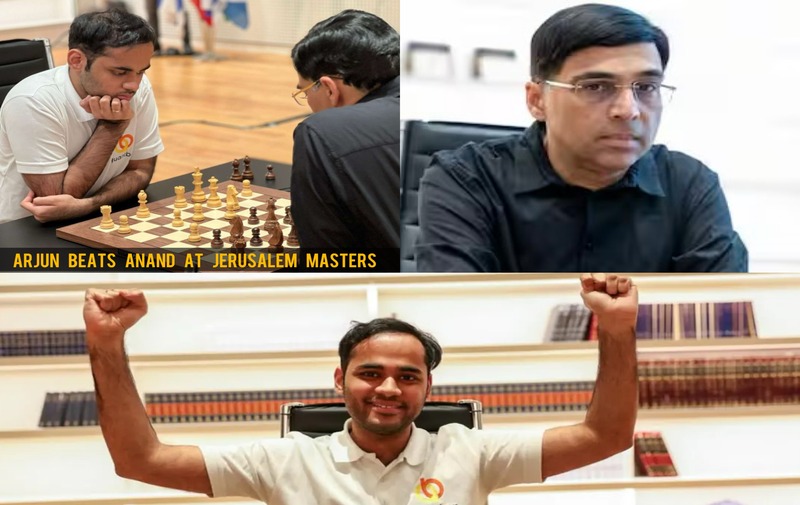
Arjun Erigaisi’s win over Viswanathan Anand at the Jerusalem Masters was more than just a tournament victory; it was a symbolic moment for Indian chess. On one side stood Anand, the five-time world champion and the torchbearer of India’s chess revolution. Opposing him was 22-year-old Arjun Erigaisi, a rising star shaped by the very movement Anand helped create. When the two met in the final, it felt like a meeting of eras: experience versus youth, legacy versus ambition, and teacher versus student.A Festival of Chess in JerusalemThe Jerusalem Masters formed the knockout finale of the Jerusalem Chess Festival, bringing together the top four players from the round-robin stage. Peter Svidler, who dominated the preliminary rounds with 8/11, entered as the favourite. Ian Nepomniachtchi, the reigning World Blitz Champion, joined him alongside Anand and Arjun—three generations of elite chess players in one arena. With rapid games (15+5), blitz (3+2), and Armageddon if needed, the format promised fireworks. And it delivered.An All-Indian Final: A Meeting of ErasThe final between Arjun and Anand carried emotional weight for Indian chess fans. Anand is not only a former world champion but also the inspiration behind India’s chess boom. Arjun, part of the new generation of prodigies, grew up studying Anand’s games. The rapid games reflected a tense battle of ideas. In the first game, both players missed winning chances Arjun in the middlegame, Anand in the endgame. The second rapid game was more solid, ending in a controlled draw. Neither side wanted to give away an inch. With the rapid section tied 1–1, the championship moved to the blitz tiebreak. Arjun struck decisively in the first blitz game. Playing with the white pieces, he built pressure move by move, eventually converting his advantage into a clinical win. Suddenly, Anand was on the back foot. In the second blitz game, Arjun reached a favourable, queenless position with rooks and minor pieces on both sides. Instead of pushing for a risky win, he made a practical decision, forcing a draw. That half-point was all he needed. Final Score Arjun Erigaisi 2.5 – 1.5 Viswanathan Anand. At 22, Arjun had beaten one of the greatest chess players in history to win the Jerusalem Masters title and take home USD 55,000 in prize money.A Story Behind the MovesBeyond moves and results, this victory carries a deeply human dimension. Arjun represents the dreams of thousands of young Indian chess players who grew up in Anand’s era. His win is not a break from that legacy but a continuation of it. To defeat your own idol on an international stage requires not just skill but emotional maturity. Arjun respected Anand, yet competed fearlessly. Anand, ever gracious, fought hard and accepted defeat with dignity, showing why he remains a hero to generations. In that moment, two journeys met: a giant who built the road and a young player now ready to walk ahead on it.A Tournament of Skill, Nerves, and LegacyThe Jerusalem Masters was a true test of chess skill and psychological strength. The mix of rapid, blitz, and knockout pressure created an arena where experience and youth had equal chances. For Anand, it was another masterclass in consistency. For Svidler and Nepomniachtchi, it was a journey of hard-fought battles. But for Arjun Erigaisi, this tournament will forever mark a turning point, a moment when he stepped from promise into proof. Indian chess has seen many rising stars, but Arjun’s win over a legend like Anand signals something bigger. A new generation is not just arriving; it is ready to lead.