
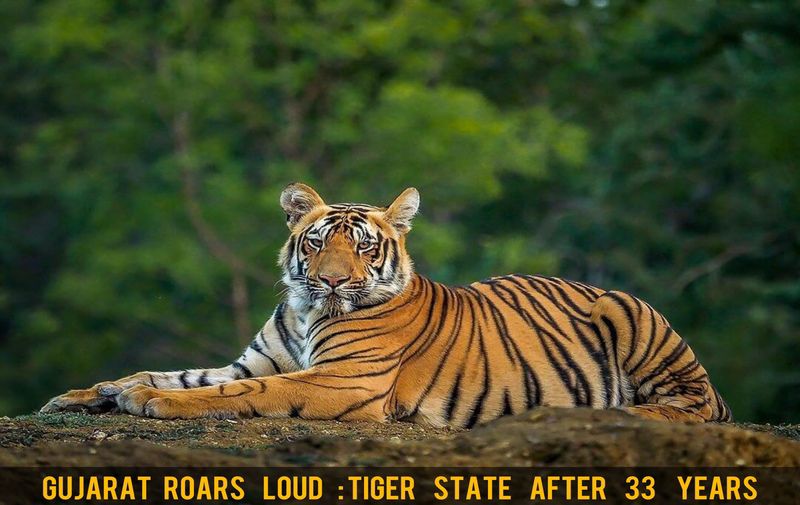
Tiger Returns to Gujarat: Gujarat Becomes India’s Only State with Lions, Tigers, and Leopards
After more than three decades, Gujarat has officially reclaimed its identity as a “Tiger State.” The National Tiger Conservation Authority (NTCA) confirmed the permanent presence of a tiger in Ratanmahal Wildlife Sanctuary in Dahod district. This historic development transforms Gujarat from being known solely for the Asiatic lion to becoming India’s only state where lions, leopards, and tigers coexist in the wild. The ecological milestone carries both conservation significance and political symbolism, highlighting Gujarat’s commitment to wildlife preservation.The Journey of a Tiger in RatanmahalThe breakthrough began quietly in February 2025, when a young male tiger crossed into Gujarat from neighboring Madhya Pradesh. Unlike previous transient visits, this tiger chose to settle in Ratanmahal, marking a rare event in India’s conservation history. Over nearly ten months, continuous sightings, camera-trap evidence, and consistent movement patterns convinced the NTCA that the tiger was a permanent resident rather than a passing visitor. Forest officials noted the significance of this continuity. Camera traps first recorded the tiger. The next day, patrolling staff discovered unusually large pugmarks in the Pipalgota Round of the Kanjeta Range. Subsequent analysis of camera-trap footage confirmed the animal’s identity, providing concrete evidence to support Gujarat’s restoration of Tiger State status.A Long Wait for RevivalGujarat’s tiger story is one of ecological challenges and resilience. In 1989, only tiger pugmarks were recorded, and no cubs were found. By 1992, the state was excluded from the tiger census, losing its Tiger State identity. A brief resurgence in 2019, when a tiger cub was sighted, ended tragically within 15 days due to the cub’s death. This time, the evidence is robust and undeniable. The NTCA conducted a detailed habitat assessment, confirming that Ratanmahal Wildlife Sanctuary possesses the ecological viability to sustain tiger life. This assessment also formed the basis for Gujarat’s inclusion in the 2026 All India Tiger Census, formally restoring its Tiger State status after 33 years.Strengthening Habitat and Conservation MeasuresEven before formal announcements, Gujarat moved swiftly to safeguard its new tiger resident. Water sources in the sanctuary were strengthened, security measures increased, and fire-prevention protocols enhanced. Prey availability was ensured through both natural populations and strategic releases. Species such as wild boar, nilgai, and monkeys already inhabit the sanctuary, while sambar and chital were introduced during the monsoon to reinforce the prey base. Camera-trap coverage was expanded across the region to monitor the tiger’s movement and ensure early detection of any threats. Officers and frontline staff have been given specialized training in tiger conservation and breeding, ensuring long-term preparedness for population management. Plans are also underway to introduce female tigers to develop a sustainable breeding population.A Unique Wildlife ConvergenceGujarat’s tiger confirmation adds a new layer to the state’s ecological identity. It is now the only state in India where lions, tigers, and leopards coexist in the wild. This rare convergence of apex predators represents a unique ecological balance and showcases Gujarat’s biodiversity. The presence of these three species in a single state also allows researchers and conservationists to study interspecies interactions, predator-prey dynamics, and habitat management in ways not possible elsewhere in India.Steps Toward a Tiger ReserveForest Minister Arjunbhai Modhwadia has indicated plans to eventually declare Ratanmahal Wildlife Sanctuary a tiger reserve. This move would institutionalize conservation efforts and provide additional resources for habitat management, research, and protection. Creating a tiger reserve would also enhance ecotourism opportunities, generate employment for local communities, and further strengthen public awareness about wildlife conservation in Gujarat. Gujarat’s return to the tiger map demonstrates how consistent monitoring, scientific assessment, and proactive management can revive ecosystems previously considered fragile or lost. The state’s achievement is a model for other regions where large predators have disappeared due to habitat loss, poaching, or human-wildlife conflict. Beyond symbolism, the tiger’s permanent presence in Ratanmahal reinforces India’s broader conservation goals. It highlights the importance of habitat preservation, the role of apex predators in ecosystem health, and the value of integrating local communities in wildlife management.Looking AheadWith the tiger firmly established in Ratanmahal, Gujarat is poised to write the next chapter in its wildlife story. The careful blend of scientific intervention, habitat management, and human engagement offers a blueprint for sustaining tiger populations. By reclaiming its Tiger State identity, Gujarat not only celebrates a rare ecological milestone but also strengthens India’s vision of preserving biodiversity for generations to come.