
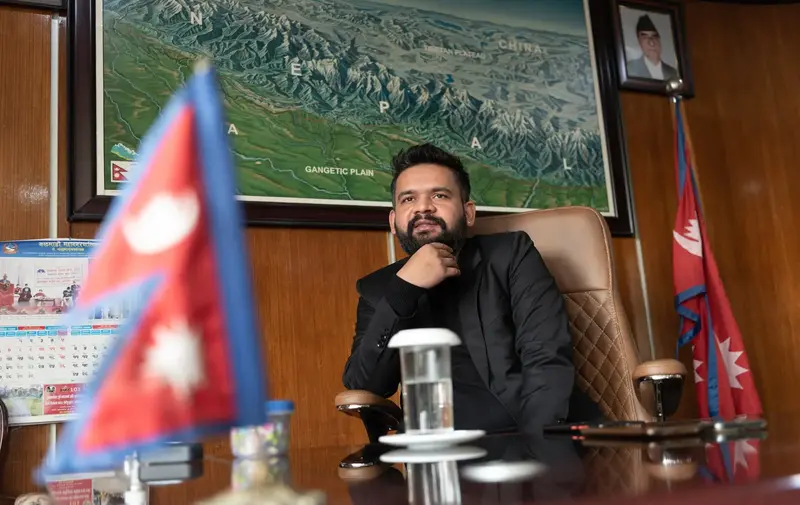
The Beat of Change: How Balen Shah Became Nepal’s Youth Icon in Politics
In modern South Asian politics, very few stories are as unusual and inspiring as that of Balendra “Balen” Shah. A structural engineer by education, a socially conscious rapper by passion, and a political leader by conviction, Shah’s journey from underground hip-hop artist to one of Nepal’s most influential political figures represents the changing face of leadership in the 21st century. His rise reflects the growing influence of youth culture, social media and civic awareness in shaping democratic movements. For many young Nepalis, Balen Shah is not simply a politician. He is someone who emerged from the same streets, struggles and cultural spaces that shaped their own lives.Early Life and EducationBalendra Shah was born on 27 April 1990 in Naradevi, Kathmandu, into a Maithili Madheshi family of Hindu origin. His father, Ram Narayan Shah, worked as an Ayurvedic practitioner, while his mother, Dhruvadevi Shah, managed the family and supported her children’s education. The family originally came from Mahottari district in Madhesh Province, and their move to Kathmandu was linked to his father’s professional posting at Naradevi Ayurvedic Hospital. Growing up in Kathmandu exposed Shah to the complexities of urban life, where economic disparities, infrastructure challenges and political debates were part of everyday reality. These experiences would later influence both his artistic expression and political vision. Shah pursued his early education at Alliance Academy and later studied at V.S. Niketan Higher Secondary School for his higher secondary studies. With a strong interest in engineering and infrastructure development, he enrolled at Himalayan WhiteHouse International College and completed a Bachelor’s degree in Civil Engineering. His academic journey then took him to India, where he earned a Master’s degree in Structural Engineering from Visvesvaraya Technological University (VTU) in Karnataka. Shah later began pursuing a PhD at Kathmandu University, focusing on the conservation of Newa heritage structures. His research aimed to explore how the preservation of Kathmandu’s historic architecture could strengthen tourism and boost the local economy.The Birth of a Rap VoiceLong before he entered politics, Balen Shah had already built a reputation in Nepal’s underground music scene. He became part of the emerging Nepali hip-hop movement, commonly known as Nep-hop, during the early 2010s. His first single, “Sadak Balak,” released in 2012, marked his entry into the music world. The song, written during his school years, reflected the hardships faced by young people navigating life in a rapidly urbanising city. Its raw honesty and social commentary resonated strongly with listeners. Shah’s popularity grew further in 2013 when he participated in the YouTube rap battle series “Raw Barz.” The platform played an important role in introducing underground artists to wider audiences. His lyrical sharpness and fearless criticism of social problems quickly earned him recognition within Nepal’s growing hip-hop community. Unlike many mainstream songs, Shah’s music carried powerful social messages. His lyrics addressed corruption, inequality, political frustration and the realities of urban life. One of his most widely known tracks, “Balidan” (Sacrifice), criticised political corruption and captured the anger felt by many young citizens. The song spread widely through online platforms and significantly boosted his public profile. For many listeners, Balen Shah’s music became more than entertainment. It became a voice of protest and reflection.Entering Politics and the Kathmandu Mayoral ElectionIn 2022, Balen Shah made an unexpected leap into politics by contesting the Kathmandu mayoral election as an independent candidate. At the time, Nepal’s political landscape was dominated by long-established parties, and many observers believed an independent candidate had little chance of winning. However, Shah’s campaign focused on issues that deeply resonated with urban residents. He spoke about corruption, accountability, transparency and the need for efficient governance in Kathmandu. His campaign style was simple and grassroots-driven. Early supporters recall that he would often travel through the city on a scooter with a microphone and pamphlets, speaking directly to citizens at street corners. As the campaign progressed, the momentum grew rapidly. Young volunteers, social media users and first-time voters rallied behind him. When the votes were counted, Shah achieved a historic victory, defeating candidates from major political parties including the Nepali Congress and the CPN (UML). His win made him the first independent candidate to become Mayor of Kathmandu. The result was widely seen as a sign that Nepal’s younger generation was ready for a different kind of leadership.The Cultural Impact of Nep-hopBalen Shah’s story cannot be separated from the broader rise of Nep-hop, Nepal’s homegrown hip-hop movement. Inspired initially by Western rap culture, Nep-hop gradually developed its own identity rooted in Nepali languages, local realities and political themes. After the end of Nepal’s civil war in 2006, hip-hop became an important medium for youth expression and social commentary. Artists such as Yama Buddha, Laure and Uniq Poet helped shape the movement by addressing issues ranging from corruption to identity politics. Social media platforms and YouTube played a crucial role in spreading these voices. Artists who once performed in small underground studios suddenly had access to national and international audiences. In many ways, Balen Shah’s journey mirrors the evolution of Nep-hop itself, a movement that began in rap battles and street culture but eventually reached the highest levels of political influence. Balen Shah’s rise is therefore more than just a political success story. It is a reminder that culture, youth energy and civic participation can transform the future of democracy.