
Home After Three Centuries: Netherlands Returns Priceless Chola Copper Plates to India
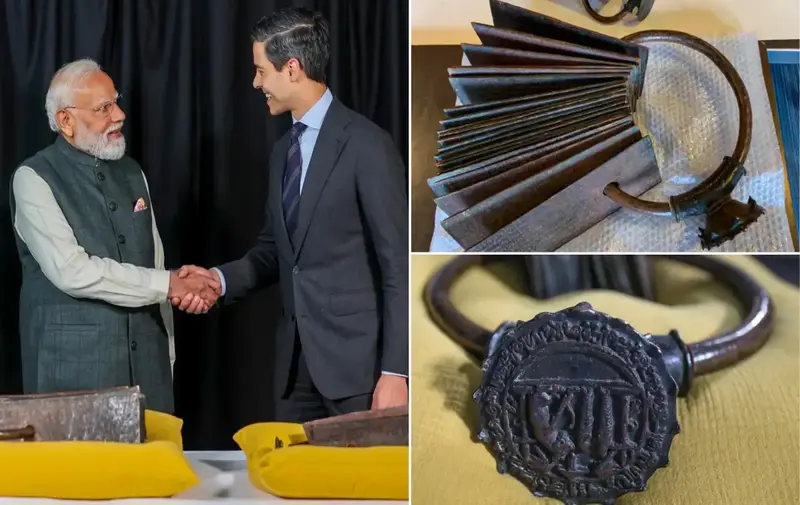
In a landmark moment for India’s cultural heritage and global restitution efforts, the Netherlands on Saturday formally handed over the priceless 11th-century Chola copper plates to India during Prime Minister Narendra Modi’s visit. The return marks the end of a journey that began more than three centuries ago when the artefacts were removed from Nagapattinam during the colonial era.Dating back to the reign of Rajaraja Chola I and his successor Rajendra Chola I, the copper plates are among the most valuable surviving records of the mighty Chola Empire, which once ruled large parts of South India and dominated maritime trade across Asia.Weighing nearly 30 kilograms, the collection consists of 21 large copper plates and three smaller ones, all bound together by bronze rings bearing the royal seals of the Chola dynasty. According to sources, they will be returned to India in a few weeks.Treasures of the Chola EmpireThe copper plates are believed to have originated between 1687 and 1688 and contain inscriptions in both Tamil and Sanskrit. Five plates feature Sanskrit text, while the remaining inscriptions are in Tamil, a language Prime Minister Modi described as “one of the most beautiful languages in the world.” The inscriptions largely document agreements linked to Buddhist shrines and monasteries in Nagapattinam and formalise commitments made during the Chola reign.Prime Minister Modi said the plates showcased the greatness of the Cholas and reflected India’s rich civilisational heritage.“We in India are immensely proud of the Cholas, their culture and their maritime prowess,” he wrote on social media, while thanking the Dutch government and Leiden University for facilitating the restitution.The Colonial Trail Behind the ArtefactsAccording to investigations conducted by Leiden University and the Dutch Colonial Collections Committee, the plates were most likely excavated during redevelopment work around a Buddhist pagoda site in Nagapattinam by the Dutch East India Company (VOC) between 1687 and 1700. At the time, the region had come under Dutch control.The committee concluded that the artefacts had been removed without the consent of the rightful custodians, constituting an involuntary loss of possession during colonial occupation.Following a request from India’s Ministry of Culture in 2023, the Dutch government initiated a formal review under its national policy for the return of colonial-era plunder. The Colonial Collections Committee later advised the unconditional return of both sets of plates to India.Bringing History Back HomeThe Chola copper plates are not merely ancient inscriptions etched onto metal. They are echoes of an empire that shaped South India’s history, culture, trade, and maritime influence for centuries. Their return after more than 300 years carries emotional and historical significance for millions of Indians.As the treasured artefacts prepare to come home, the moment stands as a powerful reminder that history, no matter how far removed, still has the power to reconnect nations with their roots.