
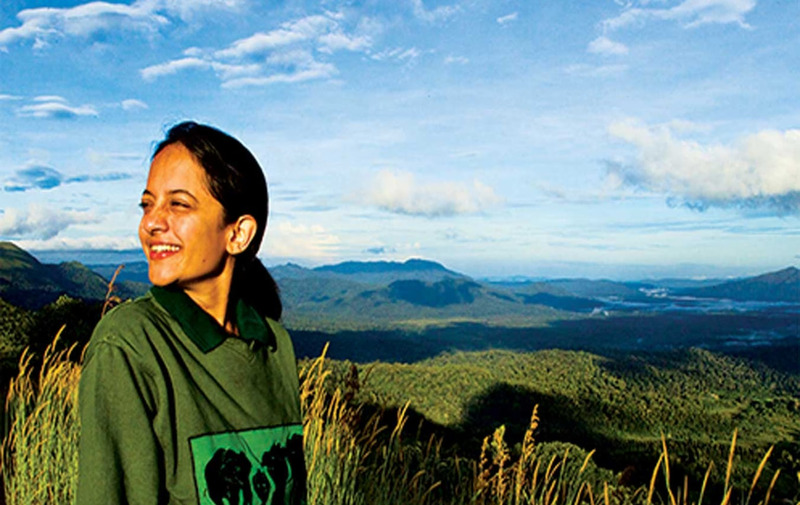
India’s Wildlife Warrior Wins Global Honour: Krithi Karanth Named 2026 Rolex National Geographic Explorer of the Year
For years, Krithi Karanth has walked the delicate line between forests and villages, where fear, survival, and wildlife often collide. Now, her relentless work to bridge the gap between humans and animals has earned her one of the world’s most prestigious recognitions in conservation.The National Geographic Society has named her the 2026 Rolex National Geographic Explorer of the Year, making her the first Indian ever to receive the title. The announcement was made in Mumbai on May 6 this year.The honour celebrates explorers and changemakers whose work is reshaping the future of the planet. For Karanth, it is also recognition of years spent listening not only to wildlife experts but also to farmers, children, and families living on the frontlines of conservation.Working Where Humans And Wildlife CollideIndia holds nearly half of Asia’s elephants and almost 75 percent of the world’s wild tigers. But as forests shrink and human settlements expand, encounters between people and animals have become increasingly common.This is where Karanth’s work stands out.As the CEO of the Bengaluru-based Centre for Wildlife Studies, she has focused on creating practical solutions that protect both people and wildlife.Her approach is simple yet powerful: conservation cannot succeed if communities living near forests are ignored.To address the growing tensions, Karanth and her team launched Wild Seve, a support programme that helps families affected by wildlife damage. When crops are destroyed or livestock is attacked, families can contact a toll-free helpline. Trained field staff then visit the location, document the loss, and help residents file compensation claims.The initiative has already helped nearly 17,000 families receive financial compensation.For many villagers, this support is more than paperwork. It reduces frustration and helps prevent retaliatory attacks on animals.Speaking about the issue, Karanth explained, “How do you make sure people are not injured, they’re not killed, they don’t have economic losses? Because when any of that happens, anger builds, and they want to retaliate against the animal.”Teaching Children To Live With WildlifeWhile Wild Seve addresses immediate conflict, another of Karanth’s initiatives focuses on shaping future generations.Called Wild Shaale, meaning “Wild School” in Kannada, the programme introduces children living near forests to the world of wildlife through storytelling, games, theatre, and art.Instead of teaching fear, the programme teaches understanding.Children learn why elephants enter villages, how tigers behave, and what safety measures can reduce conflict. What began as a small pilot initiative in 2018 has now expanded to nearly 1,600 schools across India, reaching around 72,000 children.The programme is helping transform how young people view wildlife—not as enemies, but as living beings sharing the same landscape.Building A Movement Of CoexistenceUnder Karanth’s leadership, the Centre for Wildlife Studies has worked across more than 7,000 villages and over 100 wildlife reserves in eight Indian states.The organisation has trained over 50,000 people and collaborated with nearly 10,000 farmers to encourage wildlife-friendly farming practices.Beyond fieldwork, Karanth has also made significant contributions to science and mentorship. She has authored more than 100 scientific papers and guided over 300 young researchers from countries including Chile, China, Indonesia, and the United Kingdom.Praising her work, Jill Tiefenthaler said, “Krithi has sparked a movement of hope across India. By combining science, education, and community partnership, she is redefining how people coexist with nature.”Today, as India faces growing environmental challenges, Karanth’s journey is proving that conservation is not just about saving animals. It is about creating a future where people and wildlife can survive—together.