
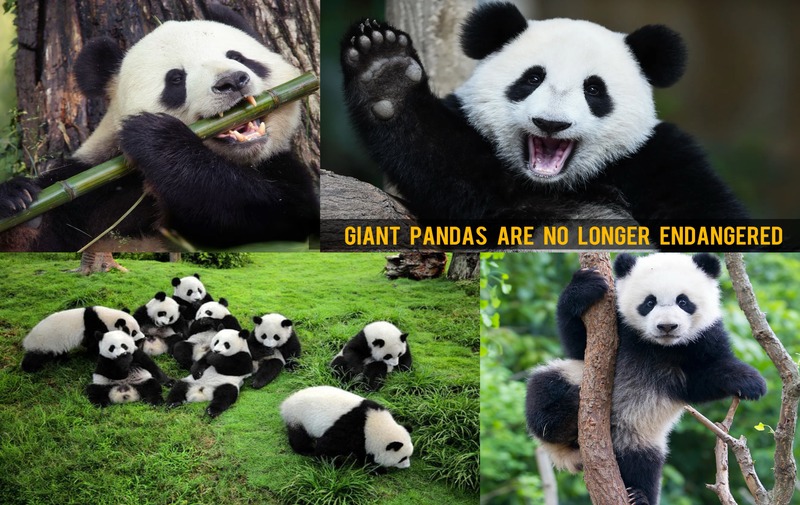
Once Endangered, Now Recovering: How Pandas Found a Second Chance
In a world where news about wildlife often carries loss and despair, the giant panda has offered something rare: hope. Once teetering on the edge of extinction, the black-and-white bear that became a global symbol of conservation has officially been reclassified from “endangered” to “vulnerable” on the International Union for Conservation of Nature (IUCN) Red List. It is a milestone that marks decades of human effort finally paying off, reminding us that extinction is not always inevitable. For conservationists and ordinary people alike, this change is more than a technical update on a global list. It is proof that collective human action, when sustained over generations, can reverse even the most alarming environmental trends.From the Brink of Extinction to a Slow RecoveryThere was a time when the future of the giant panda looked bleak. Habitat loss, deforestation, poaching, and the panda’s own low reproduction rate had pushed the species into the “endangered” category. The forests of China, where pandas live almost exclusively, were shrinking, and bamboo, their primary food source, was disappearing at an alarming rate. Today, the story looks different. According to the latest data, there are an estimated 1,864 giant pandas living in the wild, a rise of about 17 percent compared to earlier decades. This increase may seem modest, but in conservation terms, it represents an extraordinary turnaround for a species once considered a near-lost cause.The Long Road of Conservation EffortsThis recovery did not happen overnight. It is the result of years of deliberate, science-driven planning and political commitment. Governments expanded protected areas, enforced strict anti-poaching laws, and invested in habitat restoration. Forest corridors were created to connect isolated panda populations, allowing them to roam, feed, and breed more freely. Local communities played a crucial role in this success. By involving people living near panda habitats, conservation shifted from being an external force to a shared responsibility. Alternative livelihoods, eco-tourism, and education helped reduce human pressure on forests while improving local living standards.The Panda and the Power of SymbolismFew animals have captured the human imagination like the giant panda. The World Wide Fund for Nature (WWF) adopted the panda as its emblem in the late 20th century, turning it into a global ambassador for wildlife conservation. That symbolism mattered. The panda became a face people could connect with, donate for, and rally around. Behind that friendly image lay serious conservation work, research, monitoring, habitat mapping, and policy advocacy. The panda’s recovery shows how powerful storytelling combined with scientific action can mobilise governments, organisations, and individuals toward a common goal.What the Panda Teaches India and the WorldFor countries like India, home to iconic species such as the Bengal tiger, Asian elephant, and river dolphin, the panda’s story offers both inspiration and caution. India’s conservation successes, including the revival of tiger populations, show that similar principles work everywhere: habitat protection, community involvement, and sustained political will. At the same time, the challenges are growing. Climate change, expanding cities, and human-wildlife conflict threaten gains that took decades to achieve. The panda’s recovery reminds us that conservation is not a one-time achievement but an ongoing commitment that must evolve with changing environmental realities.Hope, With Responsibility AttachedThe reclassification of the giant panda is a rare piece of good news for global wildlife, but it is also a reminder of how fragile success can be. Conservation victories can be reversed if attention fades or funding dries up. Nature does not need miracles; it needs consistency. The panda’s survival tells us that when we act together, guided by science and compassion, we can repair some of the damage we have caused. In a time of climate anxiety and ecological loss, that message matters more than ever. The giant panda is no longer “endangered,” but its story is not finished. It stands today as a living promise that extinction can be slowed, reversed, and sometimes even defeated. The question now is whether humanity will extend that same care and commitment to the countless other species still waiting for their second chance.