"Dream, Dream, Dream! Conduct these dreams into thoughts, and then transform them into action."
- Dr. A. P. J. Abdul Kalam
"Dream, Dream, Dream! Conduct these dreams into thoughts, and then transform them into action."
- Dr. A. P. J. Abdul Kalam
2 Apr 2026
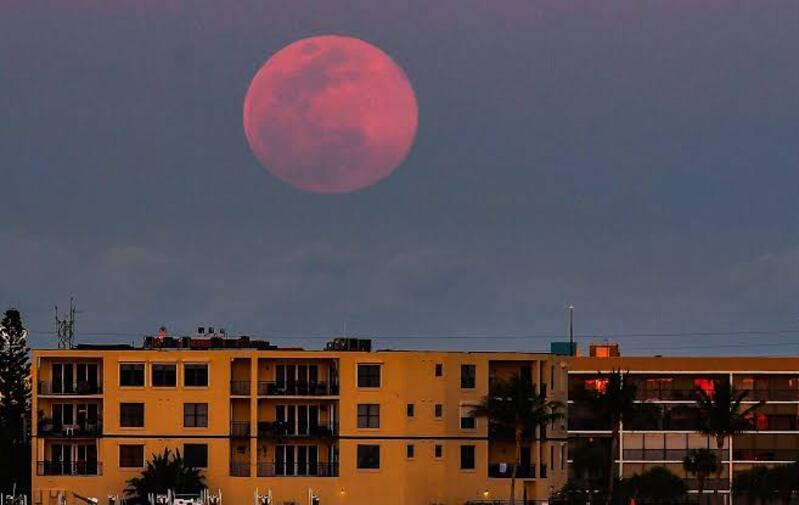
Last night, as April quietly stepped in, something magical unfolded above us. The sky didn’t just turn dark; it came alive. On the night of April 1 and into the early hours of today, April 2, 2026, the much-awaited Pink Moon rose gracefully, capturing hearts across the world. From the rooftops of Indian cities to quiet countryside fields, people paused, looked up, and shared a silent connection with the universe. It wasn’t just a full moon—it was a feeling. A moment of stillness in a fast-moving world.
Let’s clear the biggest myth first the moon wasn’t actually pink. Despite its romantic name, the Pink Moon usually appears bright white, sometimes glowing golden or even slightly orange when it rises low on the horizon. The name comes from nature, not the sky. It is inspired by early spring flowers called moss phlox, which bloom in soft pink shades during this time of year. So, while the moon itself doesn’t change color dramatically, its name reflects the beauty of Earth’s seasonal transformation, a poetic link between the sky and the soil.
The Pink Moon reached its peak illumination on April 1, 2026, at around 10:12 p.m. EDT, which translated to early morning on April 2 for many parts of the world, including India. And if you happened to look up just after sunset, you might have witnessed something even more special—the moon rising slowly in the eastern sky, appearing unusually large and glowing like a giant lantern. It felt closer. Brighter. Almost within reach.
That “larger-than-life” appearance wasn’t your imagination. It’s a fascinating visual trick known as the Moon illusion. When the moon is near the horizon, our brain compares it with objects like trees, buildings, and mountains. This comparison makes the moon seem bigger than it actually is. As it climbs higher into the sky, with no reference points around, it appears smaller.
There’s also another scientific reason behind its warm colors during moonrise: atmospheric scattering. When the moon is low, its light passes through a thicker layer of Earth’s atmosphere, scattering shorter wavelengths and allowing warmer hues like orange and red to dominate. So what we see is a beautiful combination of science and perception—a cosmic illusion that never fails to amaze.
Interestingly, the April 2026 full moon was not classified as a supermoon. A supermoon occurs when the moon is closest to Earth in its orbit, making it appear bigger and brighter than usual. Yet, despite not being a supermoon, the Pink Moon still managed to steal the spotlight. Its timing, brightness, and emotional symbolism made it just as captivating if not more. Because sometimes, it’s not about size. It’s about the feeling. The Pink Moon holds deep cultural and spiritual importance.
It is known as the Paschal Moon, which plays a crucial role in determining the date of Easter. Easter is celebrated on the first Sunday after this full moon, making it a key marker in the Christian calendar. It is also called by other names across cultures: Breaking Ice Moon, Budding Moon, and Egg Moon, all symbolizing new beginnings, growth, and life returning after winter. In many ways, it marks a transition not just in nature but within us.
One of the most beautiful things about this Pink Moon was how it brought people together without them even realizing it. Families stepped onto balconies. Photographers captured its glow over city skylines. Across continents, strangers shared the same sky, the same moon, the same moment. No borders. No differences. Just one shared experience. In a world often divided by noise and chaos, the moon quietly reminded us of something simple: we are all connected.
As April 2 unfolds today, the Pink Moon slowly fades from its peak brilliance. But its impact lingers. In photos. In memories. And in that quiet feeling it left behind. Because sometimes, the most powerful moments aren’t loud or dramatic they’re gentle, glowing, and fleeting. Just like the Pink Moon.

Writing about what truly matters, good news and stories to remind the world - it is brighter than we think.