"Dream, Dream, Dream! Conduct these dreams into thoughts, and then transform them into action."
- Dr. A. P. J. Abdul Kalam
"Dream, Dream, Dream! Conduct these dreams into thoughts, and then transform them into action."
- Dr. A. P. J. Abdul Kalam
7 May 2026
In a country where the uniform is a symbol of pride and sacrifice, there are many unseen contributors who quietly shape the minds that go on to serve the nation. Among them is Dr Santosh Goyal, a former teacher at the prestigious National Defence Academy. With a PhD in English and a passion for literature, he spent years guiding young cadets many of whom would later become officers in the Indian Army.
For Dr. Goyal, teaching was never just a profession. It was a purpose. He introduced students not only to the beauty of language, from William Shakespeare to the nuances of grammar, but also to discipline, clarity of thought, and confidence—qualities essential for military leadership. His classroom was a space where intellect met inspiration and where future soldiers learned the power of words alongside the duty of service.
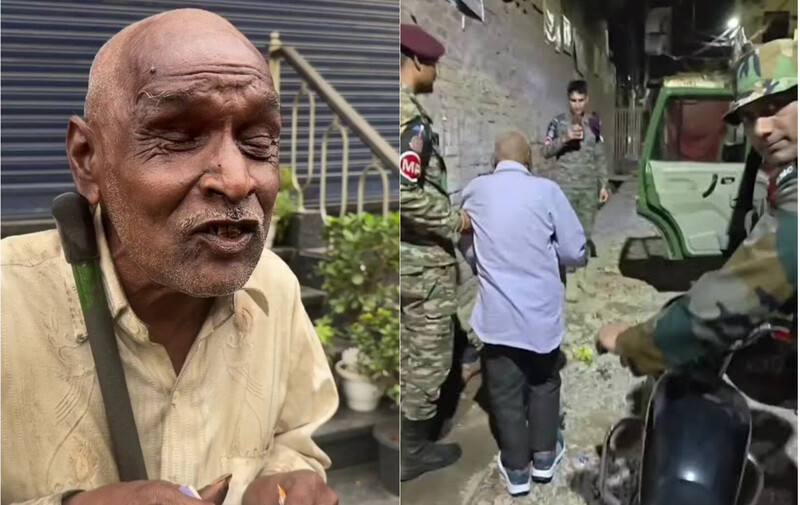
However, life does not always follow the script we imagine. In a cruel twist of fate, Dr. Goyal lost his eyesight. The loss was not just physical—it altered the entire course of his life. Unable to continue his duties, he was forced to leave his job. Without the security of a pension, the transition was harsh and unforgiving. From shaping futures within the structured environment of a premier institution, he found himself struggling for basic stability.
Eventually, he moved to Agra, where he began living in a temple with minimal resources. For many, such circumstances might have marked the end of their journey. But for Dr. Goyal, it became the beginning of a different kind of purpose.
Despite his condition, Dr. Goyal refused to let go of his identity as a teacher. In the quiet corners of the temple, he continued to educate students—free of cost. Without the support of modern tools or a formal classroom, he relied on memory, voice, and sheer dedication. Students gathered around him, learning everything from literature to language basics.
His lessons carried more than academic value; they were infused with life experiences, resilience, and the belief that knowledge should never be limited by circumstances. In many ways, his teaching became even more powerful because it came from a place of struggle and strength. For the students he mentored during this phase, Dr. Goyal was not just a teacher but a living example of perseverance. His story quietly spread through word of mouth, eventually reaching a wider audience.
In today’s digital age, stories of humanity often find their way to the world through social media. Dr. Goyal’s journey was one such story. When it went viral, it struck a deep emotional chord with people across the country. Here was a man who had given so much to society yet was living in hardship, still choosing to give more.
The public response was overwhelming. Messages of support poured in, and many were moved by his unwavering spirit. But the most significant response came from the institution he had once served indirectly, the Indian Army. Recognizing his contribution and his current condition, the Indian Army stepped forward. The Agra-based unit of 60 Para took Dr. Goyal under their care.
Importantly, this was not presented as charity. It was an act of respect, a reflection of the Army’s core values honour, dignity, and loyalty. For an organization that emphasizes brotherhood and standing by one’s own, this gesture carried deep meaning. Dr. Goyal had once shaped the minds of those who would wear the uniform. Now, the institution ensured that he would not be left behind in his time of need. At the same time, it highlights the impact of collective compassion. A story that began in hardship turned into one of hope, simply because people chose to care and act.
Romanticizing life and shaping stories from everything I see through my journalistic lens. Also, I love sports on the side.