"Dream, Dream, Dream! Conduct these dreams into thoughts, and then transform them into action."
- Dr. A. P. J. Abdul Kalam
"Dream, Dream, Dream! Conduct these dreams into thoughts, and then transform them into action."
- Dr. A. P. J. Abdul Kalam
3 Feb 2026
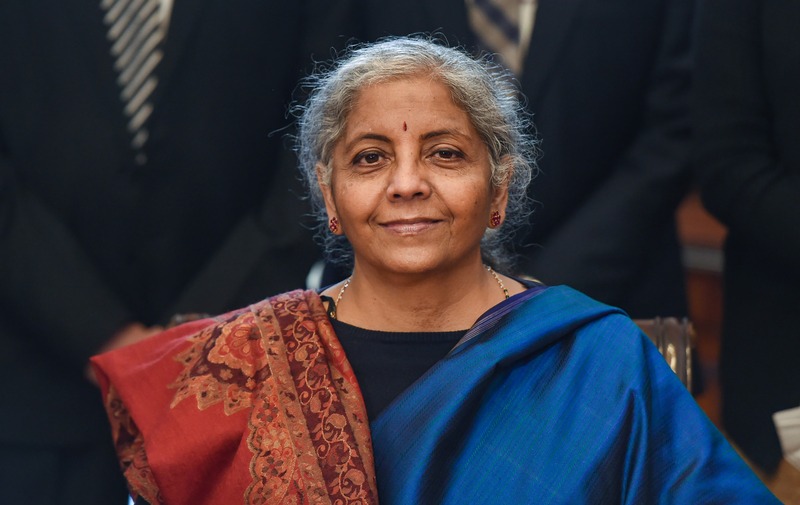
It is very rare that India has witnessed women holding the nation’s most powerful government posts with sustained authority and uncompromising resolve. Fewer still have done so while navigating skepticism, scrutiny, and the sheer weight of history. Nirmala Sitharaman belongs to that exceptional league. As India’s first full-time woman Defence Minister and Finance Minister, she has not only occupied positions once considered unreachable for women but has also reshaped what leadership looks like at the very top of Indian governance. Her rise is not marked by flamboyance or theatrics. It is defined instead by discipline, clarity of thought, and an unyielding sense of responsibility.
Born on 18 August 1959 in Madurai to a Tamil Iyengar family, Nirmala Sitharaman’s childhood was shaped by movement. Her father worked with the Indian Railways, and every few years the family relocated to a new city. New schools, unfamiliar classrooms, fresh faces, and inevitable goodbyes became part of her growing-up years. It was during these transitions that her mother offered a line that would quietly define her worldview: “Beta, home isn’t a place, it’s what you carry inside you.” At the time, it was just reassurance for a child struggling with change. Years later, it became a philosophy that would help her lead a nation constantly in transition.

Education was never incidental in Sitharaman’s journey. She pursued a Bachelor’s degree in Economics from Seethalakshmi Ramaswami College, followed by a Master’s degree and an MPhil from Jawaharlal Nehru University. Her academic grounding in economics sharpened her analytical lens long before she entered public life. A brief professional stint in the United Kingdom exposed her to global economic systems and policy thinking. Though she enrolled for a PhD at JNU, life took her to London when her husband secured a scholarship at the London School of Economics. These years added quiet depth to her understanding of global markets knowledge that would later influence national policy.

Nirmala Sitharaman joined the Bharatiya Janata Party in the mid-2000s, not as a career politician but as a thinker and communicator. Her clarity and command over issues soon earned her the role of national spokesperson. Between 2010 and 2014, she became a familiar face in political debates, known for sharp articulation rather than noise. In 2014, following the BJP’s electoral victory, she entered the Union Cabinet as Minister of State with independent charge of Commerce and Industry. It was a crucial phase, one that tested her ability to move from words to decisions, from television studios to policy rooms.

In September 2017, she was appointed India’s Defence Minister, a moment that sparked loud skepticism. Questions followed her immediately. Can she handle it? Is she suited for this role? What followed was not a loud rebuttal but quiet competence. She remembered those railway platforms of her childhood, each new beginning demanding strength. She led the ministry during sensitive times, asserting civilian leadership over defence with calm authority. In doing so, she became the first woman to hold the post full-time, permanently altering the mental map of Indian power structures.
On 30 May 2019, Nirmala Sitharaman assumed office as India’s Finance Minister, becoming the country’s first full-time woman to do so. When she presented her first Union Budget, she sent a message beyond numbers. She discarded the colonial-era briefcase and carried a red cloth-wrapped bahi-khata, symbolically reclaiming India’s own traditions of accounting and governance. During her tenure, India navigated unprecedented economic challenges, including the pandemic. As head of the Economic Response Task Force, she oversaw relief measures at a scale unseen in independent India. Under her watch, India rose to become the world’s fifth-largest economy in 2022 and the fourth-largest in 2025.

Longevity in power is rare in Indian politics, especially in economic ministries. In July 2025, Sitharaman became the longest continuously serving Finance Minister, surpassing C. D. Deshmukh. By February 2026, she had achieved another historic milestone, presenting the Union Budget for nine consecutive years, a first in Indian history. These records are not just numerical achievements. They signal institutional trust, political resilience, and the ability to endure pressure year after year. Nirmala Sitharaman’s life is more than a political biography. It is proof that authority need not shout, that women can hold the heaviest offices with composure, and that leadership shaped by discipline can redefine institutions. In a country where such examples are rare, her journey stands tall quiet, firm, and undeniably historic.


Romanticizing life and shaping stories from everything I see through my journalistic lens. Also, I love sports on the side.