"Dream, Dream, Dream! Conduct these dreams into thoughts, and then transform them into action."
- Dr. A. P. J. Abdul Kalam
"Dream, Dream, Dream! Conduct these dreams into thoughts, and then transform them into action."
- Dr. A. P. J. Abdul Kalam
3 May 2026
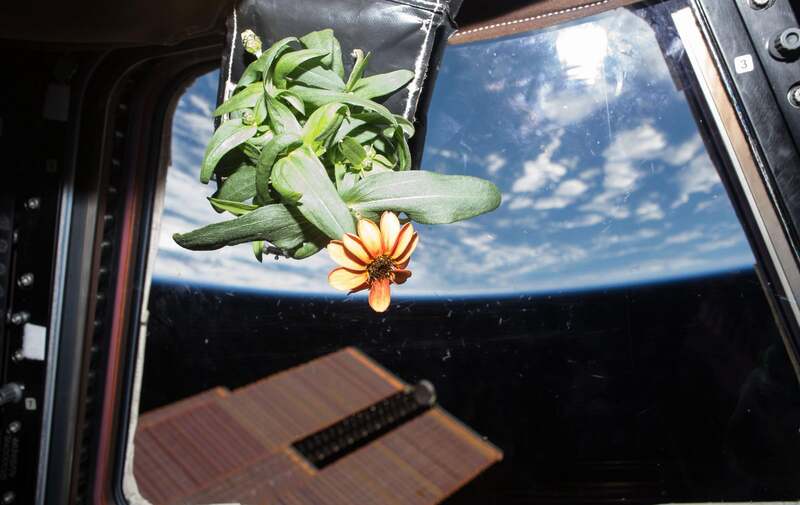
Somewhere above our planet, where there is no soil, no breeze, no seasons, NASA planted a flower. In November 2015, aboard the International Space Station, astronaut Kjell Lindgren placed tiny zinnia seeds into a compact plant growth chamber called Veggie. It wasn’t done for beauty, but for a question humanity has been carrying for decades: can life truly sustain itself away from Earth? Zinnias were chosen not because they are easy, but because they are demanding. Unlike lettuce, they require time, care, and the ability to complete a full flowering cycle. If a zinnia could bloom in space, it would mean that something deeply Earth-like, growth, patience, transformation could survive in the most unearthly place we know.
But space is not kind to growth. Without gravity, even something as simple as water forgets how to behave. It clings, floats, over-saturates. The zinnia plants began to suffer, leaves curled, mold crept in, and what was meant to be a milestone nearly became a failure. Inside the station, astronaut Scott Kelly stepped in, not as a scientist following a fixed protocol, but as a caretaker responding to life in distress. He adjusted airflow, reduced watering, and tended to the plants almost intuitively. In that moment, the experiment shifted. It was no longer just about controlled systems, it became about human presence, observation, and care. Space had introduced uncertainty, and the only answer was attention.
The Day a Flower Opened in Silence
Then, on January 16, 2016, something quietly extraordinary happened. A bright orange zinnia bloomed. No applause, no sound, just petals unfolding in zero gravity. A simple act on Earth, but in space, it was a statement. It proved that a flowering plant could complete its life cycle beyond our planet, inside NASA’s Veggie system. That bloom carried more weight than its fragile structure suggested. It meant that growth was not bound to gravity. That life, if guided with care, could adapt to places it was never meant to be. The image of that flower, floating against the cold machinery of space, felt almost poetic, as if Earth had sent a small piece of itself to remind us where we come from.
What a Single Bloom Really Meant
That one zinnia was never just a flower. It was a beginning. For astronauts who may one day travel to Mars or live for years away from Earth, plants will not be optional, they will be essential. They will provide food, oxygen, and something far less measurable but equally important: a sense of life. The zinnia showed that growing plants in space is not only possible, but deeply human. It requires patience, care, and the willingness to respond to the unexpected. And maybe that’s the real lesson it carried back to us, that no matter how far we go, survival will not depend only on technology, but on our ability to nurture life. Even there, in the vast silence of space, a flower bloomed… and in doing so, it quietly redefined what it means to feel at home.

Writing about what truly matters, good news and stories to remind the world - it is brighter than we think.