"Dream, Dream, Dream! Conduct these dreams into thoughts, and then transform them into action."
- Dr. A. P. J. Abdul Kalam
"Dream, Dream, Dream! Conduct these dreams into thoughts, and then transform them into action."
- Dr. A. P. J. Abdul Kalam
26 May 2026
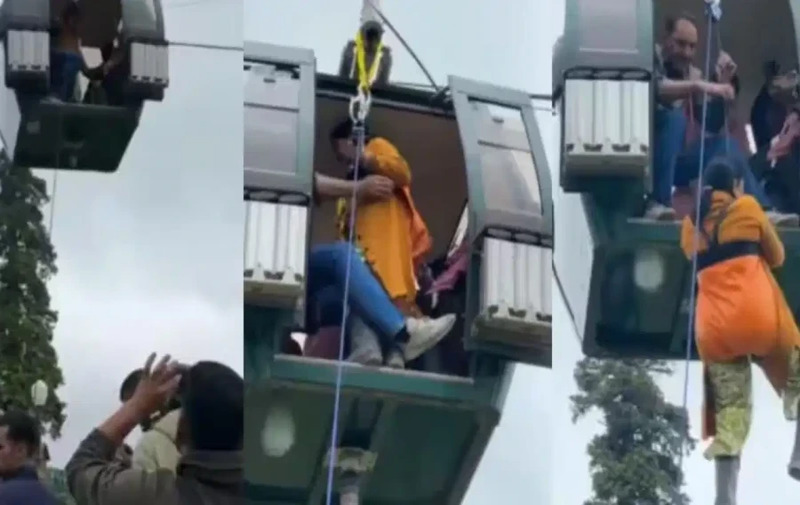
Panic unfolded high above the breathtaking valleys of Gulmarg when a major technical snag brought operations of the famous Gulmarg Gondola ropeway to a sudden halt, leaving more than 300 tourists stranded inside suspended cable car cabins. Some of the gondolas hung nearly 500 feet above the ground.
Inside the cabins were terrified families, women, children and tourists who had arrived at one of Kashmir’s most iconic tourist destinations expecting scenic views, only to find themselves trapped in the sky for hours. But what followed next became a story of extraordinary courage and coordination.
A massive seven-hour rescue mission involving the National Disaster Response Force, State Disaster Response Force, Jammu and Kashmir Police, the Indian Army’s Chinar Corps and local administration ensured that every single passenger was rescued safely without injuries.
The Gulmarg Gondola is one of the world’s highest cable car systems and a major attraction for visitors to Kashmir. On the day of the incident, operations came to a standstill after a technical glitch disrupted the system. Within moments, 65 gondola cabins froze mid-air.
As panic spread among stranded passengers, emergency evacuation protocols were immediately activated. Rescue teams rushed to the site while officials monitored the developing situation closely. Eyewitnesses described scenes of fear and uncertainty as families remained suspended for hours in the cold mountain air.
The rescue mission quickly turned into one of the region’s most challenging high-altitude evacuation operations. Personnel from multiple agencies coordinated tirelessly to bring stranded tourists down safely, cabin by cabin.
Rescue workers navigated difficult terrain, harsh weather conditions and dangerous heights to reach passengers trapped hundreds of feet above the ground. The Indian Army’s Chinar Corps played a crucial role in the operation, with trained personnel assisting evacuation teams in reaching inaccessible sections of the ropeway. After nearly seven hours of intense rescue work, all 300 tourists were finally brought to safety — without a single casualty or injury.
Manoj Sinha said he continuously monitored the operation and directed senior officials, including the Director General of Police, to supervise rescue efforts on the ground. Meanwhile, Jammu and Kashmir Chief Minister Omar Abdullah announced a probe into the technical malfunction and assured that action would be taken if lapses were found.
He also commended the rescue agencies for their swift and coordinated response. Defence Minister Rajnath Singh praised the joint rescue team, stating that the successful operation reflected the professionalism, courage and efficiency of India’s disaster response forces.
In a social media post, Singh said the nation acknowledged and applauded the dedication and service of all personnel involved in the challenging rescue effort.
According to Syed Qamar Sajjad, Managing Director of the J&K Cable Car Corporation, the incident was caused by a technical glitch and there was no major structural issue with the ropeway system. As a precautionary measure, gondola operations were temporarily suspended following the incident.
Authorities are now expected to conduct a detailed technical investigation into the malfunction to ensure passenger safety before operations resume.
What could have turned into a devastating tragedy instead became a powerful reminder of the bravery and preparedness of India’s rescue forces. High above the snowy mountains of Gulmarg, fear and uncertainty filled the suspended cabins. But below, teams of rescuers refused to give up until every last tourist was safely back on the ground.
And in those seven tense hours, India witnessed not just a rescue operation but a remarkable display of courage, teamwork and humanity.
.jpeg)
I have a Masters in Literature and a knack for spotting the silver lining! When I’m not chasing good news, you’ll find me nurturing my farm or lost in a good book.