"Dream, Dream, Dream! Conduct these dreams into thoughts, and then transform them into action."
- Dr. A. P. J. Abdul Kalam
"Dream, Dream, Dream! Conduct these dreams into thoughts, and then transform them into action."
- Dr. A. P. J. Abdul Kalam
15 Apr 2026
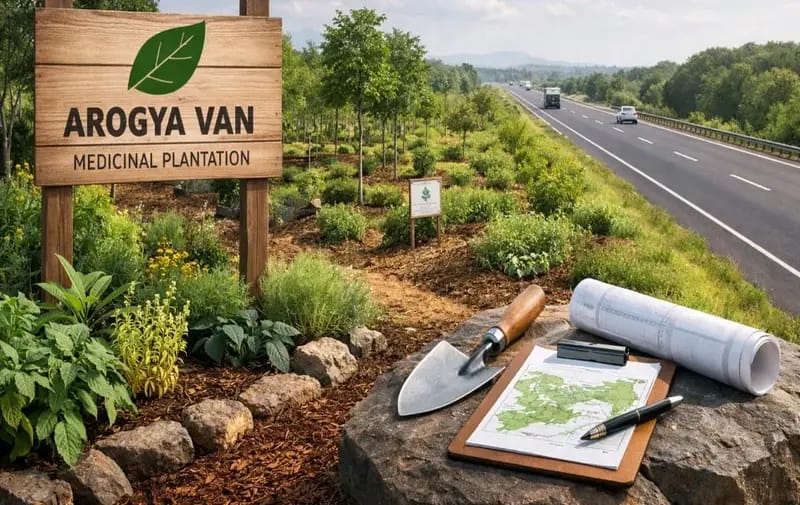
India’s highways have long been symbols of growth, speed, and connectivity. But now, they are being reimagined as something more—living, breathing ecosystems that nurture both nature and people. In a refreshing step towards sustainable development, the National Highways Authority of India has launched an initiative called ‘Arogya Van.' The idea is simple yet powerful: plant medicinal trees along highways to create green corridors that support biodiversity, improve ecological balance, and reconnect people with nature. It is a vision that transforms roads from mere transit routes into pathways of wellness.
At its core, ‘Arogya Van’ is about harmony—between development and the environment. Highways often cut through natural landscapes, affecting ecosystems and wildlife. This initiative aims to reverse some of that impact by introducing carefully selected medicinal plants that can restore balance. In the first phase, 17 land parcels covering around 62.8 hectares have been identified. These spaces, often underutilized, are now being turned into pockets of greenery. Over 67,000 medicinal trees will be planted, marking the beginning of a larger movement. The project spans multiple states, including Madhya Pradesh, Gujarat, Maharashtra, Haryana, Delhi-NCR, Karnataka, Tamil Nadu, Odisha, and Andhra Pradesh. This wide reach ensures that the benefits of the initiative are not limited to one region but spread across the country.
The choice of medicinal plants is not accidental. India has a long history of traditional healing systems like Ayurveda, where plants play a central role in maintaining health and well-being. Trees like Neem, Amla, Jamun, Imli, Lemon, Gular, and Maulsari are not just part of our landscapes—they are part of our lives. They provide shade, improve air quality, and carry medicinal properties that have been trusted for generations. By planting these trees, ‘Arogya Van’ brings back this connection. It reminds us that nature is not separate from us; it is an essential part of our well-being.
Beyond human benefits, the initiative plays a crucial role in supporting biodiversity. Medicinal plants attract birds, bees, and other pollinators, creating micro-ecosystems along highways. These green corridors can act as safe spaces for wildlife, helping maintain ecological balance in areas affected by construction and traffic. Over time, they can contribute to healthier soil, better air quality, and a more resilient environment. The selection of plants is tailored to local climate and soil conditions, ensuring that they grow sustainably. This thoughtful approach increases the chances of long-term success and reduces the need for excessive maintenance.
The first phase is just the beginning. The National Highways Authority of India has already identified around 188 hectares of land for future expansion. Most of the plantation work will take place during the monsoon season, ensuring better survival rates for the plants. This planned approach reflects a commitment to not just planting trees but nurturing them. Over time, these efforts can create continuous green corridors across highways, connecting different regions and ecosystems. It is a vision that combines infrastructure with sustainability in a meaningful way.
Arogya Van is more than just a plantation drive; it is a shift in perspective. It redefines what highways can be and what they can contribute to society. In the shade of these medicinal trees lies a promise, a promise of cleaner air, richer biodiversity, and a deeper connection between people and nature. It is a reminder that even in the busiest spaces, there is room for growth, healing, and balance. As these trees take root and grow, they will not just line the highways; they will tell a story. A story of a nation that chose to move forward without leaving nature behind.

Writing about what truly matters, good news and stories to remind the world - it is brighter than we think.