"Dream, Dream, Dream! Conduct these dreams into thoughts, and then transform them into action."
- Dr. A. P. J. Abdul Kalam
"Dream, Dream, Dream! Conduct these dreams into thoughts, and then transform them into action."
- Dr. A. P. J. Abdul Kalam
18 Nov 2026
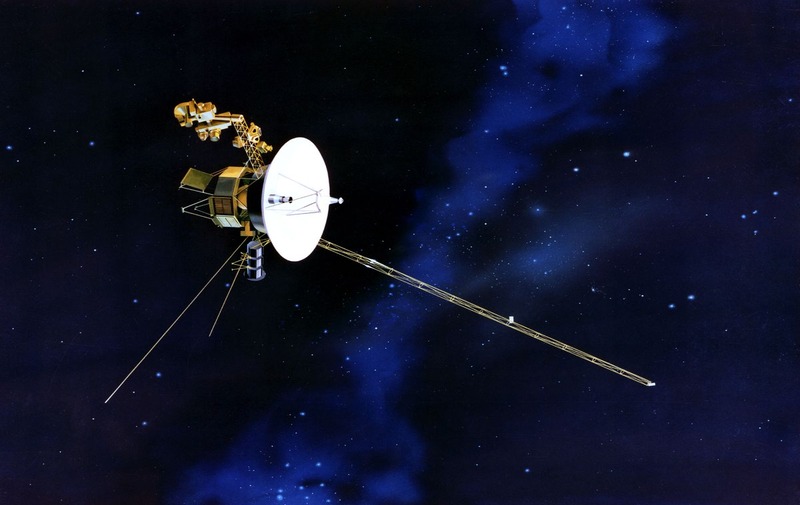
Humanity has just reached a remarkable milestone in deep-space exploration. NASA’s Voyager 1, the farthest human-made object from Earth, has travelled so deep into space that it is now one light-day away from our planet.
This means a radio signal travelling at the speed of light takes 24 hours to reach the spacecraft. The distance is approximately 16 billion miles (26 billion kilometers)—an extraordinary achievement for a mission that began nearly five decades ago.
Launched in September 1977, Voyager 1 crossed this milestone shortly after 5:16 a.m. ET on Wednesday, November 18, 2026. It has held the title of the most distant human-made object since 1998, when it overtook NASA's Pioneer 10.
Voyager 1 and its twin, Voyager 2, were originally designed for a five-year mission to explore Jupiter and Saturn. However, both spacecraft have continued operating for almost 49 years, far exceeding their expected lifespans.
Their journey has taken them beyond the heliosphere, the vast protective bubble created by the Sun's magnetic field. Voyager 1 crossed into interstellar space in 2012, while Voyager 2 followed in 2018.
Today, they are helping scientists study the space between stars, offering valuable insights into our galactic neighbourhood.
Despite being billions of kilometres away, Voyager 1 remains in contact with Earth through NASA's Deep Space Network, a global system of powerful radio antennas. However, communication is no longer a quick exchange. A command sent from Earth takes approximately 24 hours to reach the spacecraft. Its response takes another 24 hours to return. That means engineers must wait nearly two days for a complete exchange of messages!
Keeping the spacecraft operational has also become increasingly challenging. Its plutonium-powered generators produce less electricity every year. From approximately 470 watts at launch, its power output has fallen to around 210 watts. NASA has gradually switched off several instruments to conserve energy. Only two of its original 10 scientific instruments are currently operating and sending back data.
Voyager 1 carries something beyond scientific equipment: a Golden Record. This gold-plated copper disc contains images, music, natural sounds and greetings in 55 languages, created as a message for any extraterrestrial civilisation that might encounter it.
According to CNN, the spacecraft is currently travelling towards the star Gliese 445, more than 17 light-years from Earth. It is expected to make its closest approach to the star in about 40,000 years.
Even when its power eventually runs out, Voyager 1 will continue its journey through space, carrying humanity's message into the unknown. Nearly 49 years after launch, this remarkable spacecraft continues to remind us how far human curiosity and scientific ambition can travel.
.jpeg)
I have a Masters in Literature and a knack for spotting the silver lining! When I’m not chasing good news, you’ll find me nurturing my farm or lost in a good book.