"Dream, Dream, Dream! Conduct these dreams into thoughts, and then transform them into action."
- Dr. A. P. J. Abdul Kalam
"Dream, Dream, Dream! Conduct these dreams into thoughts, and then transform them into action."
- Dr. A. P. J. Abdul Kalam
3 Dec 2025
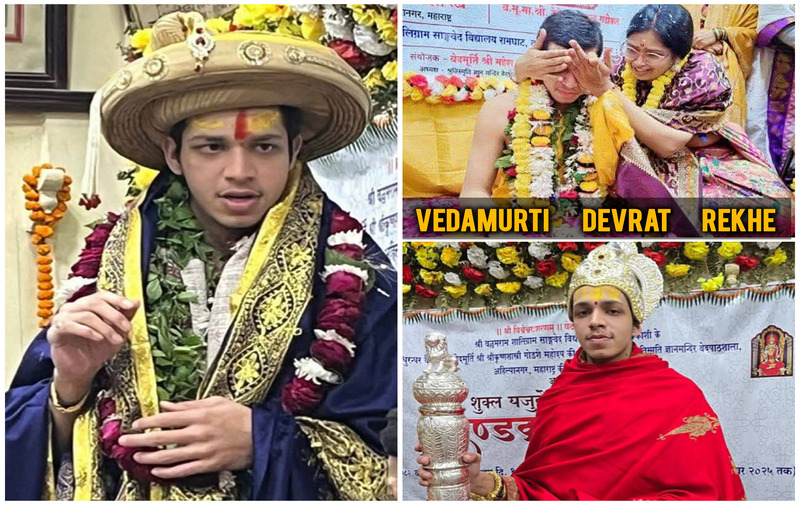
At just 19, Vedamurti Devavrat Mahesh Rekhe from Ahilyanagar, Maharashtra, has carved his name into India’s spiritual history with an achievement few ever dare to attempt. In the sacred city of Varanasi, he completed the highly demanding Dandakrama Parayanam at Vallabharam Shaligram Sangved Vidyalaya, a Vedic feat so rare that scholars say it had not been performed in nearly 200 years. From 2 October to 30 November, Rekhe devoted himself entirely to this intense spiritual discipline, reciting nearly 2,000 mantras from the Madhyandina branch of the Shukla Yajurveda over 50 continuous days. What began as a sacred duty soon became a national moment, turning a quiet student of scriptures into a young symbol of cultural revival.
Devavrat’s journey did not begin in Kashi; it was shaped at home. He comes from a lineage steeped in Vedic education. His father, Mahesh Chandrakant Rekhe, is not only his guru but also a respected authority in Vedic examinations associated with the Sringeri Sharada Peetham. From a young age, Devavrat was immersed in daily chanting, discipline, and intellectual rigour. While most teenagers navigate screens and schedules, his world revolved around syllables, rhythm, and sacred meters. His upbringing taught him that the Vedas are not merely to be read, they are to be lived, memorised, and honoured through sound and silence alike.
The Dandakrama Parayanam is not ordinary chanting. It is one of the most complex and demanding forms of Vedic oral recitation, requiring absolute precision, mental stamina, and mastery over multiple verbal patterns. Devavrat recited over 25 lakh words without reading from any text, navigating through eight intricate vikruti recitation forms that test memory to its limits. Observers described his delivery as calm, flawless, and unwavering. Every verse had to be perfect; one misplacement of tone could undo years of training. And yet, day after day, he stood firm, guided more by internal discipline than public applause.
When Prime Minister Narendra Modi publicly praised Devavrat’s accomplishment, the young scholar became more than a rare Vedic achiever; he became a national symbol of continuity in a changing India. Spiritual institutions honoured him with awards and recognition, and the streets of Varanasi witnessed a grand procession celebrating his success. Hundreds of Vedic students, seers, and citizens gathered as conch shells echoed through the ancient city. But behind the ceremony stood a simple young man who bowed before his teachers and returned to his studies. At 19, he is not merely completing rituals, he is building a legacy.
Romanticizing life and shaping stories from everything I see through my journalistic lens. Also, I love sports on the side.