"Dream, Dream, Dream! Conduct these dreams into thoughts, and then transform them into action."
- Dr. A. P. J. Abdul Kalam
"Dream, Dream, Dream! Conduct these dreams into thoughts, and then transform them into action."
- Dr. A. P. J. Abdul Kalam
8 Oct 2026
What happens when rockets become cheaper, reusable and more accessible? World Space Week 2026 is putting that question at the centre of its global celebrations.
Held from October 4 to 10, this year’s theme is “Rocket Revolution”, highlighting the rapid changes transforming spaceflight. From commercial launch companies to reusable boosters and new spacecraft, the way humanity reaches orbit is changing—and millions of students and space enthusiasts are joining the celebration.
The United Nations established World Space Week in 1999 as an annual celebration of space science and technology. The dates commemorate two milestones: the launch of Sputnik 1 in 1957 and the entry into force of the Outer Space Treaty in 1967.
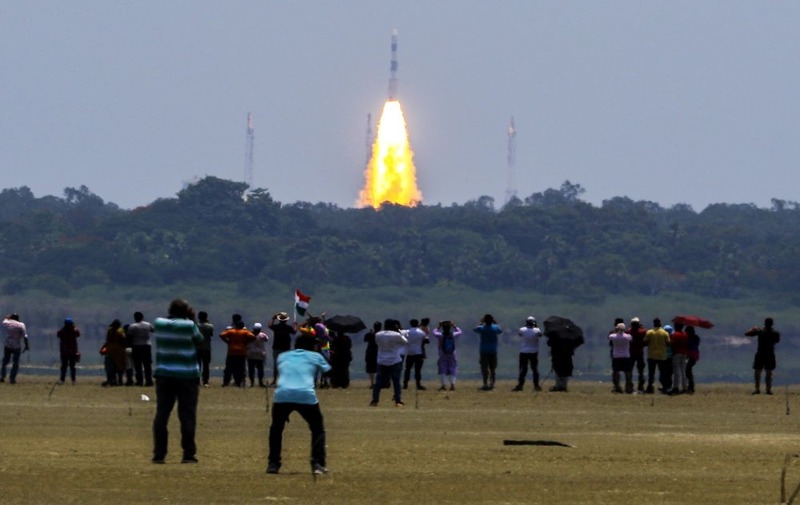
For decades, launching something into space was largely the domain of national space agencies. Today, a growing commercial space sector is changing that picture. Reusable rocket technology has helped make more frequent launches possible, while new companies are developing launch vehicles and spacecraft for an expanding range of missions.
The World Space Week Association says falling launch costs are opening the door to new uses of space. The theme also aims to inspire young people to explore science, technology, engineering and mathematics (STEM).
The rocket revolution comes at a time when ambitious missions are pushing beyond Earth orbit. NASA’s Artemis programme is working towards renewed human exploration of the Moon, with longer-term plans looking towards Mars. Commercial companies are also developing lunar landers and new launch systems that could play a role in future missions.
Meanwhile, reusable rockets are changing the rhythm of spaceflight. Instead of major rocket components being discarded after one launch, reusable boosters can return to Earth and fly again.
World Space Week has no single venue. Schools, museums, astronomy clubs, space agencies and aerospace organisations host programmes across the globe.
Last year, around 50,000 events were held in 102 countries, demonstrating the enormous public interest in space. This year, model rocket launches, exhibitions, educational activities and astronomy events are again bringing space closer to classrooms and communities. NASA’s Kennedy Space Center Visitor Complex is also hosting an expo featuring Space Shuttle Atlantis.
There is even a playful twist to this year’s celebration.
The European Space Agency (ESA) and The Pokémon Company International are collaborating on family-focused activities combining real space science with the world of Pokémon. Participating museums will host special Pokémon GO activities, while ESA astronaut Sophie Adenot has taken a Pikachu plush toy to the International Space Station as part of the collaboration.
From classrooms to launchpads, World Space Week 2026 is showing that the next space revolution may not just be about reaching farther—it could also be about making space accessible to more people than ever before.
.jpeg)
I have a Masters in Literature and a knack for spotting the silver lining! When I’m not chasing good news, you’ll find me nurturing my farm or lost in a good book.