"Dream, Dream, Dream! Conduct these dreams into thoughts, and then transform them into action."
- Dr. A. P. J. Abdul Kalam
"Dream, Dream, Dream! Conduct these dreams into thoughts, and then transform them into action."
- Dr. A. P. J. Abdul Kalam
8 Mar 2026
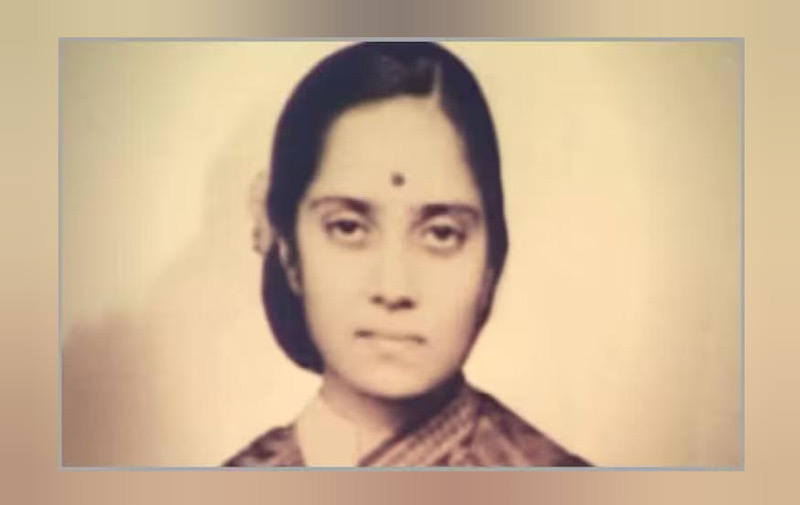
Every nation’s freedom story has heroes who fought on battlefields and in prisons. But some fought with ideas, courage, and determination. Usha Mehta was one such extraordinary woman whose voice became a symbol of resistance during India’s struggle for independence. Born on 25 March 1920 in Saras village near Surat in present-day Gujarat, Usha grew up in a family where discipline and education were highly valued. Her father was a judge under the British administration, and naturally he expected his daughter to live a quiet, respectable life. But destiny had different plans. At the age of five, Usha saw Mahatma Gandhi during one of his visits to Ahmedabad. The sight of the simple yet powerful leader left a deep impression on her young mind. Soon after, she participated in a Gandhian camp where she learned about khadi, self-reliance, and the idea of freedom. From that moment, the seeds of patriotism were planted in her heart.
Usha’s courage showed itself very early. In 1928, when she was just eight years old, she joined protests against the Simon Commission protests in India. Along with other children, she shouted the famous slogan “Simon Go Back!” These were not ordinary protests. Children would march in the early morning, picket liquor shops, and wave the Indian flag despite the threat of police violence. In one protest, the police charged at the crowd and a girl carrying the national flag fell down. Angry and determined, the children returned to the streets and shouted boldly, “You can wield your batons, but you cannot bring down our flag.” For Usha, freedom was not just a political idea—it had become a personal mission.
By the time she was studying philosophy at Wilson College in Bombay, the country was entering one of the most crucial phases of its freedom struggle. In August 1942, Gandhi launched the historic Quit India Movement, calling on Indians to “Do or Die.” Within hours, the British arrested almost all senior leaders, including Gandhi. Newspapers were censored and communication between revolutionaries was cut off. For many, the movement seemed paralyzed. But a 22-year-old student refused to accept silence.
Usha Mehta had a revolutionary idea: if newspapers were censored and leaders imprisoned, why not spread the message through radio? With the help of her associates, including Ram Manohar Lohia, technicians, and supporters, she set up an underground radio station known as the Secret Congress Radio. On 27 August 1942, the station began broadcasting. The first words spoken in Usha Mehta’s voice were historic: “This is the Congress Radio calling on 42.34 meters from somewhere in India.” From hidden locations across Bombay, the station broadcast uncensored news, messages from freedom leaders, and updates about protests happening across the country. At a time when the British controlled the press, this underground radio became the voice of resistance. To avoid detection, the team shifted the station’s location almost every day. For nearly three months, they successfully outsmarted the British authorities.
Eventually, on 12 November 1942, the British police tracked down the radio station and arrested Usha Mehta and her colleagues. What followed was months of harsh interrogation by the colonial authorities. She was kept in solitary confinement and even offered opportunities to study abroad if she revealed information about the movement. But Usha remained silent. During her trial, when the judge confirmed she was not required to answer the questions, she calmly declared that she would not respond to any of them even if it meant punishment. She was sentenced to four years in prison and lodged in Yerwada Jail in Pune. Despite illness and physical suffering, she never betrayed her fellow freedom fighters.
When India finally gained independence in 1947, Usha Mehta was too ill to attend the celebrations in Delhi. Later, she resumed her studies and earned a PhD on Gandhi’s political and social philosophy from the University of Bombay. She eventually became a respected professor and head of the Department of Civics and Politics. Even after independence, she remained dedicated to spreading Gandhian values through institutions like the Gandhi Peace Foundation. In 1998, the Government of India honored her with the Padma Vibhushan, the country’s second-highest civilian award. Yet she remained humble and deeply reflective about India’s journey.
On International Women’s Day (8 March), stories like Usha Mehta’s remind us that women were not just participants but leaders in India’s freedom struggle. At a time when society expected women to stay at home, she ran a secret radio network that challenged the might of the British Empire. Her courage shows that strength does not always come from weapons; it can come from conviction, ideas, and an unwavering voice. Today, when we celebrate women breaking barriers in science, politics, sports, and journalism, Usha Mehta’s story reminds us that the path was paved by brave women who dared to speak when the world wanted them silent. Her underground radio lasted only three months. But its echo continues to inspire generations of Indians to believe in the power of courage, truth, and freedom.

Romanticizing life and shaping stories from everything I see through my journalistic lens. Also, I love sports on the side.