"Dream, Dream, Dream! Conduct these dreams into thoughts, and then transform them into action."
- Dr. A. P. J. Abdul Kalam
"Dream, Dream, Dream! Conduct these dreams into thoughts, and then transform them into action."
- Dr. A. P. J. Abdul Kalam
5 May 2026
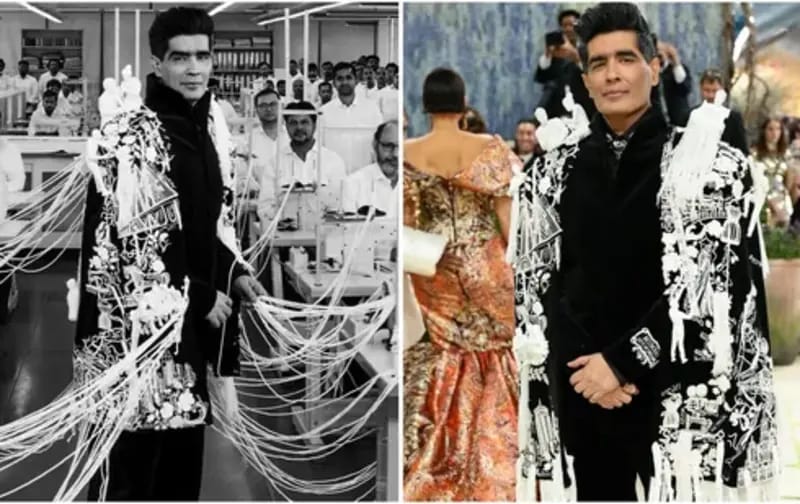
On one of the world’s most watched red carpets, where fashion often leans towards spectacle, Manish Malhotra chose something deeper. At the Met Gala 2026, he did not just wear an outfit; he carried a story. A story of Mumbai, of dreams stitched into fabric, and of the many hands that quietly shape beauty behind the scenes. As flashes of cameras lit up the grand steps of the Metropolitan Museum of Art, Malhotra stood tall in a look that blended elegance with emotion. It was not just about style; it was about identity, belonging, and pride.
At first glance, the ensemble was striking: a classic black bandhgala paired with a dramatic velvet cape. But the real magic lay in the details. The outfit took over 960 hours to create and involved more than 50 artisans, each contributing their skill and dedication. The cape, rich in texture and storytelling, became the heart of the look. Crafted using traditional Indian techniques like zardozi, chikankari, dori, and kasab embroidery, it showcased the depth of India’s textile heritage. Against a deep black base, intricate white embroidery unfolded like a moving painting, inspired by the spirit and skyline of Mumbai. Every stitch carried meaning. Every thread held memory. This was not just couture—it was a living narrative.
What made the ensemble truly unforgettable was its human connection. In a powerful and deeply personal gesture, Malhotra chose to include the names and signatures of his artisans directly into the embroidery. This was more than design; it was recognition. In an industry where the spotlight often shines on the final product, Malhotra turned attention to the creators behind it. The tailors, embroiderers, and craftsmen who spend hours perfecting every detail were no longer invisible. They were part of the story, permanently etched into the fabric. Adding to this narrative were miniature sculptural elements on the cape, depicting artisans at work. It was almost as if the garment itself were alive, telling the story of creation, effort, and passion.
At the core of this masterpiece is Mumbai, the city that shaped Malhotra’s journey. Known as the “City of Dreams,” Mumbai has long been a place where ambition meets opportunity, where countless individuals come to build their futures. Malhotra captured this essence beautifully. The cuff of his bandhgala featured custom embroidery reading “Mumbai – City of Dreams,” anchoring the entire look in personal memory and gratitude. For someone who began his journey in the world of cinema and fashion in Mumbai, this tribute felt deeply authentic.
Over the past three decades, Manish Malhotra has become one of India’s most influential designers. From redefining Bollywood costumes to building a global couture label, his journey reflects constant evolution. He started as a model but soon found his calling in costume design, blending storytelling with style. His work in films like Rangeela earned him recognition, including a Filmfare Award for Best Costume Design, and set the stage for a career that would shape Indian fashion. Today, his ventures extend beyond clothing to include high jewellery and film production, making him not just a designer but a creative entrepreneur.
The Met Gala 2026 was not just about one individual; it was a moment for India. Alongside Malhotra, personalities like Isha Ambani, Karan Johar, and Ananya Birla brought Indian tradition to an international audience. Their presence highlighted a larger shift: Indian fashion is no longer on the sidelines; it is at the centre of global conversations. Rich textiles, handcrafted details, and cultural narratives are gaining recognition and appreciation worldwide.
Malhotra’s look stood out because it combined all of this into one powerful statement. It was modern yet rooted, global yet deeply Indian. What makes this moment truly special is its emotional depth. Malhotra did not just represent himself; he represented a community. Every artisan whose name was stitched into that cape, every young designer watching from afar, and every dreamer who believes in the power of creativity found a place in that story.
It sends a simple yet powerful message: success is never a solo journey. It is built on collaboration, trust, and shared effort. For many, watching this moment was not just about fashion. It was about seeing India’s craftsmanship, culture, and creativity being celebrated on one of the biggest stages in the world.
Romanticizing life and shaping stories from everything I see through my journalistic lens. Also, I love sports on the side.