"Dream, Dream, Dream! Conduct these dreams into thoughts, and then transform them into action."
- Dr. A. P. J. Abdul Kalam
"Dream, Dream, Dream! Conduct these dreams into thoughts, and then transform them into action."
- Dr. A. P. J. Abdul Kalam
15 Apr 2026
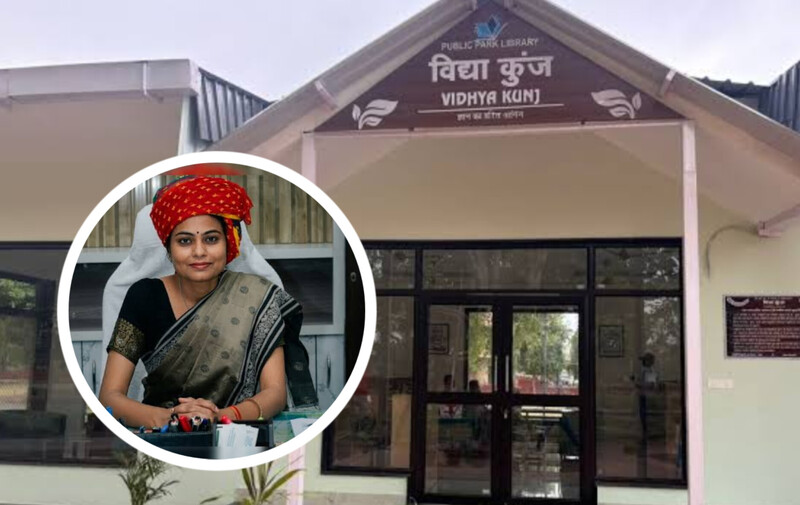
In a time when screens dominate attention and quiet reading spaces are slowly fading, a refreshing idea has taken root in Alwar. It is not just a new facility but a vision, one that brings together nature, learning, and community. Named “Vidya Kunj,” this initiative is Rajasthan’s first park library, thoughtfully introduced by Artika Shukla. More than a structure, it is an experience. A place where sunlight filters through glass walls, greenery surrounds every corner, and the simple act of reading feels deeply connected to nature. As we reflect on her journey, this initiative becomes a powerful example of how leadership can shape spaces that nurture both minds and hearts.
Located within Buddha Vihar at the Urban Improvement Trust headquarters, Vidya Kunj is not a conventional library. It is designed to be open, inviting, and alive. The glass-wrapped structure allows readers to remain connected with the outside world, even as they immerse themselves in books. This unique concept reflects a deeper understanding of human needs. Reading is not just an intellectual activity; it is also emotional. When combined with the calmness of nature, it becomes even more enriching. The library accommodates over 50 readers at a time and is thoughtfully divided into sections for children, youth, and general readers. Parents can sit inside and read while keeping an eye on their children playing outside, creating a space that feels both safe and inclusive.
Constructed at a cost of ₹45 lakh and housing around 5,000 books, Vidya Kunj is already being seen as a model for future initiatives. But what truly sets it apart is its community-driven approach. Artika Shukla has invited citizens to become a part of this journey. Through a 15-day donation drive, people are encouraged to contribute books from their homes, turning the library into a shared treasure of knowledge. This idea transforms the space from being government-owned to people-owned. It builds a sense of belonging, where every book carries a story not just from its pages, but from the person who donated it.
The vision behind Vidya Kunj reflects the personality and approach of Artika Shukla herself. A 2016-batch IAS officer, she is known for her people-first governance style. Originally from Varanasi, she began her journey in the field of medicine, completing her MBBS from Maulana Azad Medical College. However, her desire to serve society on a larger scale led her to civil services, where she secured an impressive All India Rank 4 in her very first attempt in the UPSC examination. Her background as a doctor perhaps shaped her understanding of well-being—not just physical, but mental and emotional. Vidya Kunj reflects this understanding, offering a space that heals through knowledge and nature.
The initiative has already received praise from senior officials, including V. Srinivas, who described it as a “laudable initiative.” Such recognition highlights its potential to inspire similar projects across the state and beyond. In a country where access to quality reading spaces is still limited in many areas, Vidya Kunj offers a simple yet powerful solution. It shows that libraries do not have to be confined to closed rooms; they can be open, vibrant, and deeply connected to their surroundings. At its core, Vidya Kunj is about rediscovering the joy of reading. In today’s fast-paced world, finding time to pause and engage with a book has become increasingly difficult. This space encourages people to slow down. To sit under natural light, hear the rustle of leaves, and immerse themselves in stories and ideas. It reminds us that learning is not just about information; it is about experience.
As cities continue to grow and urban spaces become more crowded, the need for such thoughtful initiatives becomes even more important. Vidya Kunj offers a model that is both simple and scalable. It shows that meaningful change does not always require complex solutions. Sometimes, it begins with a clear idea and the intent to make a difference. In the quiet corners of this park library, where books meet nature and ideas take root, lies a simple yet powerful message that knowledge, when shared and nurtured, has the power to transform communities. And sometimes, all it takes is one thoughtful idea to begin that transformation.
Romanticizing life and shaping stories from everything I see through my journalistic lens. Also, I love sports on the side.